
When bypassing the budget process is appropriate
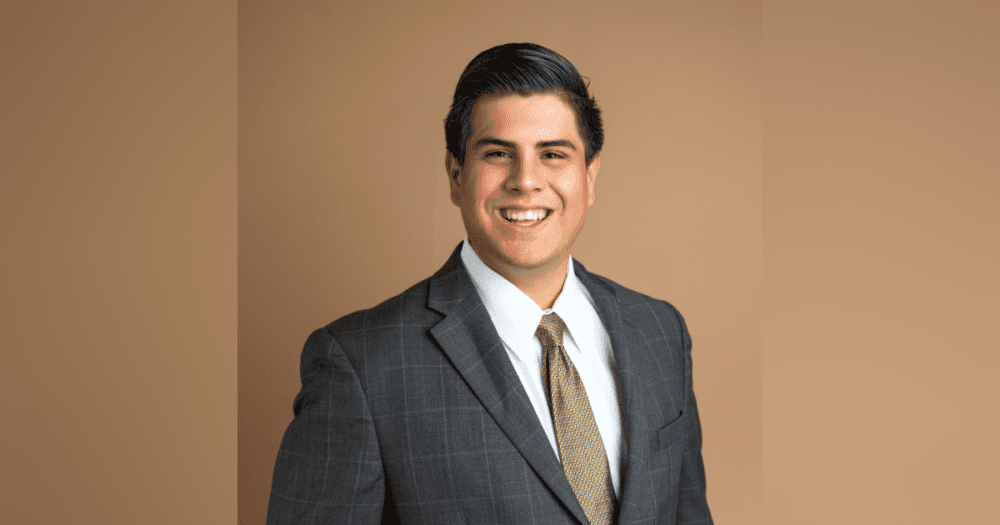
Editor’s note: This opinion piece was submitted to The Permian Press for publication. Precinct 3 Commissioner Steven Villela is one of five members of the Midland County Commissioners’ Court. Following our reporting on the court’s Feb. 3 meeting, The Permian Press invited commissioners on both sides of the vote to submit opinion pieces addressing the same question:
How should the court define when it is appropriate to bypass the normal budget process for decisions that impact the budget, and how did the deputy constable decision align with that standard? Read Judge Johnson’s response.
At the February 3 Commissioners Court meeting, I joined two other commissioners in voting to increase law enforcement presence in Precincts 3 and 4. I have consistently supported expanding law enforcement capacity in Midland County, including approving five new positions for the Sheriff’s Office after budget hearing concluded or after adopting the budget. My position has not changed. When public safety needs are clear and immediate, we have a responsibility to act.
The reality on the ground in Precinct 3 is straightforward. My constituents have repeatedly communicated that they notice, or feel, a reduced law enforcement presence in their neighborhoods, and those concerns are justified. Crime related to human trafficking, oilfield theft, and drug trafficking continues to impact our community.
From my perspective, there is no such thing as too much law enforcement when it comes to protecting residents and property, whether that authority comes from the Sheriff’s Office or the Constable’s Office, the two county law enforcement agencies with overlapping jurisdiction and responsibility, as long as we can pay for it without levying higher property taxes.
I am fully aware that morale within law enforcement has been low and that staffing challenges remain. Those challenges are not unique to Midland County. Nationally, law enforcement agencies are experiencing staffing shortages, and those impacts are visible locally as well. Even as crime statistics fluctuate, public expectations for safety and visible patrol presence have not declined. In many cases, they have increased.
The Sheriff is actively working to fill vacancies, manage jail operations, and support specialized efforts such as Texas Anti Gang initiatives. My intent is not to compete with or undermine the Sheriff’s Office. On the contrary, my goal is to help bridge the gap in Precinct 3 by supporting a law enforcement solution that answers more directly to the residents I represent and to the Constable they elect, just as voters hold me accountable at the ballot box.
Providing a deputy constable to a duly elected Constable is a practical, lawful, and efficient way to increase patrol presence, improve response capability, and support public safety efforts. Constables have broad law enforcement authority, and when properly staffed, they serve as a force multiplier for the entire county. This decision strengthens our overall public safety posture rather than weakening it.
An important question has been raised about when it is appropriate for the court to act outside of the normal budget process. In my view, bypassing the regular budget cycle is appropriate when four conditions are met. First, finances must be available. Second, there must be a demonstrated and immediate public safety need.
Third, there must be open communication between elected officials and department leadership about that need and the proposed response. Fourth, the action must be consistent with past court practice and county priorities rather than treated as an exception.
This court has demonstrated that approach in practice. After the budget hearings and adoption of the Fiscal Year 2025/26 budget, the court has continued to respond to staffing needs as they arise. Only two meetings ago, the court approved a significant supervisory position within the Sheriff’s Office. In addition, from 2021 through 2025, the county’s contingency fund averaged approximately $5,018,215 per year. After budget amendments during those years, an average of $1,210,370 remained unspent annually.
In 2026, the court approved a contingency allocation of $4,920,000, and as of today $4,121,957 remains available. These figures demonstrate that the county has historically maintained a strong contingency balance even after responding to unplanned needs. Using contingency funds for legitimate and time sensitive public safety demands is consistent with how this court has managed unforeseen priorities in the past.
During my thirteen months on this court, I have not seen the level of law enforcement presence in Precinct 3 that my constituents expect and deserve. When the opportunity arose to address that need responsibly and transparently, I supported it. Waiting for the next budget cycle would have meant continuing to fall short of community expectations despite having the capacity to act.
This decision was not about politics or personalities. It was about responding to a real need using lawful authority and staying consistent with prior court actions. Public safety does not always align neatly with budget calendars, and when lives, property, and public trust are at stake, leadership sometimes requires timely action.
I will continue to advocate for increased law enforcement presence, stronger coordination between county agencies, and decisions that put the safety of our residents first. That is what the people of Precinct 3 elected me to do, and that responsibility does not pause simply because a budget cycle has ended.