
MISD denies grievance over Dec. meeting complainant
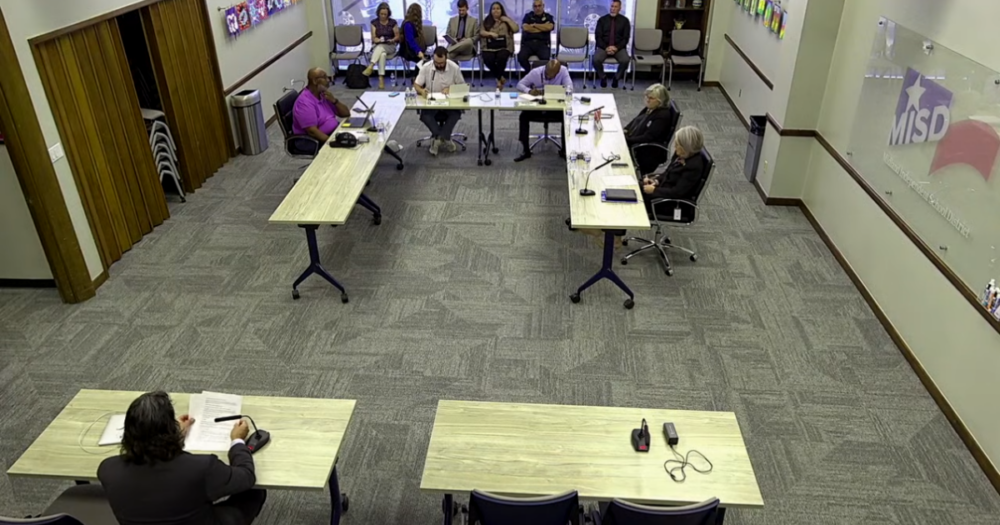
What happened: The MISD Board of Trustees voted 4-0 on Wednesday, May 13, to uphold its earlier ruling that a December 2025 board meeting complied with the Texas Open Meetings Act, rejecting a community member’s appeal that argued the meeting was invalid because then-board president, Brandon Hodges, chaired the meeting remotely from Philadelphia.
The big picture: The dispute centered on whether the district applied the correct section of state law and whether the meeting met the law’s requirement for real-time, two-way communication.
The complainant argued the district relied on the wrong legal standard and pointed to statements during the meeting in which Hodges said he could not see the board at times. He said those moments showed the meeting did not meet the required communication standard.
The district and its attorney said the rule requiring the presiding officer to be physically present applies only to multi-county entities, not to single-county school districts like Midland ISD. They also said Hodges remained visible and audible to the board throughout the meeting, even if he had a limited view of the room at times.
Go deeper: Trustees questioned whether the visibility issue reflected a technical limitation, such as camera angle or screen view, rather than a breakdown in two-way communication. The complainant responded that the standard exists for a reason and that the district should strictly apply it to maintain public trust.
He asked the board to redo the officer election from the December meeting and revalidate all actions taken since January under the current leadership. The board did not take any action to redo the vote or revisit past decisions.
What they’re saying: The complainant told trustees the grievance was not about personalities or politics, but about maintaining confidence in the district’s governance.
“Public confidence is damaged when citizens watching board president repeatedly state during official proceedings that he cannot adequately see participants during votes and deliberations,” he said.
What’s next: The complainant has 45 days to appeal the board’s decision to the Texas Commissioner of Education.