
Council renews license plate reader cameras for two years
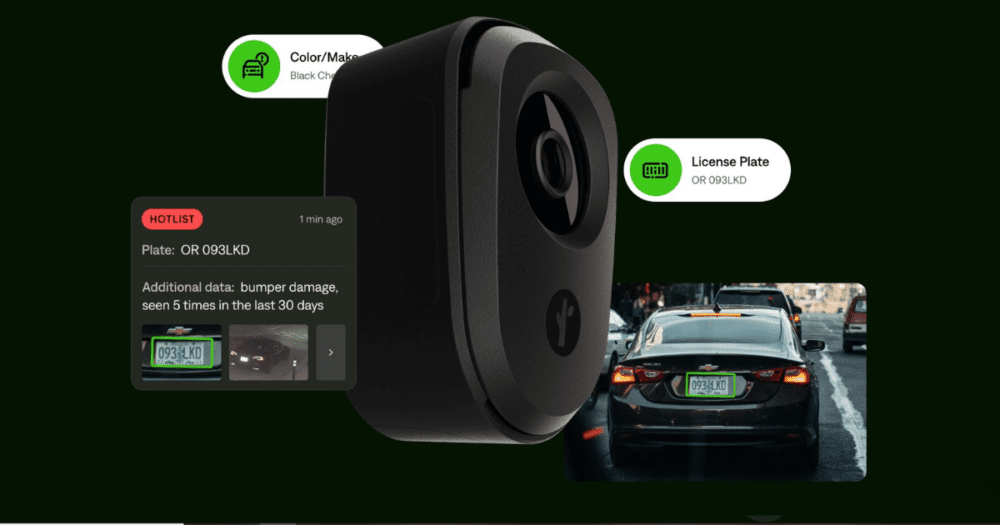
Photo credit: Flock Safety
What happened: The Midland City Council unanimously approved a two-year contract on Tuesday, Feb. 10, to continue using Flock license plate reader cameras citywide. The contract covers 73 cameras and costs $225,500 per year, or roughly $3,089 per camera.
Why it matters: MPD Chief Greg Snow told council that the cameras helped Midland recover nearly $4 million in stolen property, recover 49 stolen vehicles, and generate 111 arrests or warrants last year. He called the system a key public safety tool that helps solve serious crimes faster. Councilmembers spent significant time asking questions about privacy, data retention, and clarifying how the cameras work.
The big picture: Snow said the cameras take still images and do not record video. He also noted that the system stores data for only 30 days, and once that period is up, it’s a “hard delete.” Snow also said only MPD personnel can access the system, and the system logs every search and ties it to a case or incident number.
“I want to commend you,” Councilwoman Robin Poole said. “Because from the research I did, that’s where cities end up in quite a bit of trouble, is they don’t have retention policies, they don’t have access policies. And so you guys have all of that in place.”
Reality check: One woman spoke during public comment and made several claims. City staff addressed some of those claims during the meeting. The Permian Press reviewed the remaining claims against publicly available reporting:
- Claim: it’s a mass surveillance system – License plate readers photograph license plate numbers, vehicle descriptions, time, and location. Officers can search stored data later during investigations, but the system does not continuously track individuals in real time, staff said during the meeting.
- Claim: it tracks where we live, etc. – The system alone can not identify drivers, addresses, employers, or activities without additional police investigation using other databases or evidence, staff said.
- Claim: the data’s been misused nationwide – Public reporting documented cases of individual officer misuse and investigations into some cross-jurisdiction data sharing.
- Claim: Flock has data breaches or weak security – Public reporting identified vulnerabilities in some license plate reader systems or access controls. No confirmed reporting shows a nationwide breach of Flock’s core license plate database.
Go deeper: Snow described the system as a “force multiplier” that helps officers focus resources rather than blindly searching large areas. Mayor Lori Blong asked whether the technology could reduce future staffing needs, to which Snow said yes. Instead of sending multiple officers to search for a suspect’s vehicle, Snow said a single officer can check the system for location history and dispatch officers directly.
Snow cited a 2024 drive-by shooting investigation where officers identified suspects within 24 hours using license plate data. Snow said law enforcement agencies can share access across jurisdictions, but private businesses and homeowners cannot access police data.
Councilman Jack Ladd asked whether the police use the cameras for routine traffic enforcement, and Snow replied they do not use the system for traffic enforcement unless the violation led to an accident or to damage to life or liberty.