
Housing project with 13 objections heads to council
What to watch: The Midland City Council will meet on Tuesday, April 14, to consider proposed housing developments that have drawn objections and to make decisions on a water main project, a new opioid settlement, delinquent court fines, utility billing accuracy, and unsafe properties.
Key points:
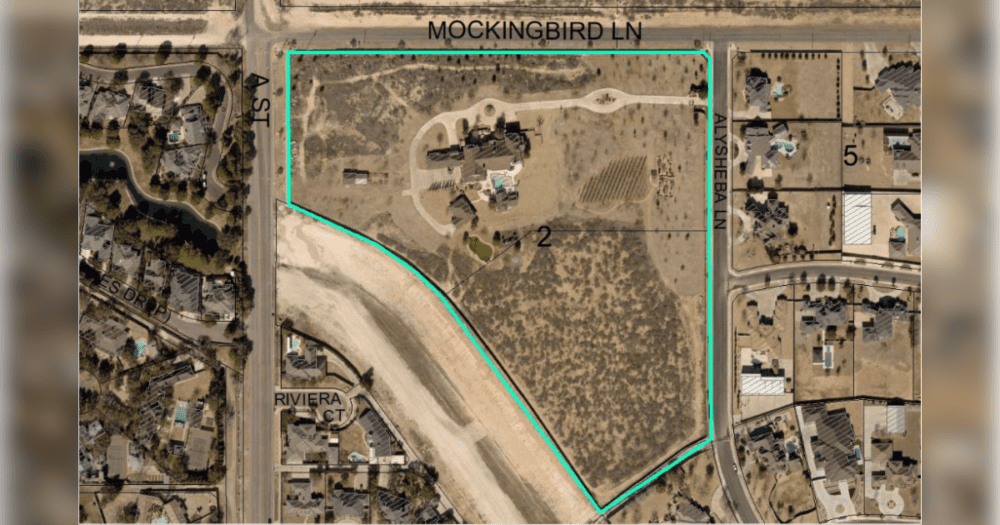
- Alysheba Lane rezoning: Council will consider a rezoning request to allow a 36-lot private residential subdivision on Alysheba Lane. City staff reported 13 objection letters were received, with four counted toward the formal objection threshold based on proximity requirements. One of those objections concerned seeing houses built across from them.
- North Garfield rezoning: Council will consider a rezoning request tied to a proposed 385-lot subdivision on 164.5 acres along North Garfield Street. Most of the site is planned for single-family housing, with a smaller portion designated for low-intensity retail. Two objections were submitted, including one from a nearby property owner requesting the preservation of a 50-foot easement used for agricultural access.
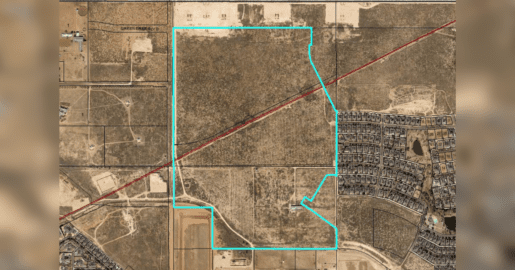
- ETJ preliminary plats: Council will consider two preliminary plat requests to divide more than 170 acres into 39 lots for future industrial development in the city’s extraterritorial jurisdiction (ETJ). The ETJ is land outside city limits where Midland regulates subdivision layout, such as lot size and street design, but does not provide services or enforce zoning.
State law allows property owners to opt out of ETJ oversight, and cities are not required to maintain one. The Texas Public Policy Foundation regards ETJs as “regulation without representation.”
- Opioid settlement: Council will consider opting into a new national opioid settlement with six regional distributors and dispensers. If approved, the city would receive an estimated one-time payment of about $25,000, which must be used for specific opioid abatement efforts such as treatment, prevention, and recovery programs.
- Utility meter software: Council will consider awarding a $760,780, five-year contract for software to monitor and manage the city’s utility meters. The system helps track meter performance, detect inaccuracies, and identify underperforming meters that could lead to lost revenue. It also supports billing accuracy by reducing estimated usage and improving data reliability.
- I-20 water main: Council will consider awarding an $851,245 contract for the I-20 Water Main Re-Route Project, funded through the $98 million Water and Sewer fund balance. The project involves relocating an existing water line to accommodate infrastructure constraints and ensure continued service reliability. Projects like this are typically required when existing utilities conflict with roadway, development, or safety needs.
- Municipal Court collections: Council will consider approving an agreement with a third-party firm to collect delinquent Municipal Court fines and fees. The contract operates on a revenue-sharing model, meaning the firm is paid from the fines it successfully collects rather than upfront city funding.
- Benton Sidewalk Project: Council will consider awarding a $101,340 contract for the Benton Sidewalk Project, funded through Community Development Block Grant (CDBG) funds. The project includes the construction of new sidewalk infrastructure and related improvements, part of federally funded efforts to enhance pedestrian access and neighborhood connectivity.
- Mobile vehicle barrier: Council will consider approving a $263,538 purchase of a mobile vehicle barrier system designed to stop vehicles and prevent unauthorized access in high-traffic areas. City staff says the equipment would be used at events like the Fourth of July celebration and other large gatherings. The purchase would be funded through Hotel Occupancy Tax funds.
- Manufactured housing: Council will consider a request to rezone 35 acres to allow a manufactured home park. The applicant says the change reflects a partial property sale and would allow the site to operate under manufactured housing zoning. Council previously approved the rezoning for this development and emphasized the need to consider design standards, density, and infrastructure before final approval.
- Substandard buildings: Council will consider resolutions for two deteriorated residential properties at 301 S. Jefferson St. and 1604 S. Loraine St., both identified by the city as life and safety risks. If approved, property owners would be required to repair or demolish the structures within 30 days.
The cases come as the city continues addressing more than 100 substandard buildings citywide. At the previous meeting, the council discussed using limited federal funds to cover demolition costs while still placing liens on properties to recover expenses over time.