
MDC commits $3.5M to 1.5-mile Briarwood widening
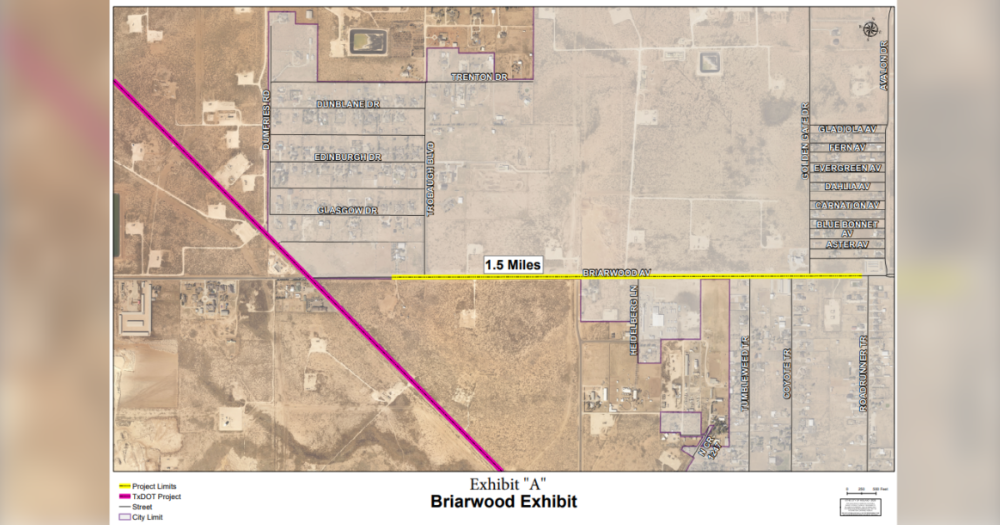
What happened: The Midland Development Corporation (MDC) Board of Directors met on Monday, July 6, and adopted a $23.9 million budget for the upcoming fiscal year, committed up to $3.5 million toward widening Briarwood Avenue, and formally backed Midland’s bid for its first federal Opportunity Zone designations.
Key points:
- $23.9M annual budget: The board approved the MDC’s new spending plan, which is about $7.7 million larger than the previous year’s. The increase reflects a $4.1 million increase in incentive payments that the MDC previously committed to businesses, primarily to Costco and the Omni hotel projects, that it is now scheduled to pay, as well as $3.6 million in additional funding for future economic development incentives.
The budget assumes sales tax revenue will remain flat at $15 million and uses about $7.5 million from reserves to balance the budget. MDC Executive Director Sara Harris said that actual sales tax collections are running about 22% ahead of budget this fiscal year, though she said next month’s comptroller report will show whether June’s unusually strong growth was temporary.
- $3.5M for Briarwood: Directors approved an economic development agreement that reimburses the city up to $3.5 million to widen Briarwood Avenue between Avalon Drive and Trobaugh Boulevard into a four-lane divided roadway with curbs, gutters, sidewalks, and a new traffic signal at Avalon.
Construction is already underway on the roughly $9 million project, and Midland County has approved reimbursing a share of the cost for the stretch that runs through county jurisdiction. MDC pays only when the city certifies the work is complete, projected for about this time next year.
Assistant City Manager Jose Ortiz told the board that roughly 850 acres of undeveloped land sit along the corridor, with water and sewer already in place. Harris noted that the payment counts toward MDC’s standing commitment to allocate 30% of its revenue to infrastructure.
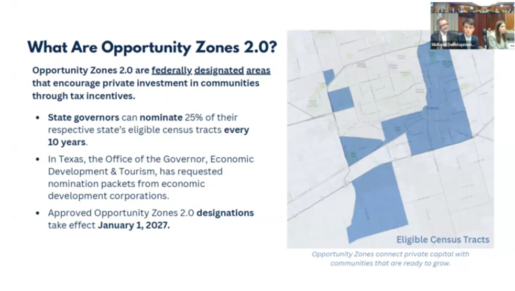
- Opportunity Zones 2.0: The board passed a resolution supporting the nomination of Midland’s eligible census tracts under the federal Opportunity Zones 2.0 program, in line with the City Council’s June 23 vote. MDC and the city nominated every eligible tract except one along Loop 250 that staff said has no developable land left.
The tracts concentrate in the south and east Midland, where staff emphasized roads, water, and sewer already exist for infill development. The program offers federal tax incentives to spur private investment in economically distressed areas. Designations would take effect Jan. 1, 2027, and would be Midland County’s first if granted.
- Midland Hispanic Chamber: The board renewed a one-year, $12,000 agreement with the Midland Hispanic Chamber of Commerce to continue supporting the chamber’s monthly micro-grant program, which awards $1,000 to a different Midland small business each month.
Harris said the chamber independently determines how it selects recipients. Board member Hayden Boldrick voted against the agreement, saying he supported opportunities that distribute money on a more level playing field, such as MDC’s entrepreneurship challenge.
- Entrepreneurship Center: The board heard a proposal from UT Permian Basin’s Office of Innovation and Commercialization seeking a one-year, $245,650 commitment to launch entrepreneurship programming in southeast Midland. The program would measure community demand before the MDC decides whether to develop its vacant property at South Lamesa Road into a permanent entrepreneurship center.
Board Chairman Brad Bullock said the MDC approached the university after exploring incubator models in other cities, and the corporation won’t build on the lot until it confirms the need.