
Commissioners split on when to save or spend tax dollars
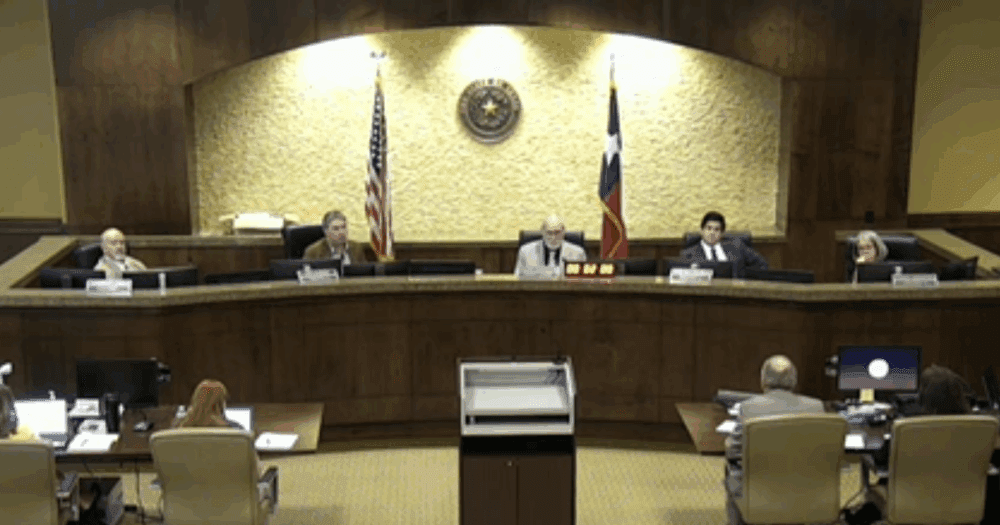
What happened: The Midland County Commissioners Court meeting on Sep. 2 featured sharp debate over budget priorities, a deputy constable position, and the county’s fleet contract.
Key points:
-
Deputy constable position: Commissioners voted 3–2 to eliminate Precinct 4’s deputy constable position, a role under Precinct 4 Constable Jamie Hall. Commissioners Dianne Anderson and Charles Hall opposed the move. Supporters said the position had set off a power struggle, with other constables also wanting deputies, and argued that the workload didn’t justify the cost.
“It’s a quarter million dollars to add a position,” Judge Terry Johnson said. “Nobody ever wanted one until we awarded one.” Commissioners Steven Villela and Jeff Sommers said their precincts also needed more help, while Sommers argued for fairness across all four precincts. Hall blasted the cut as “a junior high movement.” (Editor’s note: Commissioner Charles Hall is the father of Constable Jamie Hall.)
In a companion vote, the court created a countywide warrant services investigator position to move the deputy into broader operations. That passed 4–1, with Hall opposed. Commissioners noted the role would help all constables instead of reporting to just one.
-
Fleet management contracts: Commissioners split on whether to keep Vector Fleet, the county’s vendor since 2013, or move to Sewell Fleet Management. Villela pushed for Sewell, citing service delays and complaints from staff.
Johnson pushed back, saying Villela was trying to upend the county’s fleet maintenance system just two weeks before budget approval. “That’s not good business,” he said. Villela countered that the county should have put the contract up for competitive bids earlier in the year, but alleged Johnson had denied the request.
The court rejected Johnson’s motion to keep Vector in a 2–3 vote, with Villela, Anderson, and Hall against. Villela’s motion to approve Sewell passed 3–2, with Johnson and Sommers opposed.
- Honor Guard boots: A request to purchase boots for the Sheriff’s Honor Guard and the administrative staff failed. Commissioners agreed on the Honor Guard, but Anderson objected to taxpayer money covering administrative staff. Villela and Anderson suggested Sheriff David Criner use other funds.
Johnson moved to approve, but got no second. Criner replied, “We’ll put it out of our own pocket then.” Johnson, criticizing the inconsistency of his fellow commissioners, said, “But we’ll have $50,000 worth of green lights on the courthouse,” pointing to a later agenda item for a one-month lighting display that cost more than the boots.
-
MOTRAN funding: Commissioners revisited their decision to raise Midland County’s annual contribution to MOTRAN, a regional transportation lobbying group, from $5,000 to $10,000. Johnson objected, saying, “All other entities pay $5,000, and why we’re being asked to pay more is beyond me.” Villela defended the increase, citing Midland’s stake in I-14 development, but didn’t explain why the county should pay double.
Johnson argued, “We don’t buy the boots the sheriff wants, but we throw an extra five grand, and I don’t have an explanation of why.” His motion to hold funding at $5,000 died for lack of a second, leaving the $10,000 intact.
- Sheriff’s department pay: Commissioners approved, in a 3–1 vote, a new pay schedule for the Sheriff’s Office starting Oct. 1. It applies only to sheriff’s deputies. Hall objected, saying, “It needs to be all law enforcement because all those badges are the same.”
Johnson praised Criner’s persistence, noting he had delayed raises for four years while the county built the new law enforcement building and jail. “Your people need this,” Johnson said. “Midland deserves the finest that there is.”