
Preparing for the social disruption AI may bring
Editor’s note: This opinion piece was submitted to The Permian Press for publication. Readers interested in submitting an opinion on this or another local issue can visit our Submit a Story page.
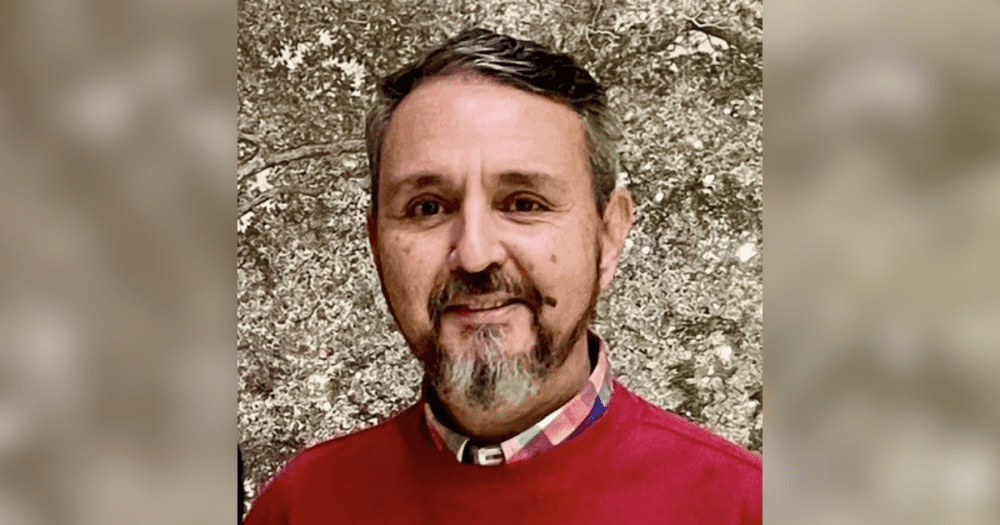
Eliel Rosa is a legal immigrant from Brazil. He is the founder of the Nehemiah220 Ministries, serving Midlanders for eight years now. He has a BA in Social Sciences and a specialization in Urban Sociology. He came to the U.S. to pursue a PhD in Constitutional Law and Public Policy.
The year was 1965. The month was July. The city was Curitiba, capital of the state of Paraná in southern Brazil. One year earlier, a military regime had seized control of the country with the support of the U.S. military and the CIA. The heads of the local, state, and federal Executive Branches were no longer elected; they were appointed and confirmed by military generals. Presidential elections were suspended for twenty-one years.
The authority to determine the future of cities, states, and the nation itself was concentrated in the hands of a small group of individuals who had not received a single vote at the ballot box. In practical terms, mayors, governors, and presidents wielded sweeping, unchecked power.
To their credit, the regime left a significant legacy in infrastructure, education, foreign relations, and national defense. Yet there was a notable exception: the mayor of Curitiba, Mr. Ivo Arzua.
According to journalist David Adler in The Guardian (May 6, 2016), Mayor Arzua “solicited a new master plan to guide Curitiba toward urban growth and order. Over the course of several months [in 1965], his local government held a series of seminars known as ‘Curitiba of Tomorrow,’ seeking to present the public with the city’s new master plan.” At the time, Curitiba had a population of just over 400,000 residents.
What Adler did not highlight, however, was that Mayor Arzua — himself a military engineer — used nine town halls held across the city’s districts not merely to present a plan, but to actively gather feedback and recommendations from citizens. He sought their input regarding the type of society they envisioned for the turn of the century — a bold 35-year horizon.
On March 30, 1993, on Curitiba’s 300th anniversary, the city was already internationally recognized as the smartest city in the Southern Hemisphere.
In my 2007 undergraduate dissertation at the Federal University of Paraná (Department of Social Sciences), written after traveling to twenty-four countries and studying both successful and flawed models of urban development, I defended the thesis that Curitiba’s global recognition and long-term success stemmed from a singular, decisive factor: the committed engagement of its local community in shaping the “Curitiba of Tomorrow.”
In May 2018, Medium Magazine succinctly captured the essence of this thesis: “The success of cities is tied to their ability to consistently adapt to new challenges. However, for them to not only survive and experience stable growth, but to truly thrive, they must become resilient — capable of absorbing shocks and transforming adversity into opportunity.”
Back to the future. Today, leading voices in the technology sector are nearly unanimous: artificial intelligence is poised to transform — and in many cases replace — both white- and blue-collar jobs across the globe. Some regard this transition as profoundly beneficial to humanity. Others warn that it may prove deeply destabilizing for billions of people.
One of the most immediate and visible impacts is the strain created by large-scale data centers: depletion of water basins, overburdened electrical grids, and growing health concerns among communities situated near these massive facilities. Yet the most consequential effects are likely to unfold within the economic and social fabric of millions of families. The pace of AI advancement has already exceeded many expert predictions.
Examples are mounting:
A recent study from the Massachusetts Institute of Technology suggests that one in eight jobs can already be replaced by AI systems. Researchers at Anthropic have argued that even if AI development were to stall today — and even if Artificial General Intelligence (AGI) were never achieved — existing systems could automate the majority of white-collar work within five years. Amazon recently announced the elimination of 600,000 jobs.
HVAC technicians and other skilled tradespeople have expressed concern that automation is beginning to encroach upon traditionally secure blue-collar professions. In Kinsley, Kansas — a town of just 1,342 residents — restaurants have begun phasing out waitstaff in favor of robotic food delivery systems. Elon Musk has projected a potential national unemployment rate of 10–20% by 2030. And these examples represent only a fraction of what is unfolding.
In light of this rapidly evolving landscape — and inspired by the foresight embodied in Curitiba’s “City of Tomorrow” initiative prior to its demographic explosion in the early 2000s — a group of local friends and I have launched a movement called Midland of Tomorrow.
Our aim is to assemble a coalition of business owners, physicians, nurses, pastors, elected officials, law enforcement officers, veterans, journalists, educators, engineers, attorneys, parents, and students — individuals from every sphere of civic life. Together, we seek to cultivate practical, forward-looking strategies to mitigate the socio-economic disruption that will inevitably affect thousands within our community.
This revolution is already underway. Its trajectory appears irreversible. As a follower of Christ, I am reminded of the words of my friend Dr. Richard Bartlett: “We are not helpless, we are not hopeless.” But preparation is not optional.
How will we respond to a surge of discouraged and displaced workers?
How will we strengthen our support networks to care for those most affected?
How can we provide meaningful direction to young students navigating an uncertain future?
And once the first wave has passed, how will Midland adapt to the realities of this emerging world?
I have ideas. Many of you do as well. So let us not delay. Let us come together — united — and address this challenge now. If you would like to be part of this movement, please contact me at [email protected]. God bless Midland. God bless you.