
Permian’s 20M daily barrels of produced water eyed as new supply
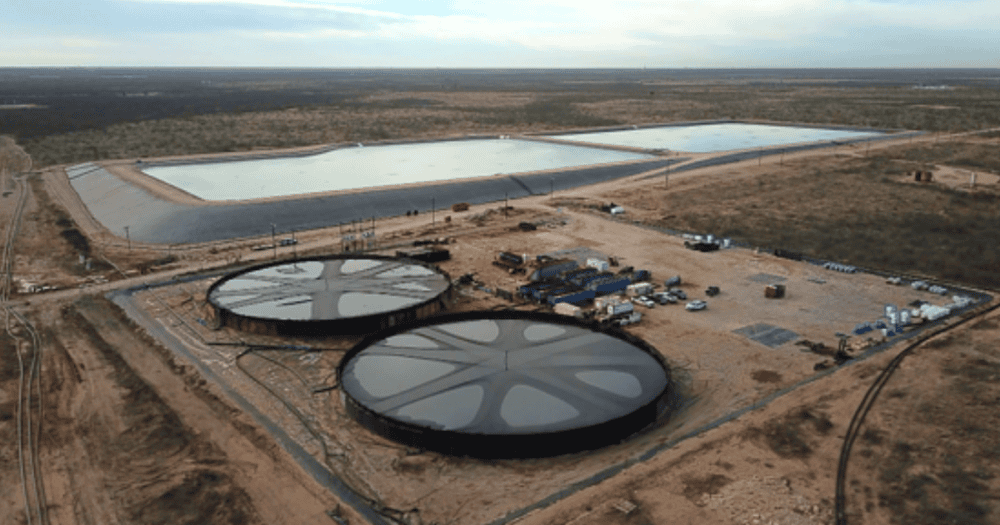
What happened: The Permian Basin brings up roughly 20 million barrels of salt water every day alongside its crude that must be disposed of. There are people working feverishly to convert that waste stream into a supply opportunity. If even a fraction of the basin’s daily 20 million barrels can be treated to a usable standard, it changes the math on where West Texas gets its next water.
For context, the City of Midland uses about 500,000 barrels of potable water a day (about 25,000,000 gallons per day).
On a recent episode of the energy podcast C.O.B. Tuesday, Dr. Scott Tinker, chairman of Switch Energy Alliance and director emeritus of the Bureau of Economic Geology at the University of Texas, put the scale plainly. He said disposing of that water by underground injection is getting harder and more expensive, and beneficial reuse is one of the industry’s largest untapped opportunities.
This discussion occurs in the shadow of the Texas Water Development Board’s 2027 draft report showing Texans might need to spend $174 billion on new water projects in the coming decades to accommodate the expected population, industrial, and economic growth. Texas also approved a constitutional amendment to allocate $1 billion per year for 20 years to the Texas Water Fund.
The big picture: Produced water is far harder to treat than seawater. It is three to four times saltier, and its chemistry varies well to well. On the podcast, Adrianne Lopez, research and development manager at Texas Pacific Water Resources, walked through Texas Pacific’s answer: freeze desalination, which purifies water by fractional freezing rather than forcing it through membranes.
Texas Pacific Water Resources is a subsidiary of NYSE-listed Texas Pacific Land Corp, which moved from research trials at a small Midland facility to a newly built 10,000-barrel-per-day demonstration plant, located near Orla in Reeves County. Lopez said proving the economics at commercial scale, alongside continued regulatory progress, is the critical next step. The company is also seeking state permits to discharge treated water into the Pecos River.
Desalination can produce about one barrel of pure water for every two barrels processed and reduce the number of barrels needed to be disposed of by 50%. Economics and regulatory regimes are major challenges to reuse. Current disposal costs are between $0.25 and $0.5 per barrel, and desalination costs are between $2 and $4 per barrel. The City of Midland charges residents between $0.28 and $0.61 per barrel of municipal water.
Go deeper: Currently, there are no set standards for using or releasing desalinated oil field produced water. Each site needs to petition for a unique permit from the TCEQ with unique conditions, as the EPA/ TCEQ prevent any use of produced water, even if it is treated and tested to be 100% pure water.
Potential end uses of treated water could include irrigation for cotton and native grasses, land rehabilitation, cooling for power plants, and AI data centers. Produced water also carries valuable minerals, including lithium, that could be recovered in treatment, improving the economics.
The bottom line: Dr. Tinker argues that the technology to treat produced water largely exists already. He says what’s missing is the economics and the regulatory certainty to scale it. Disposal keeps getting more expensive while desalination gets cheaper with scale. If they cross, the Permian’s biggest daily waste stream starts to look like one of Texas’s newest water sources, and Midland sits at the center of it.