
Most of Midland’s votes came from nine precincts
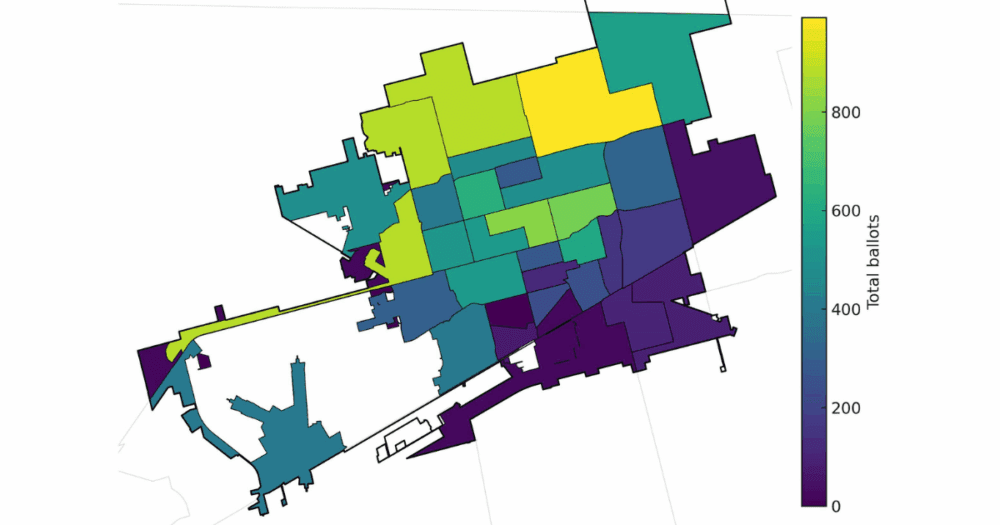
What happened: A small cluster of precincts drove most of the voting in the Nov. 4 election, shaping the results in the mayor’s race and two city council districts. Precinct-level data from the Midland County Elections Office shows where turnout concentrated, and how those patterns produced the final margins.
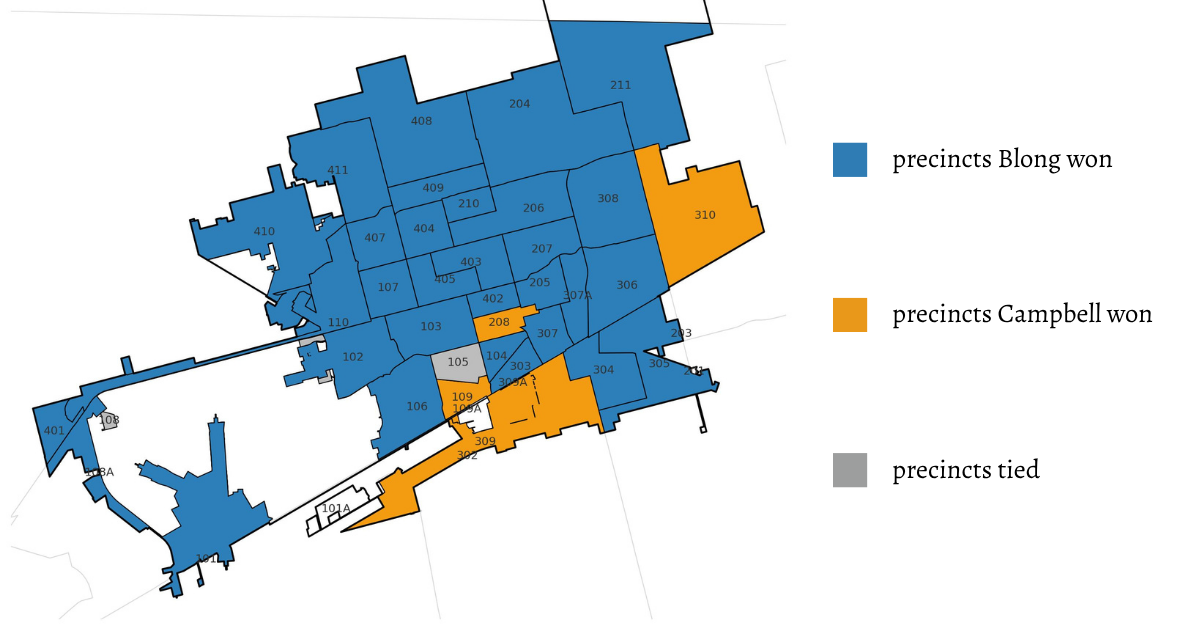
In the mayor’s race, Lori Blong won about 65.2% to Judd Campbell’s 34.8%. In City Council District 3, Jack Ladd won with nearly 73.8% against Shandi Williams’ 22.7% and Cheston Blank’s 3.6%. Amy Stretcher Burkes ran unopposed in District 4.
By the numbers:
- Mayor’s race: Blong won between 70% and 80% of the vote in several precincts, including 205 (79.7%), 207 (77.7%), 408 (75.5%), 204 (75.5%), and 206 (69.8%). Her five highest-turnout precincts (110, 204, 207, 408, and 411) accounted for 23.7% of all ballots cast citywide.
Campbell carried a few precincts outright, including 310 (56.8%), 208 (55.4%), 309 (53.8%), and 109 (52.8%), but these were among the city’s smallest-turnout precincts. His five highest raw-vote precincts (103, 110, 211, 403, and 411) accounted for only 4.3% of total ballots cast.
The closest precincts where the race was competitive were 304, 307A, 106, 303, and 104, all of which finished within a few points of each other. However, these were also very low turnout precincts, accounting for only 6.9% of all ballots cast.
- District 3: Ladd carried every precinct in District 3, but the three highest-volume precincts (205, 207, and 403) accounted for 39.0% of all ballots cast in the race and largely determined the outcome.
Williams’ strongest precincts (103, 205, and 403) accounted for 10.8% of the districtwide vote. Blank’s strongest (103, 403, and 405) accounted for 1.7%.
- District 4: With no opponent, Burkes’ precinct map functions as a turnout profile. The largest participation came from precincts 110, 411, and 107.
The big picture: Most voters made their selections before Election Day. Early voting accounted for 61.5% of all ballots, while Election Day voting made up 37.8% and mail-in ballots 0.7%. Of the city’s 35 active precincts, just nine accounted for 52.5% of all votes cast.
A comparison with the Midland College bond election earlier this year shows that many of the same neighborhoods that participated heavily in that countywide vote also cast the most ballots in the municipal election. Precincts 204, 110, 408, 411, and 403 were among the highest-turnout precincts in both contests.
Neighborhoods in Old Midland, Grasslands, and the corridor north of Loop 250 continue to anchor the city’s most consistent voter participation. Newer suburban growth areas in northwest Midland are becoming increasingly influential in municipal outcomes. By contrast, turnout in several east- and south-side neighborhoods remains lower relative to their population.