A project unlike any other, the Road Bond is completed
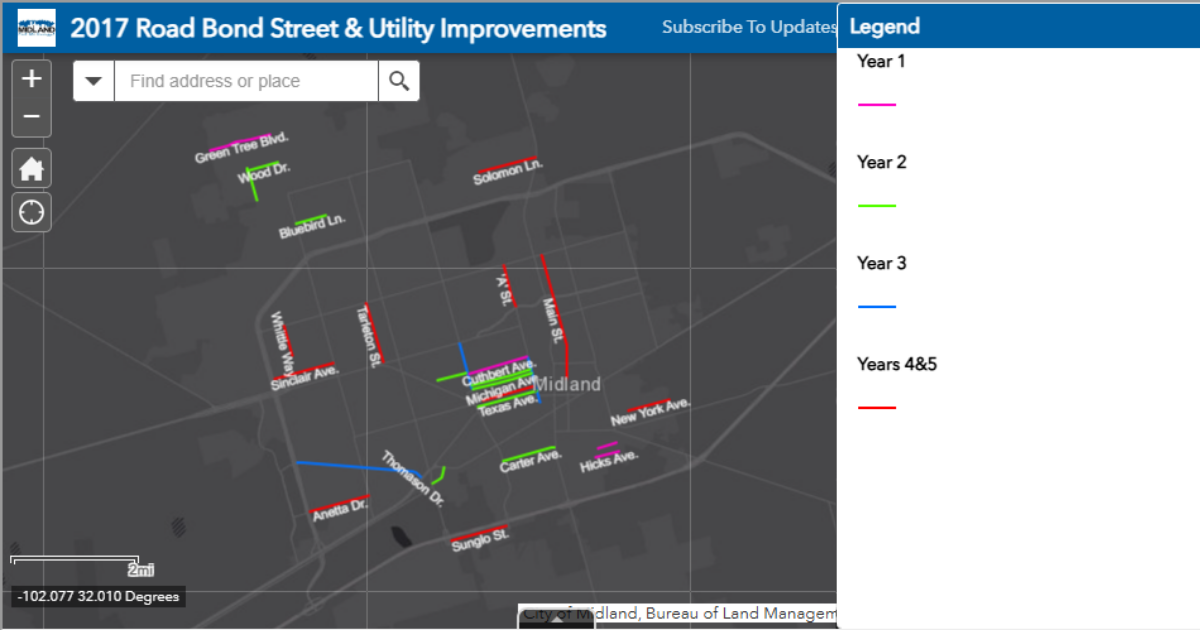
The Road Bond has come to an end. In 2017, Midland voters overwhelmingly approved a $100 million plan to upgrade parts of 26 streets across the community.
That list included some of the most high-profile streets in the community. “A” Street, Main Street, Garfield Street, Cuthbert Avenue, and Thomason Drive, but it also included improvements for neighborhood streets like Taylor Avenue, Hicks Avenue, Carter Avenue, Solomon Lane, Louisiana Avenue, Michigan Avenue, Bluebird Lane, Sinclair Avenue, Tarleton Street, Anetta Drive, and Illinois Avenue. Pick a region of town, and it was accounted for.
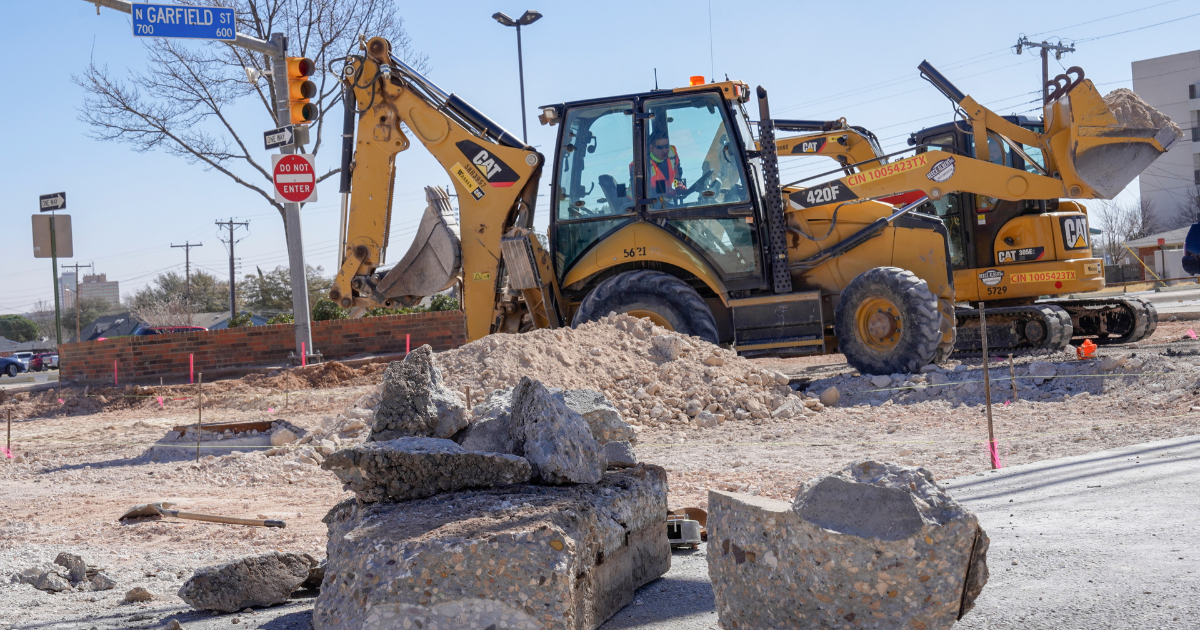
And it wasn’t just paving. Of the 26 projects that made up the most intricate series of infrastructure projects in the city’s history, 22 included utilities upgrades. And many of those meant replacing utilities underneath aged roadways. It is hard to imagine the condition of the metal pipe uncovered during the process in central and south Midland.
The deterioration of metal pipes has been the reason for sinkholes and other roadway issues on roads like Midkiff and Golf Course. The underground infrastructure is such that it would have been criminal not to replace utilities. Voters made the right decision to make that a requirement.
Is this community right to have cone fatigue? Sure. Those who came up with the original Road Bond plan were certainly ambitious to expect a five-year completion schedule. But this city had never undertaken anything like the Road Bond. To complicate scheduling more, the State of Texas made that impossible by doling out hundreds of millions for projects across West Texas.
Still, the City of Midland will finish the Road Bond under budget.
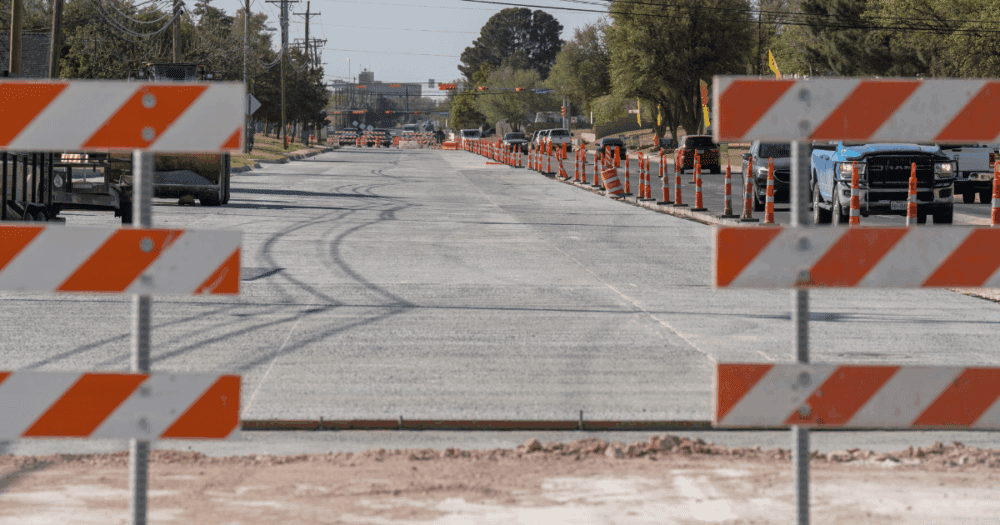
As the finishing touches take place up and down Main Street, we finally can talk about putting the Road Bond in the rear-view window. And while we know there is more work to do to bring other streets, neglected for decades, into the 21st Century, that is a conversation for another day.
The Road Bond is completed.