
You asked: Why your plant looks stressed after repotting
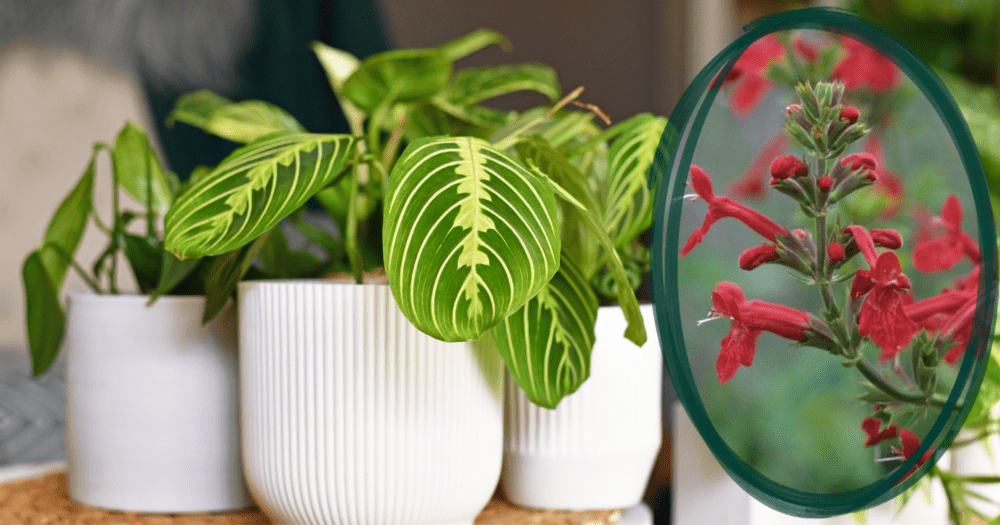
What to watch: The Permian Basin Master Gardeners are eager to answer Midland’s gardening, plant, and horticulture questions. We’re asking you, the reader, to share your questions. In return, we will have a trained Master Gardener provide you with their professional opinion. Here is the latest inquiry:
Question
“Any advice for a potential repot failure of my mature indoor Maranta? I haven’t repotted in 3 years, so while repotting, I replaced all the soil, carefully removing it from the roots and repotting in fresh soil mixed with perlite. I repotted most of my indoor plants this weekend, and this is the only one looking stressed. I have it next to a humidifier, but I’m not sure if there’s anything else I can do to help it out. Do you have any suggestions?”
Answer
Sara Moran, Horticulture agent for Ector & Midland Counties, provided some insight: I had to do some research for this one, as I am not familiar with Maranta Leuconeura growing conditions. Maranta is native to the Brazilian forest. With that information, you can better guess the type of environment to create for the plant to thrive. You grow it indoors and provide additional moisture with the humidifier, which is all good!
House plants should be repotted at some point in their lives, but repotting does cause root disturbance. Roots can be damaged by breakage or become exposed to temperature changes. Then, there is also a change in soil conditions (texture, nutrients, etc.). It will take time to adjust to the new conditions.
This is known as transplant shock. Common signs of transplant shock include wilting- even when the soil is moist, yellow or browning leaves, leaf drop, stunted growth, and, in severe cases, plant death. Roots are responsible for taking up water and nutrients; when they are disturbed, they cannot do so, and the plant becomes stressed. Some plants recover quickly, others might take more time. Sadly, some do not make it.
Fortunately, there are ways to minimize the effects of transplant shock: before transplanting, water the plant well and avoid transplanting during extreme heat or cold. During the transplanting, keep as much of the root ball intact and handle the root gently. After transplanting the water well, keep the soil moist, and avoid fertilizing -it can stress the roots more. Finally, be patient, which is always the hardest part, but the plants will know what to do.
Native Planting
Your bonus for today is learning about Texas Betony (Stachys coccinea)—a beautiful and drought-tolerant perennial native to the southwestern United States and Mexico. Texas Betony is a member of the Lamiaceae (mint) family due to its square stem. Bright red tubular flowers grow on a spike. It is currently blooming in full sun all day long. It is highly recommended for pollinators as it attracts hummingbirds and pollinators. The perennial has low water needs and is heat-tolerant, making it perfect for native Midland gardens.