
Sen. Sparks raises concerns over proposed $40B transmission lines
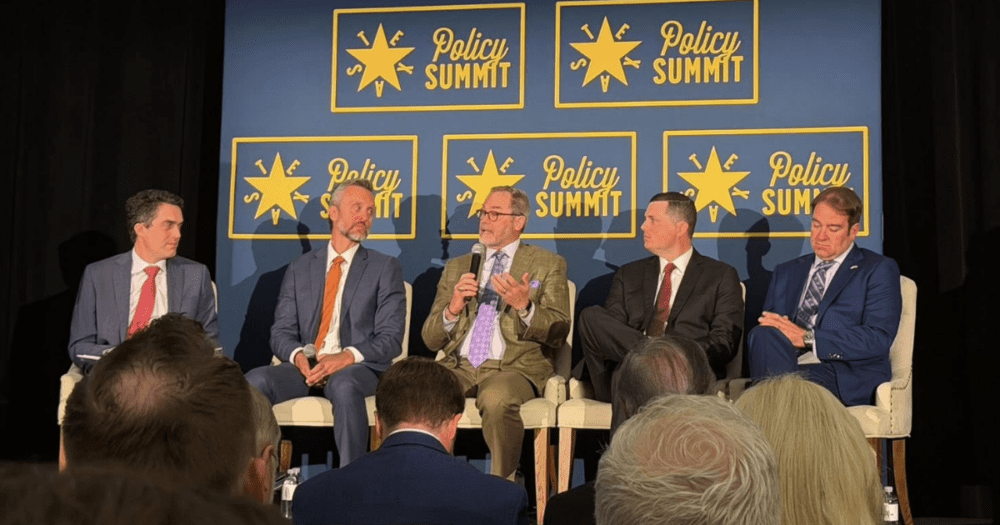
Photo credit: Midland Mayor Lori Blong
What happened: At a panel during the Texas Public Policy Foundation’s (TPPF) Texas Policy Summit, State Sen. Kevin Sparks discussed concerns about a $40 billion partially approved plan to build roughly 1,200 to 1,400 miles of new 765-kilovolt transmission lines stretching from the Gulf Coast to West Texas.
The plan has already received partial approval from the Texas Public Utility Commission (PUC) in West Texas, remains under review across Central Texas, and is still in the drafting phase to the Gulf Coast.
Catch up quickly: Texas lawmakers passed legislation in 2023 to improve the speed at which energy producers, particularly in the Permian Basin, can connect to the grid. But that effort has since ballooned into a much larger statewide transmission build-out, with no consideration for building new reliable electrical generation alongside these lines.
The PUC sold the plan as addressing West Texas’ growing electricity demand. However, the current structure actually accommodates the construction of more unreliable, intermittent power generation at the ratepayers’ expense. West Texas currently has almost 31,000 megawatts of intermittent wind and solar generation, but only about 4,000 MW of reliable generation. We often rely on imports to meet our average electricity usage of 9,000 MW.
The big picture: Sparks said the increase in electricity demand is real, driven in part by changes in oil and gas operations, but argued the issue of the 765 kV transmission lines is less about energy availability and more about how the system operates.
“We’re sitting on the most energy-rich region in the United States. Why are we importing electricity?” he said. “Why don’t we generate the electricity right there and build out the regional infrastructure?”
He said West Texas has the resources to generate its own power, particularly with natural gas, but lacks the right infrastructure in the right places.
“We need the electricity, but we have the ability to do that,” Sparks said. “We have the ability to create gas-fired power generation. We need the regional infrastructure to move that electricity around.”
Go deeper: Sparks questioned whether the proposed transmission lines would solve the stated problem, noting that no projects are currently planned on the eastern side of the lines to generate new electricity for West Texas.
“Literally, there’s nothing on the books on the east side of these lines that’s going to generate power to send out there,” he said. “So, what are we really doing?”
Sparks said the lines may instead move existing stranded, intermittent energy out of West Texas, rather than to bring new power into the region. He pointed to federal funding and ongoing development efforts to expand unreliable wind and solar projects, many of which are still in the process of connecting to the grid.
What they’re saying: State Rep. Jared Patterson said federal tax incentives and the structure of the ERCOT market help explain why those projects dominate new generation. He said wind and solar developers receive subsidies that allow them to bid electricity into the market at extremely low, and sometimes negative prices, effectively ensuring the market selects them first.
Because ERCOT prioritizes the lowest-cost power available at any given time, Patterson said those incentives have led to years of investment flowing into wind and solar. At the same time, dispatchable generation, such as natural gas, has lagged.
TPPF Policy Director of the Life:Powered campaign, Brent Bennett, said the structure of the Texas grid contributes to that dynamic, with transmission often expanded to connect distant and unreliable wind and solar generation to demand, rather than building reliable gas generation closer to where consumers use electricity.
“Capacity is really being driven by the fact that we’re trying to meet that demand with distant wind and solar,” Bennett said.
The bottom line: Sparks said the cost of the $30 to 40 billion transmission line buildout would ultimately fall on ratepayers. He said the state has the resources to meet demand locally but lacks alignment in how to structure the market.
“The good news is we have the energy to supply,” Sparks said. “The bad news is we’ve got to have the political will to make the adjustments to our ERCOT market to facilitate it.”