
Blong seeks state oil, gas tax reinvestment for water projects
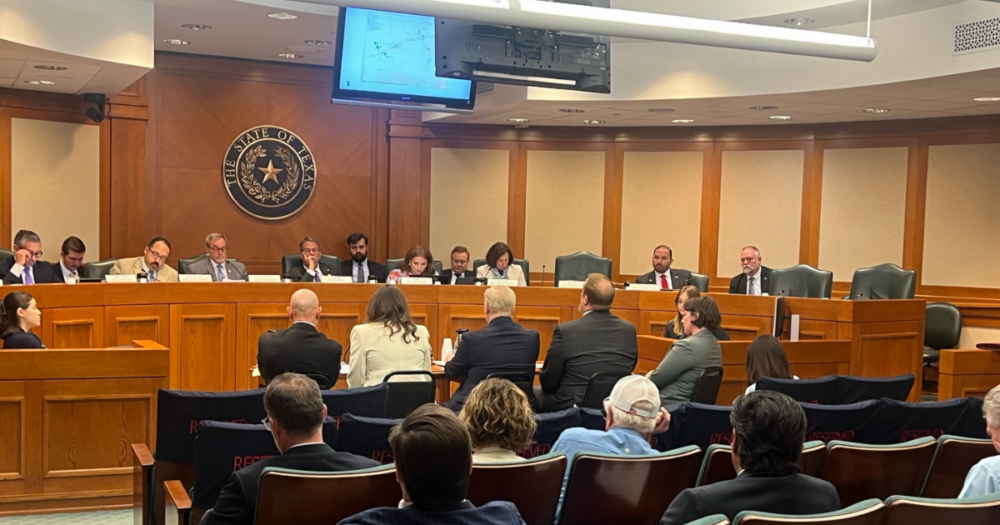
Photo credit: Mayor Lori Blong
What happened: Midland Mayor Lori Blong told the Texas Senate Water, Agriculture and Rural Affairs Committee on May 11 that the city has three future water-supply projects ready to move into final design or construction, but says state regulation, litigation, and funding barriers are slowing them down.
Blong urged lawmakers to help clear those obstacles and asked the state to return at least 20% of the oil and gas severance taxes generated in the Permian Basin to West Texas water projects, arguing that Permian Basin oil production generates more than $22 billion annually in severance taxes for the state.
“Midland and the Permian Basin will continue to do what we’ve always done, deliver energy that powers Texas and the nation,” Blong told the committee, “Water for Midland is energy for the nation.”
Midland’s top stories. One quick email. Free, every Friday.Get Midland Wrapped, our free weekly email for busy Midland residents. Each Friday, we break down the week’s most important local stories — what happened, why it matters, and what to watch next — so you can stay informed without the noise.
The big picture: Blong argued West Texas has unique opportunities to develop future water supplies because the region sits on major untapped water resources, including brackish groundwater and produced water from oil and gas operations.
Blong told lawmakers about three projects that are ready to move forward. The first is the Paul Davis Wellfield, a $90 million project north of Midland that would restore an existing groundwater source through advanced treatment. The second is an effluent reuse project that would capture treated wastewater not currently in use and redirect it for productive municipal use.
The third is the Fort Stockton Holdings Water Supply Project, a long-term regional supply project involving Midland, San Angelo, and Abilene through the West Texas Water Partnership. Blong said the project is especially important because it represents one of the region’s larger long-term opportunities for water supply.
“We are asking for reinvestment into the very region generating that economic engine,” Blong said.
Go deeper: Blong told senators that the Fort Stockton project has faced some of the most significant legal and permitting challenges. Litigation tied up the project’s Texas Commission on Environmental Quality permit for more than a decade, she said, and current renewal disputes have now reached the Texas Supreme Court.
She also said the project cannot move from a short-term three-year export permit to a longer 30-year permit because Texas law does not clearly define what it means to “commence construction of a conveyance” under Section 36.122 of the Texas Water Code.
“This level of uncertainty makes it difficult to advance critical infrastructure that multiple communities depend upon,” Blong said.
Blong later appeared on KWEL radio and said desalination projects also face the challenge that Texas regulators have not fully established a clear path for handling the high-salinity waste they produce.
“TCEQ has not caught up with what to do with the waste product, and so that is one of the big hindrances that we face in Texas,” Blong said.
The bottom line: Blong said Midland has enough water to meet today’s demand, but future water projects take years to permit, design, and build.
She told KWEL that Midland currently has access to about 52 million gallons of water per day, compared with a peak summer demand of 39 million gallons per day and an annual average demand of 28 million gallons per day.
“Water development takes years,” Blong said. “This is not something that we do, and then a couple years later, we’re drinking that water from our tap. We have to plan ahead and go through this process.”