
Drainage fee increase sparks class-based attacks on officials
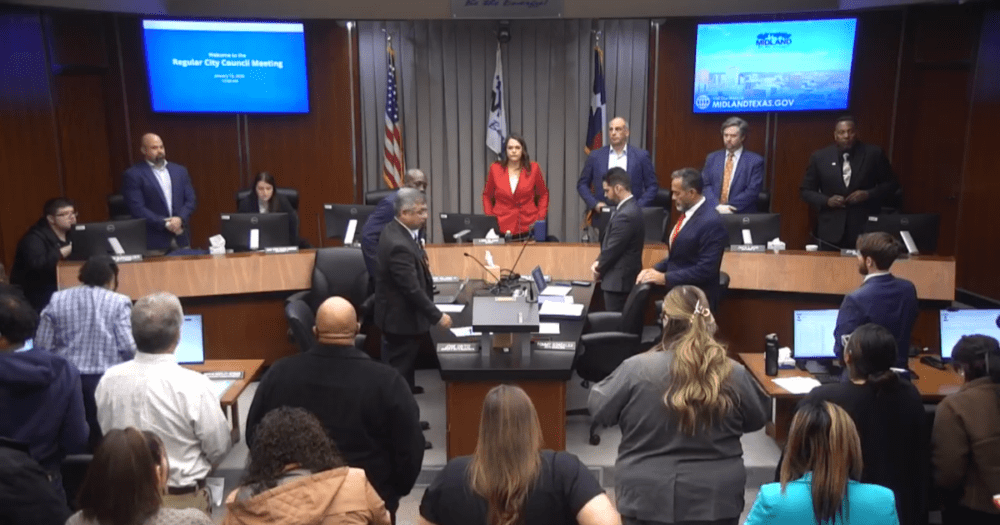
What happened: The Midland City Council approved an increase to the city’s existing drainage utility fee on Tuesday, Jan. 13, a change that will raise most residential bills by about $2 to $5 per month, while shifting the largest share of new costs to commercial property owners. Some large commercial properties will see monthly increases of more than $300.
Despite repeated acknowledgments from council members and city officials that the situation was frustrating and constrained by prior agreements, several speakers made personal attacks on council members and city staff, arguing that officials’ personal wealth disqualified them from weighing in on a fee increase they said would not “affect” them.
Why it matters: Some speakers framed the issue as a moral conflict between everyday residents and wealthy officials. That framing closely mirrors the rhetoric of New York Assemblymember Zohran Mamdani and his supporters, who openly argue that “millionaires” and business owners should bear public costs.
The big picture: The fee increase stems from infrastructure obligations tied to two new Midland ISD high schools. In August, council approved $18.2 million over three years for road, drainage, water, and sewer infrastructure surrounding the campuses. Midland ISD will contribute $9.4 million, leaving the city responsible for roughly $13 million after accounting for permit fees and water fund offsets.
That figure matters because, in December, MISD officials told trustees the district’s 2023 bond projects are tracking about $13 million under budget, months after the city committed to covering that same amount through its own funding mechanisms. City officials said the roads and drainage were already part of Midland’s long-range plan, but the schools accelerated the timeline.
Go deeper: In Tuesday’s meeting, Midland City Manager Tommy Gonzales said city code required MISD to build about $4 million in infrastructure, but through negotiations the city secured a $9.4 million contribution from the district. Councilman John Burkholder added that the city is now under a contractual obligation with MISD and could face legal consequences if it attempted to withdraw from the agreement.
Under Midland’s development code, a developer’s baseline obligation is to dedicate and build public infrastructure within and along the boundaries of the site. The city typically leads broader off-site connections unless it negotiates separate agreements, meaning that without city involvement, roads could dead-end at school property lines instead of connecting to the surrounding street network.
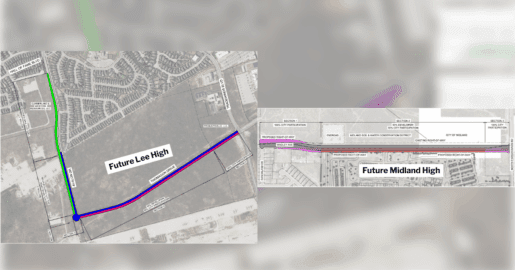
Reality check: Because Midland does not have a traditional underground storm sewer system, roads function as the city’s primary drainage network, carrying stormwater into natural draws. As a result, road construction and drainage infrastructure are functionally inseparable.
“The street system is a part of our drainage,” Gonzales said. “The streets are part of that system, so that’s why we’re recommending this [drainage fee increase].”
Yes, but: While several speakers raised legitimate policy questions about audits, proportionality, and alternative funding, others focused on council members and city staff’s personal wealth.
Comments included, “You’re a multimillionaire… This does not affect you,” “Probably doesn’t affect the people that live in the multimillion-dollar houses that much,” and “When you make that kind of money, of course millions of dollars sound small. Of course spending rolls off the tongue easy.”
By the numbers: The city calculates the drainage fee by multiplying a property’s equivalent residential unit (ERU) classification by the new $4.90 rate. ERUs are based on impervious area, such as rooftops and parking lots. Here’s what the fee increase actually looks like:
Residential properties (monthly):
- Small homes (≤ 1,399 sq. ft. footprint): from $1.20 to $2.94
- Mid-size homes (1,400–2,424 sq. ft.): from $2.00 to $4.90
- Large homes (> 2,424 sq. ft.): from $3.40 to $8.33
Commercial properties (monthly):
- Small commercial sites: from $5.80 to $14.21
- Mid-size commercial properties: from $30.00 to $73.50
- Large commercial properties: from $220.00 to $539.00
What’s next: The new drainage rate takes effect Feb. 1. Council also approved an amendment directing staff to revisit and audit the drainage utility within 12 to 18 months, including a review of revenue, expenditures, and whether adjustments make sense.