
Friez pushes healthcare reforms as MISD approves pay plan
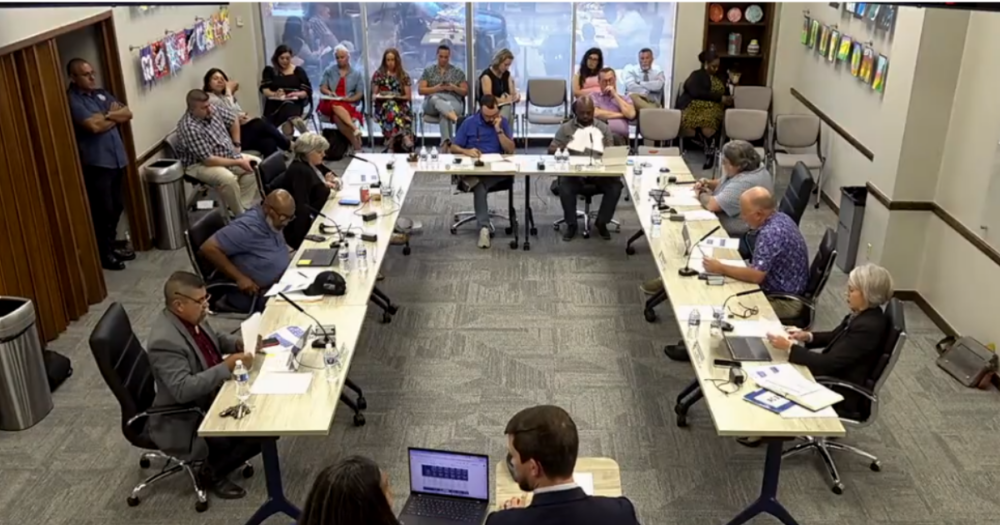
What happened: The Midland ISD Board of Trustees met Wednesday, June 10, for a special meeting and approved a revised compensation plan for the upcoming school year on a 5-2 vote, after Trustee Matt Friez unsuccessfully attempted to redirect district spending toward employee healthcare cost savings and called for reforms to central administrative staff.
The adopted compensation plan provides a 1% raise for teachers, campus leadership, administrative professionals, and several higher-grade support positions. Lower-grade support staff will receive a 2% raise.
Trustees also approved a one-time $1,250 retention incentive for full-time employees who remain with the district through Jan. 31, 2027. The compensation package increases and the retention incentive together carry a cost of roughly $4.8 million.
Why it matters: The vote comes weeks after district officials reported that they projected MISD’s self-funded employee health insurance plan would spend about $1.7 million more than budgeted, largely due to rising healthcare claims costs. Employees with family coverage will see premium increases next year.
Friez argued that healthcare costs are a greater concern for many employees than modest pay increases and proposed a package of amendments to reduce insurance costs and redirect spending toward employee benefits.
The big picture: Friez introduced eight amendments that generally focused on reducing employee healthcare costs, slowing the growth of central administration spending, and increasing transparency and accountability within the district administration.
Specifically, Friez proposed using savings from a central administration hiring freeze and the elimination of central administration raises to help offset employee health insurance costs for one year.
“The learning takes place in the classroom,” Friez said. “I think we [have] to focus all of our resources, as much as possible, into the classroom.”
Superintendent Stephanie Howard told trustees that MISD eliminated more than 140 district-level positions heading into the coming school year.
The other side: Several trustees said they had not received the amendments until shortly before the meeting and were uncomfortable voting on a package of proposals they had little time to review.
“I’m voting against every one of these. I’ve had three minutes to look over them,” Board President Josh Guinn said. “Obviously, it’s important, or you wouldn’t spend so much time on it. Just for me, I literally haven’t had time.”
Trustee Brandon Hodges suggested delaying consideration until the board’s next regular meeting so trustees could evaluate the proposals more thoroughly.
“It seems like the votes may not be there, but there might be some good information in here that people agree with if they have the time to look it over,” Hodges said.
Go deeper: After a lengthy discussion, Guinn ruled that the amendments were not germane to the retention incentive item under consideration. Trustees then unanimously approved the $1,250 retention incentive as originally presented.
Friez later reintroduced the amendments during the discussion of the compensation plan, but none ultimately advanced. The board voted some down, some failed to receive a second, and others never reached the floor.
After Trustee Sara Burleson moved to approve the compensation plan as presented, Hodges said he supports competitive and fair compensation for dedicated staff. Still, he would oppose an across-the-board pay raise because his goal is to keep MISD financially sound without asking the community for additional tax dollars. Trustees ultimately approved the compensation plan on a 5-2 vote, with Friez and Hodges opposed.
What they’re saying: After the meeting, Friez said he was disappointed that the board did not engage more with the proposals and that he could have refined some of the proposals. He argued that trustees have a responsibility to offer alternatives when they disagree with district policy, and that healthcare costs are one of the biggest concerns he hears from employees.