
Joe Watters with a hands-on approach to county leadership
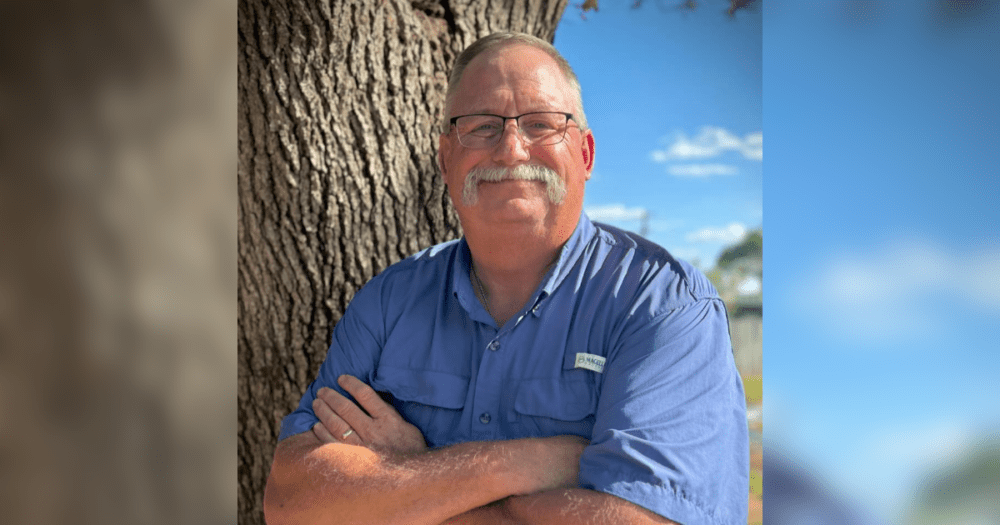
Editor’s note: Joe Watters is running for Midland County Commissioner, Precinct 2, one of five representatives who sit on the Commissioners Court, the county’s governing body, which approves the county budget, sets tax rates, and represents their precinct on local policy matters. Watters faces one challenger, Brian Carney, with whom The Permian Press has sent interview requests, but has not yet received a response.
Candidate interviews are published in the order they are conducted. We will update this article with links to the opponent interview if it becomes available. We conduct candidate interviews using a standard set of questions, with follow-up questions adapted to each candidate’s responses. Voters must register by Monday, Feb. 2. Early voting begins Tuesday, Feb. 17. Primary Election Day is Tuesday, March 3.
Joe Watters says his decision to run for Midland County commissioner is rooted in how county government experiences, or fails to experience, the problems it governs. Watters lives in unincorporated Greenwood and consistently described his campaign as a response to what he views as a disconnect between county decision-making and rural conditions.
“I have always thought that if you’re going to run for county government, I feel like you should live it,” Watters said. “They don’t live the issues that I live every day, hoping that I have water.”
Midland’s top stories. One quick email. Free, every Friday.Get Midland Wrapped, our free weekly email for busy Midland residents. Each Friday, we break down the week’s most important local stories — what happened, why it matters, and what to watch next — so you can stay informed without the noise.
He said commissioners living inside city limits have a gap between policy decisions they make and the daily reality for county residents.
Roads, dumping, and county basics
Watters repeatedly returned to what he believes are problems in the county, particularly road maintenance, dumping enforcement, and coordination between the city and county. Watters said he believes these issues are not being treated as priorities.
“There’s a lot of updating out here in the county that needs to be done to make things safer, road-wise,” Watters said. “I drive these roads every day.”
He described trash dumped on properties with residents, and the county’s environmental enforcement unit, left to deal with the clutter.
“I’m sick of people dumping trash out here. It’s ridiculous,” he said. “There’s a major dumping problem.”
An action-first view of the commissioner’s role
Watters also emphasized what he described as a hands-on approach to governing, repeatedly pointing to situations in which he said he had already stepped in to address residents’ concerns.
“I’ve already done stuff our commissioner should be doing,” Watters said. “Because I’m a guy that cares.”
He described contacting the road and bridge department about long-standing potholes, taking photos and relaying locations, and seeing repairs completed soon after. He said residents often call him directly about dumping, road damage, or other concerns, and that he responds because he views service as a responsibility.
“I’ve been getting things done for people out here. People have a pothole that’s been there forever and can’t get nobody to fix it,” he said. “I’ve visited with road and bridge, and I call them up and say, can y’ all come look at this? I go by there, a couple days later, it’s fixed.”
Watters described this approach as based on his background in law enforcement and sales, both of which, he said, required constant movement throughout the county and direct interaction with residents. He said he envisions the commissioner’s role as field-oriented.
Water in Greenwood, now and later
Watters described water scarcity in Greenwood as a present and escalating problem affecting property values, public health, and quality of life. Currently, residents depend on private providers and wells, or the possibility of a Midland County Utility District (MCUD) bond. Greenwood is located within Precinct 2.
Watters said Greenwood’s water challenges illustrate what he views as a failure to sequence infrastructure planning with immediate need.
“I’m for looking at this bond,” he said. “But I also want to make sure people that are struggling right now with water, we need to get them water.”
He emphasized that he supports long-term solutions, including MCUD’s water treatment facility, but is skeptical of how access to water is being pursued.
“I’m 100% for MCUD and the water treatment facility they’re building,” Watters said. “I’m just against how they’re wanting to get the water.”
Watters said he believed multiple discussions on long-term solutions were underway, but acknowledged they would take time and money to implement. In the meantime, Watters noted the need to address immediate water needs for affected residents while longer-term infrastructure plans are developed.
Paying for priorities and spending tradeoffs
Watters said he believes Midland County is currently in a relatively strong position compared to other counties across the state, but questioned whether existing revenue is being directed toward core infrastructure needs.
When asked about the hypothetical possibility of the county attempting to increase the sales tax again following a failed 2021 county-wide vote to do so, Watters was open to county sales tax mechanisms if revenues are clearly directed toward infrastructure, especially roads and water.
Watters also discussed a flexible tax approach tied to economic cycles, saying he supports adjusting revenue mechanisms when times are good while avoiding permanent burdens during downturns. However, he acknowledged that his proposed approach might not be possible.
“When things are good, go up a percent or half a percentage point,” Watters said. “When things are bad, let’s go down a little bit.”
Law enforcement, safety, and cost justification
Watters described himself as strongly supportive of law enforcement, while also saying some past Sheriff’s Office requests were appropriately denied.
“I’m 100% pro law enforcement,” Watters said. “I want them to have everything and anything they need that will protect any citizen in Midland County.”
“I see what some of the stuff they asked for, which fortunately the current commissioners have voted it down,” he said. “That doesn’t need to be spent. I honestly feel like they’re probably at a good spot on their budgets right now.”
He argued that infrastructure affects emergency response and that deteriorating roads slow down fire and EMS vehicles during emergencies.
Focused on results
He said his focus would remain on representing the precinct and making decisions he believes reflect the county’s needs.
“I want to take care of the people of this precinct, especially the people outside the city limits,” Watters said. “I want to be on there making the right decisions for the people in the county.”