
New MISD policy blocks Legacy-to-Lee High renaming
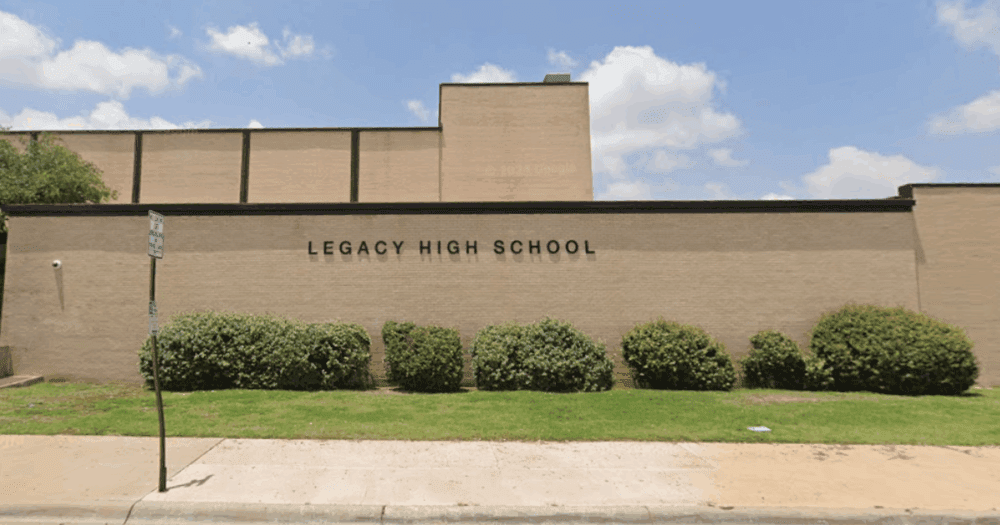
What happened: The Midland ISD Board of Trustees met on July 29.
Why it matters: The board reviewed facility naming policy revisions following a recent push by two board members to rename Legacy High School back to Lee High. Trustees also voted to opt out of allowing homeschoolers to participate in UIL activities.
Key points:
- School facility names: Trustees updated the district’s facility naming policy. Existing policy allowed naming after individuals who served MISD or Midland, made a significant societal or educational contribution, or were major donors. Also allowed are names tied to geographical areas, like Lone Star Trails.
The proposed change added a provision allowing facilities to be named otherwise pending board approval after a “community input process,” such as a survey, poll, proposition, or ballot item. Trustee Sara Burleson proposed an amendment requiring that namesakes not have advocated or fought in a war against the United States. The revised policy passed 5-0. Trustees Matt Friez and Michael Booker were absent.
Midland’s top stories. One quick email. Free, every Friday.
Get Midland Wrapped, our free weekly email for busy Midland residents. Each Friday, we break down the week’s most important local stories — what happened, why it matters, and what to watch next — so you can stay informed without the noise.
- Bond 2023 update: Lone Star Trails Elementary remains on track to open in August 2025, with terrazzo flooring, playgrounds, and parking nearly complete. Design work for the new high schools is nearly complete, with pilot furniture being tested in existing campuses.
- Accountability projections: The district expects the Texas Education Agency (TEA) to release official ratings on August 15. The district projects A or B-rated campuses will double, from seven in 2023 to 14 this year. At the same time, the district expects D or F-rated campuses to decline by 37%. Bunche and De Zavala have received failing ratings for three consecutive years. If campuses fail five years in a row, they face takeover by the TEA or public-charter management.
- District Improvement Plan (DIP): DIPs are a state-required roadmap for long-term improvement. Built on five years of data, the plan includes needs assessments by student groups and identifies academic gaps. Each problem area is matched with a SMART goal and strategies such as professional development, curriculum alignment, and improved communication.
- Student Code of Conduct: The approved 2025–26 updates align the code with recent state laws. Each campus must now designate a behavior coordinator, typically the principal, to oversee student discipline. Teachers now have expanded authority to remove disruptive students, and in-school suspension no longer has time limits. A new virtual expulsion program is also being developed. The code also says cellphones must remain off and stored away during the school day, except for documented medical or educational needs.
- Homeschool UIL participation: Trustees voted to opt out of allowing homeschoolers to participate in UIL activities under Senate Bill 401. While state law now defaults to inclusion, MISD staff cited administrative burdens as a reason to opt out. Allowing participation could have brought additional state funding. Homeschoolers may still participate in UIL through other districts that allow it.