
MDC advances Midland-to-El Paso aerospace corridor plan
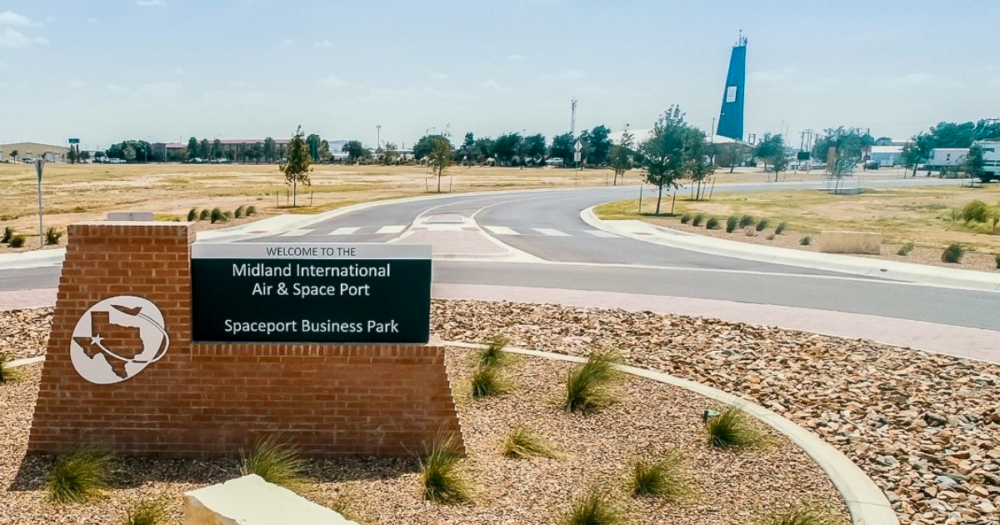
What happened: The Midland Development Corporation (MDC) board met Monday, Sept. 14, to approve a state-funded $655,000 master plan for a West Texas aerospace corridor stretching from Midland to El Paso and learned that MDC ended the fiscal year with 24% more sales tax revenue than budgeted.
The board also renewed annual funding for MOTRAN, a regional transportation lobbying organization, approved its annual $200,000 payment for UT Permian Basin’s incubator and makerspace while questioning how the investment benefits Midland specifically, and received an update on five Midland areas being considered for a federal tax incentive designed to encourage private investment.
Key points:
- $655K WTX aerospace study: The board approved a $655,000 contract for a consulting firm to develop a master plan for a West Texas aerospace corridor stretching from Midland to El Paso, with the study scheduled for completion before the end of July 2027. The study will map out what West Texas already has to support the aerospace industry, what it is missing, and where future public and private investment could go.
The study will inventory airports, industrial sites, utilities, freight routes, workforce resources, and aerospace suppliers, and identify potential projects and ways to pay for them. The process will also involve the Texas Space Commission, aerospace companies including Blue Origin and AST SpaceMobile, and regional agencies.
The study will not cost MDC locally. MDC will initially pay the consultant but will be fully reimbursed through a Space Exploration and Aeronautics Research Fund grant administered by the Texas Space Commission and awarded to El Paso County. MDC approved the aerospace corridor partnership with El Paso County in May. The new contract begins that planning work.
- MOTRAN contract renewed: The board renewed its $142,500 annual payment to the Midland-Odessa Transportation Alliance (MOTRAN), a regional transportation lobbying organization focused on securing infrastructure investment for the Permian Basin. Executive Director Sara Harris said MDC’s funding has remained at the same level for the past seven years.
MOTRAN Executive Director James Beauchamp said the Permian Basin generates approximately 73% of taxes the state collects from oil and gas production. He said MOTRAN uses that figure, along with research showing the region’s roads are more expensive to build, and its temporary workforce is not fully reflected in traditional population counts, to make the case in Austin for directing more state infrastructure money to the Permian.
Beauchamp said MOTRAN is also studying local air service. He said Midland passengers pay approximately $450 more per ticket than passengers at surrounding airports, and the organization is evaluating whether smaller regional carriers could expand local service.
- MDC questions UTPB investment: The board unanimously approved its $200,000 annual payment to UT Permian Basin for staffing the Seed Building’s business incubator and makerspace, but questioned whether MDC can measure how much the investment directly benefits Midland. The payment is part of a 2018 agreement that runs through 2037.
The incubator currently houses six tenants paying market rent, while the makerspace and other programs provide equipment, workspace, and support for students, entrepreneurs, and businesses.
Board members asked whether businesses using the incubator must create local jobs and requested data showing how many graduates and program participants ultimately work in Midland. UTPB said it currently has no minimum job-creation requirements and did not have Midland-specific retention data available. Harris said she would explore options to address the board’s concerns with UTPB staff.
- Sales tax 24% above budget: MDC ended the fiscal year with $18.6 million in sales tax revenue, compared with the $15 million it expected to collect, Harris told the board. That put collections approximately $3.6 million, or 24%, above budget and 8% above the previous year. MDC is funded by a quarter-cent sales tax collected on purchases inside Midland city limits.
- Five Midland Opportunity Zones proposed: Five Midland areas could become eligible for a federal tax incentive intended to attract private investment, Harris said. The five areas are among 606 Texas tracts Gov. Greg Abbott submitted to the U.S. Treasury Department Sept. 4 for designation under the new Opportunity Zones program. If ultimately designated, the new zones take effect Jan. 1, 2027.
MDC nominated nine of Midland’s 10 eligible tracts in July, and the state included five in its submission. Investors who put money into qualifying projects in those areas can receive federal capital gains tax benefits, creating a financial incentive to invest there. Harris said developers have already contacted MDC about potential multifamily housing projects if Midland’s tracts receive designation.
- Highway economics report: The board approved $10,000 for the Permian Strategic Partnership to update a study measuring the economic impact of the Permian Basin’s highway needs. The Odessa Development Corporation committed another $10,000. The report gives regional leaders data they can use when asking the state for additional road funding for Midland and the broader Permian Basin.