
Pfluger, Blong call for local control of city-owned minerals
What happened: U.S. Congressman August Pfluger and Mayor Lori Blong joined city officials this week to call for local control of city-owned mineral revenues beneath Midland’s airports. This change would allow the city to collect hundreds of millions of dollars in oil-and-gas royalties over the next two decades.
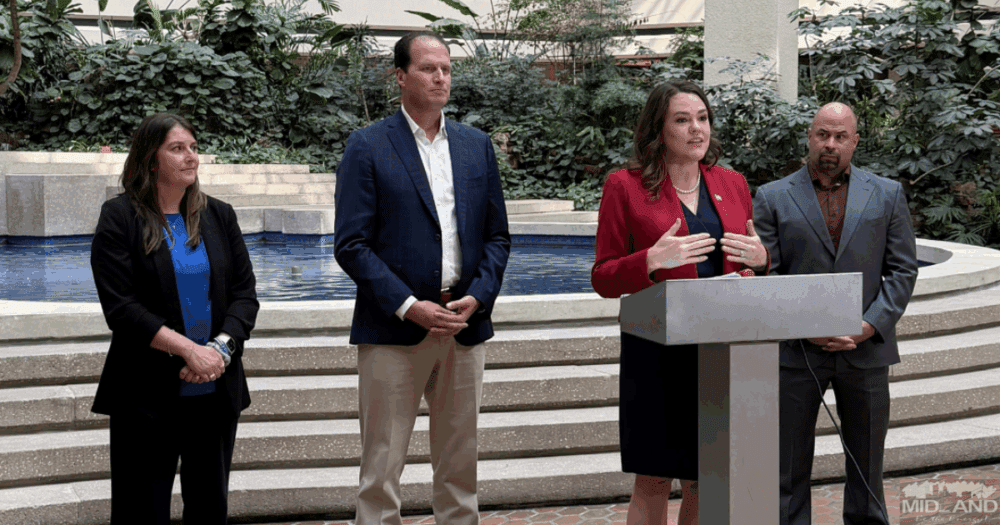
At a press event inside ClayDesta, Pfluger stood alongside Councilman John Burkholder and Councilwoman Amy Burkes, emphasizing that the City of Midland, which has owned both the land and the mineral estate since the 1940s, should be able to direct royalties toward community-wide needs, not just airport operations.
Why it matters: Under current Federal Aviation Administration (FAA) rules, all mineral royalties from airport-designated property must remain in the airport system, even if the city itself owns the minerals. City leaders say that policy traps funds in restricted accounts and prevents Midland from addressing critical infrastructure needs such as roads, drainage, water systems, and public safety.
“The city owns the property of the airport,” Pfluger said, “and they deserve to reap the benefits of these mineral royalties. Let me be clear, these royalties are not aviation revenues, but they’re generated from mineral production below our very feet. This mineral income will help the city fund critical upgrades that benefit people in the Permian Basin.”
Go deeper: The restriction traces back to Section 813 of the FAA Modernization and Reform Act of 2012, which limits how the city can use airport-related mineral revenues. The rule should give small general aviation airports limited flexibility to use surplus funds for non-aviation projects, but in practice, it has been difficult to navigate.
Midland officials note that Beaumont secured an exemption, but only by proving its airport could self-fund five years of capital improvements. This condition also disqualified it from FAA and TxDOT grants during that period. Midland Airpark transferred under the Surplus Property Act after World War II, so it remains subject to permanent FAA restrictions unless the agency issues a release or grants a Section 813 exemption.
What they’re saying: Mayor Lori Blong said the city’s airport system is financially strong and that the greater need lies in community infrastructure. “These are local dollars generated right here in Midland because of city-owned minerals,” Blong said. “Those dollars belong to the taxpayer, and they should be used to reduce the burden on taxpayers, to strengthen our infrastructure and support the families who live and work here.”
District 4 Councilwoman Amy Burkes echoed the call for flexibility. “The mineral rights that the City of Midland owns belong to the taxpayers of Midland,” Burkes said. “The City should have the ability to direct how those royalty revenues are used to best serve our community, whether that’s infrastructure, public safety, or quality-of-life investments.” She added that this restriction is keeping back potentially hundreds of millions of dollars.
The big picture: City officials emphasized that Midland’s Airport Department is in its strongest financial position in years, driven by increased parking and boarding revenues. So, leaders argue that the city could instead the mineral income to citywide improvements, while keeping local tax rates low.