
Mental health, diabetes top MMH’s ACA-required report
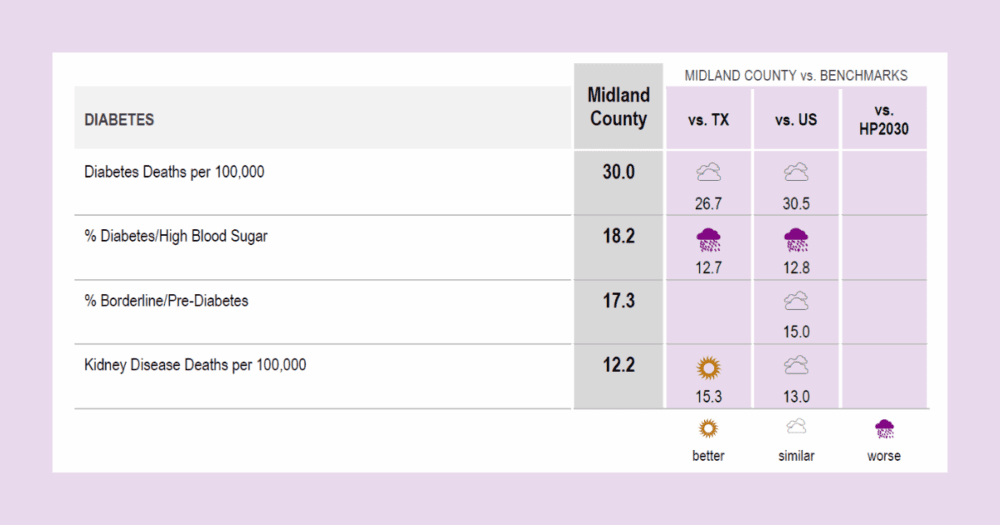
What happened: Every three years, Midland Memorial Hospital completes a Community Health Needs Assessment (CHNA). The report identifies the biggest health challenges in Midland County. The plan will guide Midland Health’s community programs for the next three years.
Why it matters: The Affordable Care Act (ACA) requires nonprofit hospitals to conduct these assessments. It combines surveys, health data, and input from more than 70 local doctors, public health officials, and community leaders. The results show how Midland compares with Texas and U.S. averages. They also highlight where the biggest health gaps exist.
Key points: The 2025 assessment highlighted nine main priorities:
- Mental health: Midland has 104 mental health providers per 100,000 residents. Texas averages 163, and the U.S. averages 263. Suicide deaths are also higher: 15.6 per 100,000 in Midland, compared with 13.9 in Texas and 13.5 nationally.
-
Diabetes: About 18% of adults in Midland report diabetes or high blood sugar, compared with 12% in Texas and 11% nationally. Diabetes deaths are also elevated, at 29.3 per 100,000 locally, compared to 22.3 in Texas and 21.6 nationwide.
- Substance use: Excessive drinking affects 22% of adults in Midland. That compares to 21% in Texas and 19% nationally. Tobacco use is also higher: 18% of adults in Midland smoke, compared with 13% in Texas and 14% nationally. Nearly half of survey respondents said substance use has affected them or their family.
-
Heart disease and stroke: Heart disease kills 158 people per 100,000 in Midland County. The Texas rate is 144, and the national rate is 133. Stroke deaths here are 36.6 per 100,000, higher than Texas (34.5) and the U.S. (33.8).
- Access to care: About 13% of Midland residents are uninsured, better than the Texas average of 17% but worse than the U.S. average of 9%. Cost barriers remain: 19% of surveyed residents said they couldn’t see a doctor in the past year due to cost, compared to 16% nationally.
-
Infant health and family planning: More than one in four Midland mothers (28%) do not get prenatal care in the first trimester, compared to 21% in Texas and 17% nationwide. Midland’s teen birth rate is also much higher: 38 per 1,000 females ages 15–19, compared to 24 statewide and 17 nationally.
-
Sexual health: Midland reports 617 chlamydia cases per 100,000 residents, above the Texas rate of 576 and the national rate of 495.
-
Disabling conditions: Deaths from Alzheimer’s disease occur at a rate of 46.8 per 100,000 in Midland, compared with 25.6 in Texas and 31.1 across the U.S.
-
Injury and violence: Motor vehicle crash deaths in Midland occur at a rate of 22.2 per 100,000. Texas averages 15.4, and the U.S. average is 11.3.
Go deeper: The report also looked at social and economic factors that affect health, such as food insecurity, financial stability, and housing. One in three residents reports food insecurity. More than one in five say they could not cover a $400 emergency. The report noted affordable housing shortages as a barrier to stability.
What’s next: The plan will target the areas with the biggest impact on patient care. Many of the issues noted in the report extend beyond the hospital, so Midland Health says it will work with other community partners to address them.