
PBPA annual meeting tackles energy wins, challenges
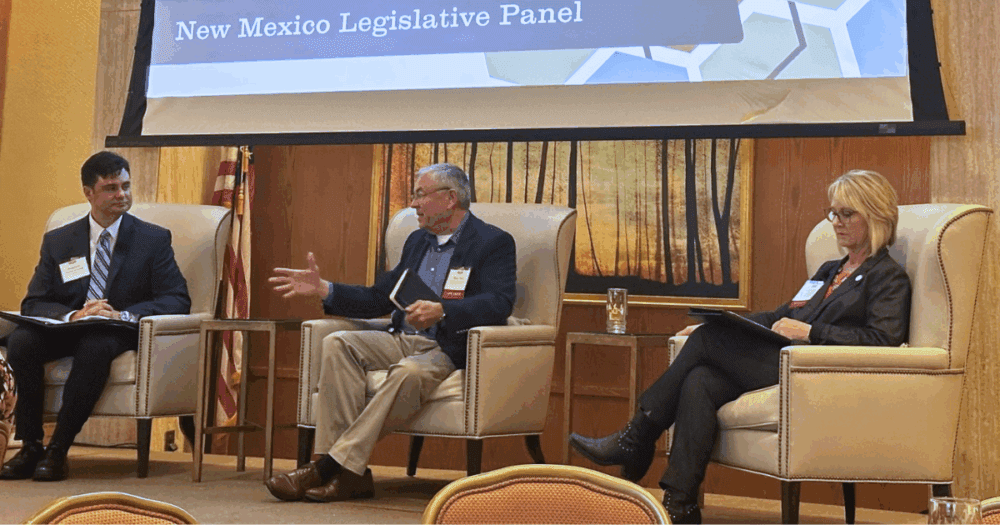
What happened: The Permian Basin Petroleum Association’s (PBPA) annual meeting brought together industry and government leaders to discuss energy policy, legislative outcomes, infrastructure, and long-term trends. PBPA is the leading advocate for the Permian Basin petroleum industry.
Why it matters: The discussions underscored the challenges shaping the future of oil and gas in the Permian Basin. PBPA has been highly impactful on several fronts, including the recent court win freeing the Prairie Chicken from overregulation by the U.S. Fish and Wildlife Service.
Key points:
- Federal policy: Parker Kasmer, Vice President of Government Affairs for the American Exploration and Production Council (AXPC), gave a policy update. He described how the Trump administration’s aggressive pro-energy agenda reshaped federal priorities. Appointments such as Doug Burgum, Chris Wright, and Lee Zeldin sped up regulatory corrections to balance industry needs with environmental and public interests.
Kasmer also noted tax reforms in the “Big Beautiful Bill.” The Waste Emission Charge (methane tax) is 0%, and the Alternative Minimum Tax excluded intangible drilling costs for 10 years. These changes should unlock decades of new investment in oil and gas. Yet, trade tensions and tariffs still create uncertainty in the industry, especially with steel and shipping.
- Texas Legislature: Speaker Tom Craddick highlighted recent legislative wins. Lawmakers approved $123 million for infrastructure that supports new behavioral health hospitals. He also pointed to the potential for MD Anderson and Texas Children’s Hospital to expand into West Texas.
Senator Kevin Sparks discussed funding for wildfire mitigation and the creation of an energy theft task force that includes the FBI, sheriff’s offices, and PBPA input. He and Craddick also praised the $100 million allocated to plug inactive oil wells.
- Diamondback CEO: Kaes Van’t Hof, CEO of Diamondback, described the company’s growth. He said Diamondback evolved from a struggling private equity-backed operator into a leading public company by focusing on disciplined execution and low costs. Van’t Hof said their journey mirrors the broader Permian Basin story over the past two decades.
Van’t Hof called the 2023 merger with Endeavor the capstone moment. It created one of the largest operators in the basin and ensured that a major public company stayed headquartered in Midland.
- Electrifying the Permian: Attorneys Meghan Griffiths and Lori Cobos outlined the $15 billion Electric Reliability Council of Texas (ERCOT) transmission expansion under the Permian Basin Reliability Plan. Texas House Bill 5066 (2023) enabled this historic build-out by allowing projects to move forward based on forecasted load, not just signed contracts.
The plan includes the first 765 kilovolt transmission lines in Texas, stretching from West Texas to Houston. It also funds many smaller local builds within the basin. In parallel, the Southwest Power Pool approved a $7.7 billion package, which includes a 765 kilovolt line from eastern Oklahoma into southeastern New Mexico.
- New Mexico Legislature: State lawmakers Gail Armstrong and Bill Shearer shared concerns about New Mexico’s policy climate. Armstrong warned that the state budget has grown from $4 billion to nearly $11 billion in just a decade, with oil and gas funding about half.
Shearer noted that although lawmakers imposed new taxes on the industry last session, Republicans blocked more than $500 million in additional hikes. Both leaders expect the Oct. 1 special session to focus heavily on social spending, which could put oil and gas back in the crosshairs.
- Executive insights: John Sellers, co-CEO and co-founder of Double Eagle, shared how his company has thrived. Since 2008, Double Eagles has built and sold multiple asset portfolios through private capital. Today, the company is pursuing deep Wolfcamp plays while working to cut well costs to under $10 million.
Sellers emphasized the company’s lean, disciplined culture. He also pointed to challenges such as volatile service costs, limited gas takeaway capacity, and growing power shortages in the Midland Basin.