
Right-of-way confusion hinges on how process actually works
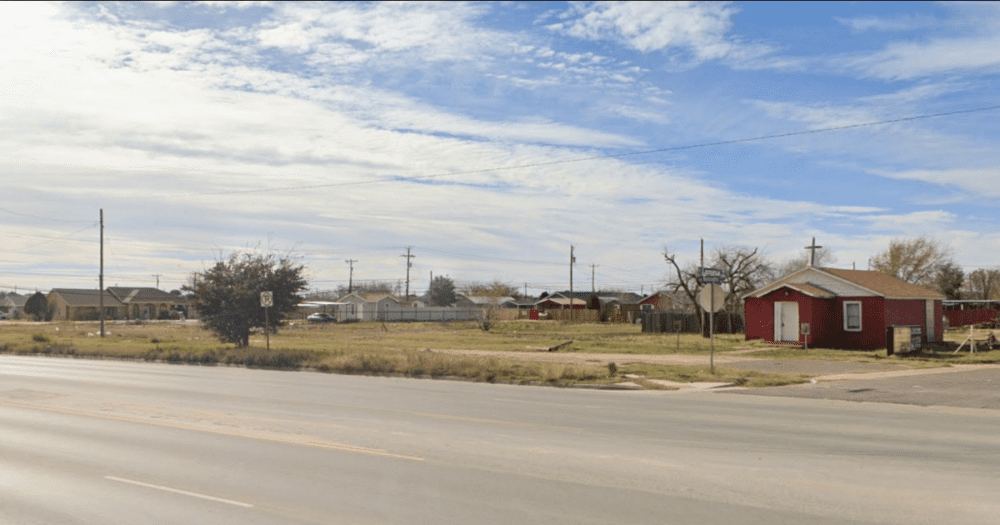
What happened: The Midland City Council voted 5–1 on Tuesday, March 24, to vacate about half an acre of unused right-of-way along South Atlanta Street tied to a larger church development project. The action does not sell the land or transfer it to a single party. Instead, the vacated right-of-way divides among the original property owners whose land borders it.
In this case, that means portions of the land will go to the church property involved, the neighboring property to the south, where a resident is leasing to own, and a portion to the city itself, which owns an adjacent triangular parcel.
Why it matters: The vote drew questions about transparency, conflicts of interest, and whether the city was giving away land. But those concerns were largely based on a misunderstanding of how right-of-way law works and what the city actually has authority to decide.
The big picture: The city originally acquired the strip of land for a planned street that they never built. Because the city has never used it for that purpose, the city can abandon it through a standard legal process. That process does not involve offering the land for sale or allowing outside buyers to compete for it. Once vacated, the land automatically reverts to the neighboring property owners based on where their land touches the right-of-way.
The applicant requesting the vacation must still independently assemble the full site, including acquiring any remaining land from neighboring owners. As part of that process, the city required the applicant to address the right-of-way first, so it could evaluate the area’s utilities. The applicant would pay for any relocation of those utilities.
-
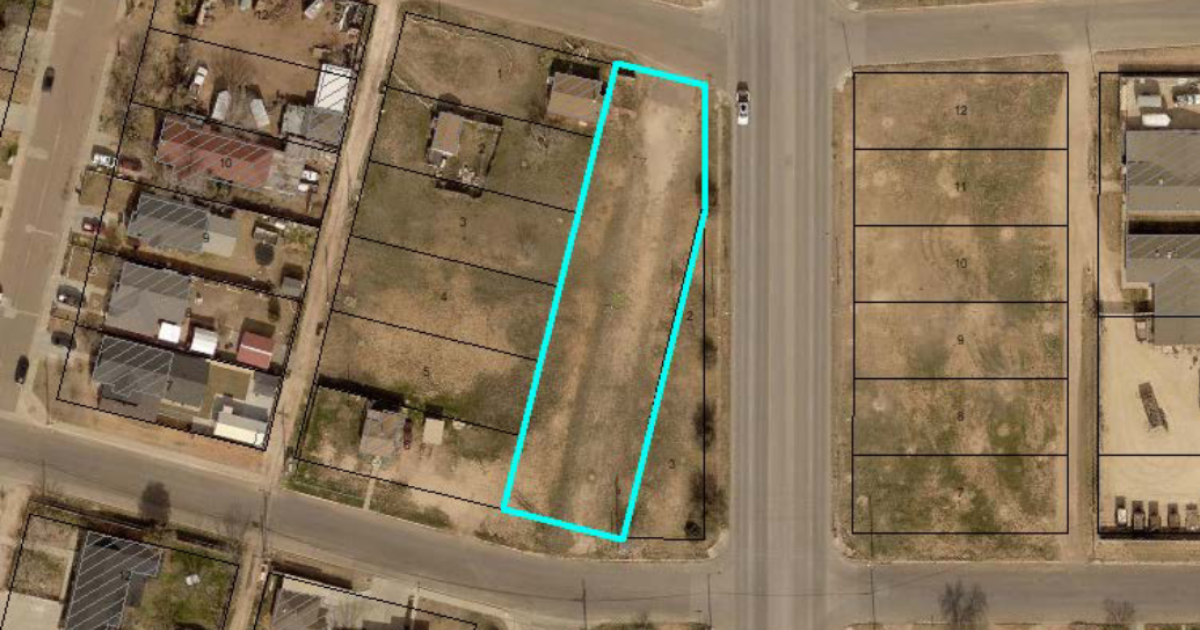
- Right-of-way highlighted in blue
-
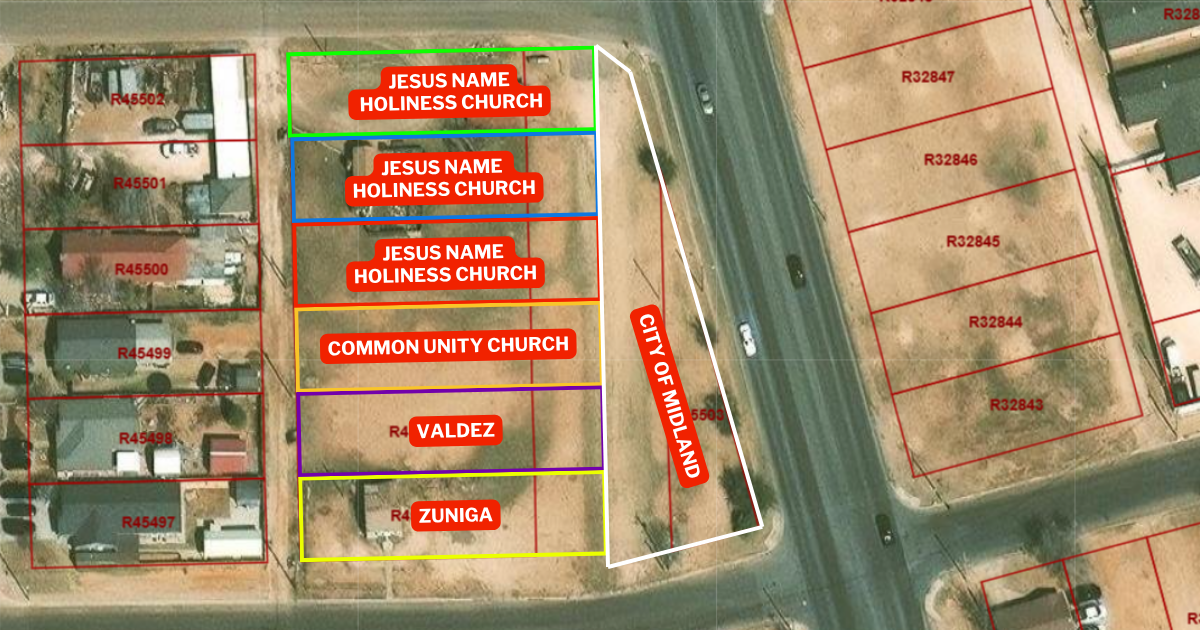
- Rendering of how the right-of-way may divide between adjacent property owners
Catch up quick: Some public comments questioned whether council members should have recused themselves due to personal relationships with the applicant, Common Unity Church. But that is not how conflicts of interest work. A legal conflict of interest requires a substantial financial interest by the elected official, not familiarity with an individual involved. The city attorney confirmed during the meeting that no council member had a legal conflict.
Co-pastor of the church, Elvie Brown, sits on the Midland Development Corporation (MDC) board, but Councilwoman Robin Poole said conversations about the project began in late 2022 or early 2023, before Brown joined the board. Mayor Lori Blong also clarified that the church itself owns the land, not by Brown personally.
Go deeper: The triangular parcel next to the right-of-way remains owned by the city and was not part of the vote. Any decision to sell that property would require separate council action. The city attorney said the council has discretion to charge full market value, reduce the price, or waive fees depending on the circumstances.
What they’re saying: Some public comments also focused on whether the city should waive $46,450.00 in fees tied to the right-of-way vacation. The item previously passed unanimously, but Councilwoman Amy Burkes changed her vote on second reading.
“City staff recommended charging the fees,” Burkes told The Permian Press. “I didn’t believe we should waive it entirely.”
“The reason I wanted to waive the fees… we’ve done it in the past,” Councilman John Norman said during the meeting, referencing a previous right-of-way vacation for St. Ann’s Catholic Church.
The bottom line: The central misunderstanding was the assumption that the city had discretion to sell or distribute the right-of-way. In reality, that discretion applies only to city-owned land, not to unused or abandoned easements that automatically revert to neighboring property owners.