
Council adopts sex-offender buffer for most of city limits
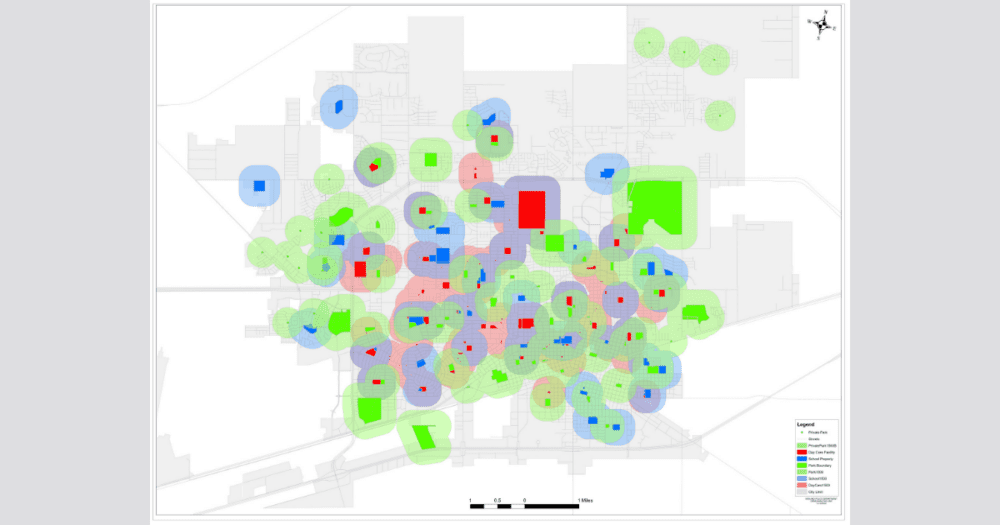
What happened: The Midland City Council unanimously approved a new ordinance on Tuesday, Dec. 16, restricting where registered sex offenders may live and enter within city limits. The ordinance establishes a 1,500-foot buffer around areas where children commonly gather. Police leadership said the ordinance applies to 253 registered sex offenders, less than .2% of Midland’s population. The restrictions take effect Feb. 1, 2026.
Why it matters: Police leadership framed the ordinance as a child-safety measure. Still, the policy does not address first-time offenders, who research consistently shows account for most sexual abuse cases and are often known to the victim. According to data compiled by the U.S. Department of Justice and cited by RAINN, the national sexual assault hotline, 93% of juvenile victims knew their abuser, meaning a small share of cases involve strangers.
Federal research has also questioned the effectiveness of residency and proximity buffers. The U.S. Department of Justice’s SMART Office concluded there is “no empirical support” that such buffers reduce reoffending. A peer-reviewed study in Criminal Justice Policy Review similarly found no significant differences in recidivism based on proximity to restricted areas.
The big picture: As initially written, the ordinance allowed sex offenders to request short-term exemptions, for example, to attend a graduation or care for a family member, subject to approval by the Midland police chief. During the discussion, Police Chief Greg Snow acknowledged the administrative burden of reviewing those requests.
“I’m not going to be looking at every single exception,” Snow said. “I’m not going to have time to review all.”
In response, Councilwoman Amy Burkes proposed an amendment creating an appeals process. Under the revised ordinance, exemption decisions by the police chief can be appealed to a panel consisting of the city manager and two council members.
During public comment, one speaker urged the council to approve the ordinance unanimously and threatened to put members “on blast everywhere” if they did not. Shortly after, the council voted 6–0 to approve the ordinance as amended.
The bottom line: The ordinance reflects a broad desire to protect children, but it also creates new governmental oversight without clear evidence that it will reduce abuse.