
County grapples with spending priorities
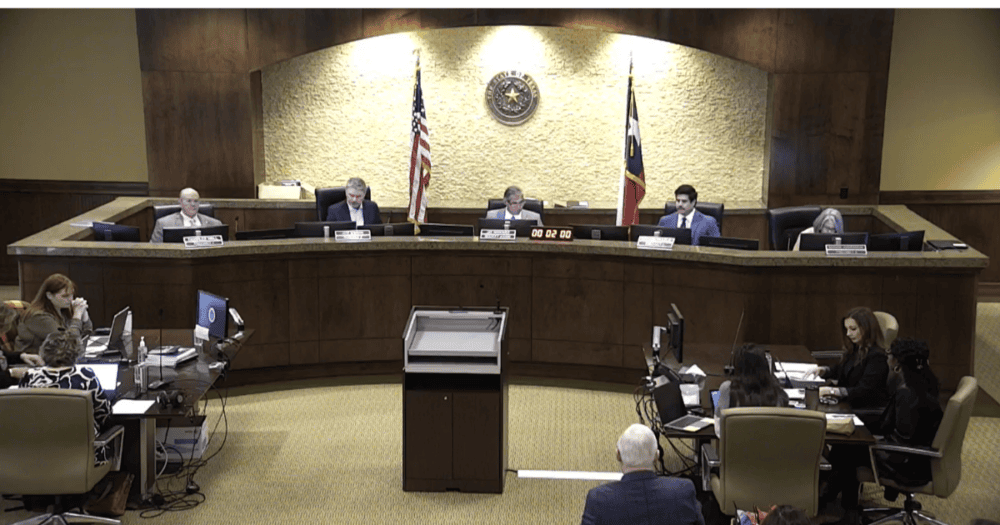
What happened: The Midland County Commissioners Court met Tuesday, Nov. 3, and delayed a decision on raises for Sheriff’s Office employees who did not receive this year’s 2% pay increase. Sheriff David Criner said correcting the issue would cost about $180,000.
Commissioners also heard an outside assessment that rated the county’s information technology department 1.5 out of 5, lifted the burn ban and approved contracts for the new Juvenile Justice Center.
Key points:
- Sheriff’s Office raises: Commissioners tabled a request to give Sheriff’s Office employees the 2% pay increase they did not receive this fiscal year. In September, the court approved a 2% cost-of-living increase for county employees with at least one year of service.
Criner said some Sheriff’s Office employees were left out of the increase and asked commissioners to correct it at a cost of about $180,000. He said the money is separate from the department’s state Senate Bill 22 funding.
Criner also asked commissioners to consider a new Sheriff’s Office pay scale to prevent the issue in future years.
County staff said the issue came from differences between the countywide 2% raise and the Sheriff’s Office pay scale, which gives employees 4% increases on their work anniversaries.
In April, commissioners voted 3-2 to remove the “2% increase” language from the county’s anniversary pay policy to align it with the Sheriff’s Office pay system.
- IT assessment: The Maryland based Two Fifth Consulting presented an assessment of the county’s information technology department rating it 1.5 out of 5, with 3 considered average.
The firm made 35 recommendations, including 23 considered high priority, and said the department needs a comprehensive overhaul. The consultant said the county’s proposed IT budget for fiscal year 2027 is a little more than $12 million.
The assessment found critical servers operating beyond their supported life, backup power equipment that was not working as expected, and the county’s backup data center less than 50 miles from the primary location.
The consultant said the county could save money by combining overlapping software programs, including multiple video conferencing systems, and using state purchasing contracts. He recommended hiring an outside technology advisor and suggested his own firm for the work.
Commissioners took no action on the assessment.
Earlier in the meeting, commissioners approved $88,000 from salary contingency to fund an IT system support specialist position filled this summer.
- Retirement plan: Commissioners approved the county’s 2027 retirement plan with a 2% cost-of-living increase for retirees, the first since 2022. The court delayed a decision Oct. 20 while staff calculated the cost.
Staff said the increase will raise the county’s required contribution rate from 10.62% to 11.14%, below the 13.5% the county already contributes. The change will not affect the fiscal year 2027 budget but will add about $2.5 million to the retirement plan’s liability.
Commissioner Steven Villela also noted that retirees’ health insurance premiums will increase in January. This mirrors the general US direction of increased health insurance premiums.
- Burn ban: Commissioners lifted the 90-day burn ban enacted in September when the county’s drought index reached 615. Staff said the index has fallen to 342, below the 575 level used to consider burn restrictions.
- Juvenile Justice Center: Commissioners approved two work orders for materials testing and inspections at the new Juvenile Justice Center. The court approved a $46.4 million construction contract in September for the 40-bed facility.
- County vehicles: Commissioners tabled a proposal to install GPS tracking devices on all county vehicles except those used for narcotics operations.
Staff estimated the devices would cost about $300 each and that 15 to 20 county vehicles do not have GPS tracking.
Criner said some Sheriff’s Office vehicles are purchased with funds other than county money and are used for covert operations. He questioned whether the county can require GPS tracking on those vehicles. Commissioners also tabled a proposal to let constables decide which vehicles in their fleets can remain unmarked after the county attorney said state law requires county vehicles to be marked unless commissioners approve an exemption for specific vehicles. The court cannot delegate that authority to constables.
- Indigent defense: Commissioners approved applying for the state’s fiscal year 2027 indigent defense grant, which helps counties pay for court-appointed attorneys. Staff said Midland County received $110,557 from the program in fiscal year 2026 and spent $2,580,938 on indigent defense that year.
- Anti-gang grant: Commissioners approved adding $2.36 million in state grant funding to the county budget for the Texas Anti-Gang Center in the Permian Basin, a regional law enforcement unit based at the Sheriff’s Office. The funding comes from the state rather than county taxes.
- Jail body cameras: Commissioners approved adding 44 body cameras for detention officers to the county’s existing agreement. The jail does not currently use body cameras. Sheriff’s Office staff said fixed cameras record activity inside the facility, while body cameras will cover inmate transports and cell removals that fixed cameras cannot capture. The cost is included in the budget.
- Animal Control: Commissioners heard an update on Animal Control, which the court previously considered moving to Emergency Management in August. The department has filled one of its two officer positions.
- TIRZ boards: Commissioners appointed Commissioner Charles Hall to the City of Midland’s Tax Increment Reinvestment Zone 4 board and Commissioner Dianne Anderson to the Zone 3 board. A city official said the county contributes 50% of new property tax growth in each zone. No money can be spent until the boards recommend and City Council approves final project and financing plans. The county’s contribution is capped at $3.8 million over 30 years for Zone 3 and $10.25 million for Zone 4, which includes the sports complex.
- Medical examiner: Commissioners approved a job description for the county medical examiner at the same pay grade as the current position so the county can post the job. Staff said the current medical examiner has asked to be relieved.