County debates standards for private development road

What happened: The Midland County Commissioners Court met on Tuesday, Nov. 4, to approve a $2.5 million anti-gang grant, authorize a new vehicle outfitting plan for the Sheriff’s Office, and discuss subdivision variances, road safety measures, and campaign sign policies.
Key points:
- Private road variances: The court approved a variance for a development that includes private caliche roads, open ditches, and narrower widths. Developers said the design keeps lots affordable and that the Homeowners Association will maintain the roads. Commissioner Dianne Anderson opposed the variance, saying the county should stop granting exceptions that undermine county standards.
“I think we need to stop doing these variances,” Anderson said. “[The county is] going to get calls about the caliche road not being fixed.” County staff responded that “the way to stop it is people not buying a lot,” noting that demand remains strong for these lower-cost properties despite the road conditions.
Commissioner Jeff Somers replied that strict county road requirements make development cost-prohibitive. “Those are private roads,” Somers said. “If you require curb and gutter and asphalt, you’ve got a million-dollar lot the guys can’t sell.” The developer defended the projects, saying they fully inform buyers before closing. The motion passed 4–1, with Anderson opposed.
- Sheriff’s fleet: The court also debated a proposal from Sheriff David Criner to shift the upfitting of all patrol vehicles to a company based in Navasota. The arrangement would allow the county’s fleet management company, Sewell, to deliver fully equipped patrol cars with radios, sirens, and lights already installed, simplifying the process for the Sheriff’s Office.
County staff raised concerns about the handling of encrypted radios outside the county and about repair delays if they must return vehicles to Navasota for warranty or service work. Anderson said she wanted a written contract to ensure accountability. Judge Terry Johnson supported giving the Sheriff operational discretion. “I hope we wouldn’t micromanage where you get your vehicles rigged,” he said.
Commissioner Steven Villela agreed the court should provide oversight. “It’s the checks and balances that we chose,” he said. The court unanimously approved the request, directing staff to draft a written agreement outlining responsibilities and expectations. Criner thanked the court afterward. “I know we have disputes sometimes, but I feel like it’s always cordial,” he said. “We need to have that verbal judo sometimes.”
- TAG grant: Commissioners accepted a $2.5 million Texas Anti-Gang (TAG) grant, allowing local, state, and federal agencies to coordinate anti-gang operations in the Permian Basin. Criner reported that since the TAG program launched just a few months ago, the unit has made 28 arrests, seized 39 guns, and removed thousands of grams of illegal drugs from the streets, including meth, fentanyl, and cocaine.
- Election sign policy: The court updated its campaign sign policy, removing the four-sign-per-location limit. Johnson said a previous commissioner put the restriction in place and caused confusion and complaints. The revised policy keeps basic rules against blocking access or creating safety hazards but removes limits on how many signs candidates can display at county-approved sites.
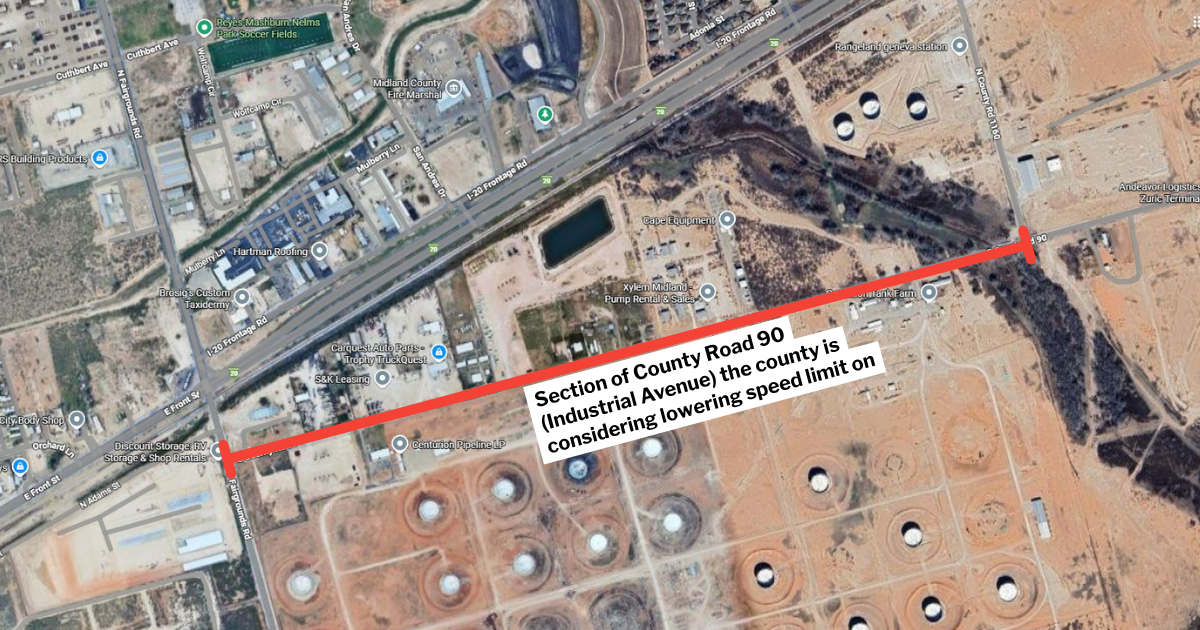
- Speed limits and signs: Commissioners approved lowering the speed limit on County Road 90 between County Road 1160 and Fairgrounds Road from 55 mph to 35 mph. Midland ISD requested the change, which has a facility just east of Fairgrounds. While the site doesn’t qualify as a formal school zone, the district sought safer conditions for buses and student traffic.
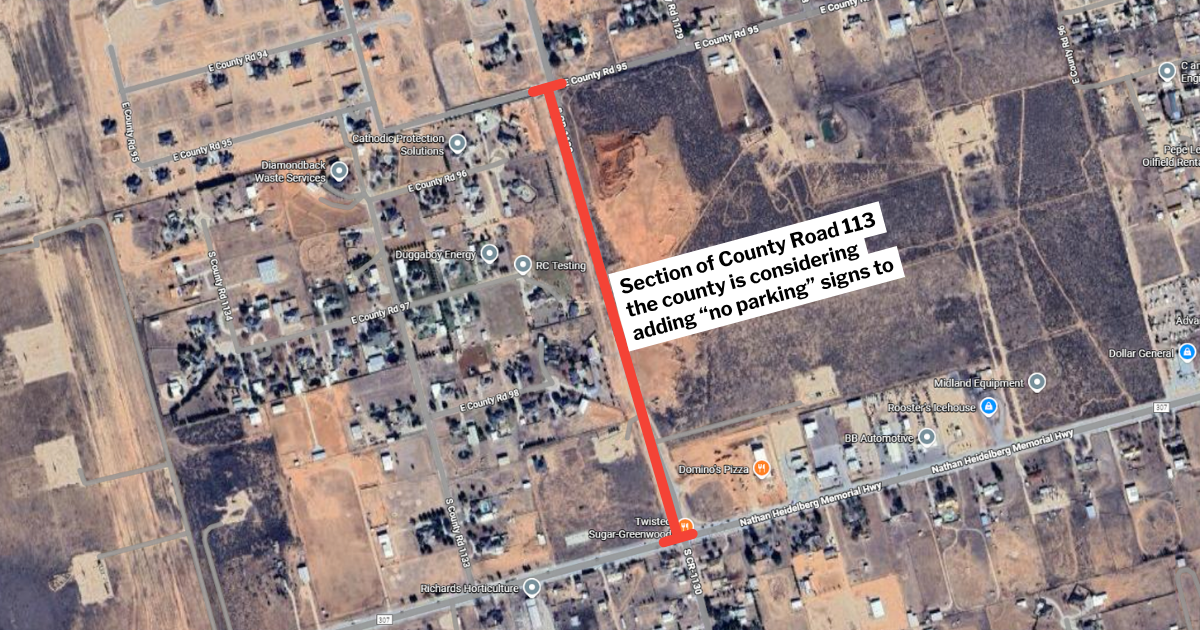
Commissioners also approved installing “No Parking” signs on County Road 1130 between County Road 95 and FM 307, following ongoing safety concerns. Food trucks and vendors had been parking along the shoulder, creating congestion and visibility issues. The court held a public hearing, and no residents spoke for or against either change.