
Jay Marquez links planning, execution to long-term stability
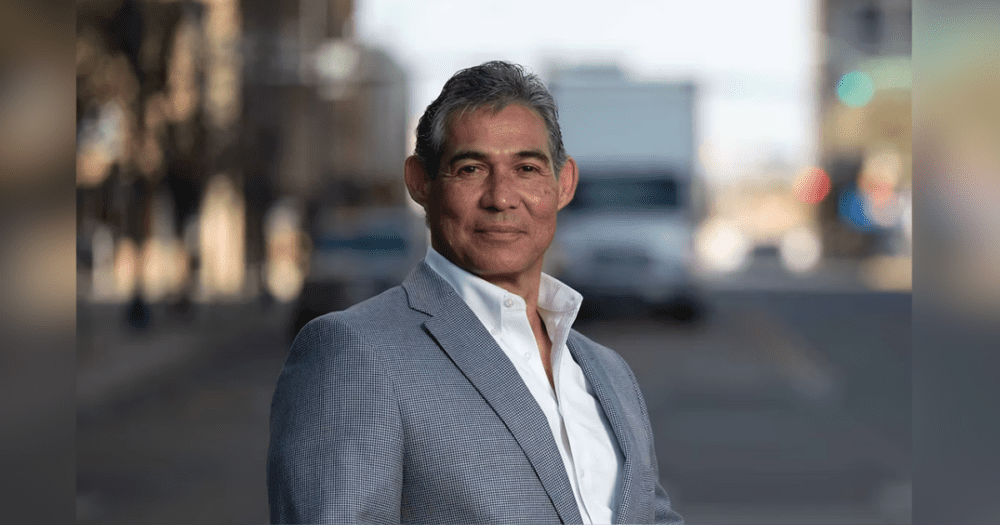
Editor’s note: Jay Marquez is running for Midland County Judge, who presides over the Commissioners Court, the county’s governing body. Johnson faces challengers Terry Johnson and Karen Hood, with whom The Permian Press is in discussions to schedule an interview.
Candidate interviews are published in the order they are conducted. This article will be updated as they become available. Candidate interviews are conducted using a standard set of questions, with follow-up questions tailored to each candidate’s responses. Register to vote by Monday, Feb. 2. Early voting begins Tuesday, Feb. 17. Primary Election Day is Tuesday, March 3.
Jay Marquez centered county leadership around two ideas: treating public spending as a needs-first responsibility, and approaching county operations with what he described as a “doer” mentality focused on follow-through and execution.
“I’m a doer. I’m a problem solver,” Marquez said.
Needs versus wants, and who decides
Marquez discussed county budgeting by separating essential services from optional priorities and believes taxpayers should have more direct input into major spending decisions. Though he later agreed that residents place their trust in the people that they elect to make decisions on their behalf.
“Are we meeting needs or wants here?” he said. “We need to meet needs as a county, but wants need to always be decided by the taxpayers of Midland County.”
He tied that distinction to transparency and accountability. He said he is not suggesting the county lacks transparency or accountability, but believes officials could be more open with constituents.
“How literally how bad do you want this?” he said. “Needs and wants… two very different things.”
Strategy, follow-through, and long-term planning
Marquez described his governing approach as starting with strategy, then execution, then reassessment.
“We need a strategy and follow-through,” Marquez said, describing what he believes should be a continuous process. “Implement it, come back and revisit it.”
Marquez said that approach also requires long-term planning and realistic limits on what the government can and cannot do.
“We need to plan. We need to plan long-term. What we can do, what we can’t,” he said.
He tied that planning model to economic growth, arguing that strong performance in oil and gas and lower tax burdens drive reinvestment in Midland.
Greenwood water and supply reality
When discussing water issues in unincorporated Greenwood, where residents rely on private providers and private wells, or the possibility of a Midland County Utility District (MCUD) bond to finance infrastructure, Marquez said Greenwood’s water challenges are a physical supply constraint before an infrastructure problem.
“You have a glass of water,” Marquez said. “You’re trying to stick three straws, four straws, five straws… you’re only going to get so much water out of there.”
He said MCUD is asking residents to consider paying for infrastructure before clearly defining long-term supply, which he said creates hesitation, especially for residents with functioning private wells. He said Greenwood will likely need to bring in new or clean existing water sources, and he said residents need clearer communication to understand the county’s authority limits and infrastructure realities.
“Is it possible? And the answer is yes. Is it timely? Yes. Is it costly? Yes. But let me tell you, if you have to pay a few more cents for an extra clean glass of water, we would do it,” Marquez said.
Marquez initially said the county needed to “stop the bleeding” regarding Greenwood’s growth, but later acknowledged that county residents “can’t have it both ways,” saying you can’t have your own freedom but limit someone else’s ability for the same.
Taxes, revenue, and existing resources
When asked whether the county could raise the sales tax again after a failed 2021 countywide vote, Marquez said he believes the government should first evaluate how it manages its existing funds before raising taxes. He noted he is not in favor of raising taxes, but also acknowledged that the county needed adequate roads and infrastructure.
“If you don’t have enough money or enough time, I believe it’s a management issue,” he said. “You work within your means first and foremost.”
He said long-term revenue growth should come from reinvestment and economic activity rather than higher property or sales tax rates, and that the county can play a role in encouraging that development.
“Without raising taxes, I believe that we can reinvest in our county,” he said, adding that increased investment could generate additional revenue over time.
Marquez said he would implement strategic planning immediately, including working directly with department leaders to assess needs, reallocate funding where necessary, and develop one-, three-, and five-year forecast budgets.
Law enforcement, costs, and operational support
When asked what level of public safety justifies what level of cost, Marquez said he has spent the past year doing ride-alongs and asking operational questions across the sheriff’s office, constables, and warrants divisions. He said that if elected, he would start with what he described as a personal inventory of law enforcement operations, focused on morale, staffing barriers, and how the county deploys personnel.
“Do they like coming to work? Do they love their job?” he said, describing the type of questions he wants answered early. “We’re going to have to look at those questions that nobody likes to ask.”
Marquez said he is strongly supportive of law enforcement but believes the county must ensure it is using resources effectively. He said some challenges may be structural rather than purely pay-related and may require a deeper operational review.
“We need to get the best bang for our buck,” he said, “We will do whatever it takes.”
Keeping Midland the way it is
Marquez said he ties his candidacy to preserving Midland’s culture and long-term quality of life, and he described that as inseparable from core governance decisions.
“I love Midland County,” he said. “This is where you make a life. This is where you raise your children.”
He said that strong oil and gas performance and lower tax burdens help drive reinvestment in Midland, and that he wants to make it easier for people to invest in Midland’s future, not just take from it.