
Midland puts liberty first in ending Flock camera contract
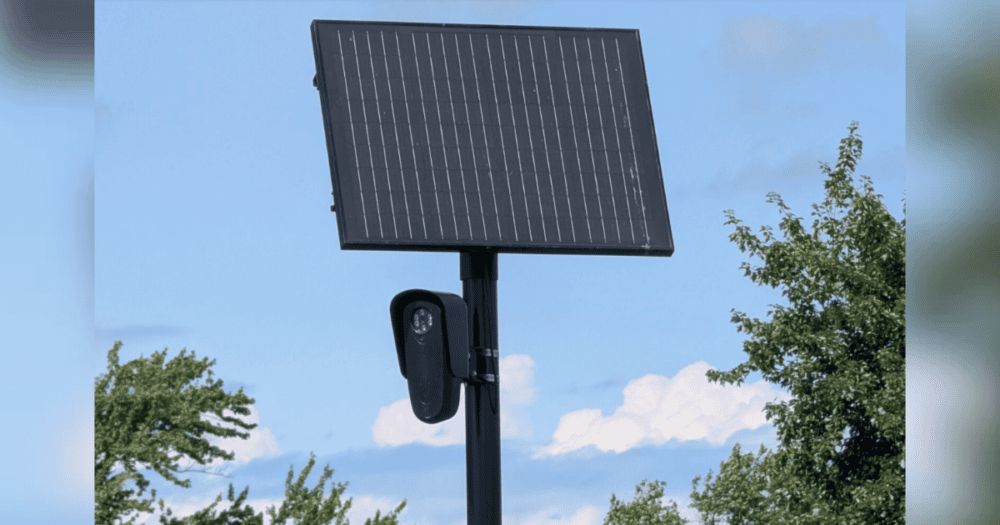
Photo credit: Texas Scorecard
What happened: Midland City Council voted unanimously Oct. 13 to end its $225,500 annual contract with Flock Safety over concerns about privacy and control of police data. The decision follows Gov. Greg Abbott’s move to restrict state funding for the company’s license plate reader cameras.
Why it matters: Flock cameras record every passing vehicle regardless of whether the driver is suspected of a crime. The system allows police to search vehicle records across jurisdictions. Council members raised concerns about how that information is shared and stored on a private company’s network.
Key points:
- Contract termination: Council approved a 60-day notice to end the contract without a termination penalty. The decision affects 73 stationary cameras and two portable units that are not in use.
More than 200 other Flock cameras in Midland belong to public entities and private organizations. Those cameras are not affected.
Council approved the contract in February at an annual cost of $225,500. Ending the agreement will save the city that amount in annual spending.
- Privacy concerns: Mayor Lori Blong said the city wants to protect individual liberty while giving police the tools needed to fight crime.
“We want to make sure that we’re protecting individual liberty at the same time,” Blong said.
Blong said the city will continue using cameras to monitor public property such as the golf course. Those cameras are owned and operated by the city rather than a private company.
“There is enough question at the state and the federal level right now to give us all pause,” Blong said.
Councilman John Burkholder said the cameras have helped police investigate crimes such as fuel theft. He also raised concerns about data sharing and the expansion of Flock’s network.
Councilman Brian Stubbs said the cameras helped police quickly identify suspects twice in the previous week but warned the technology could be abused.
- How the cameras work: License plate readers collect plate numbers and vehicle descriptions along with the time and location of each passing vehicle.
Officers can search stored records during investigations. The system does not continuously track individuals in real time according to information police provided in February. The database includes vehicles whose drivers are not suspected of crimes.
- State restrictions: Abbott ordered state agencies in August to pause funding for Flock cameras.
The Motor Vehicle Crime Prevention Authority had helped state and local agencies install at least 3,200 cameras since 2023. The grants were funded through a $1 fee on Texas auto insurance policies. Abbott’s spokesman said state agencies were clarifying that their funding could not be used for Flock cameras.
Hood County and Pflugerville’s city and school district also moved to decommission their cameras. Wylie declined to renew its contract. Abbott said the cameras were being reduced dramatically and would have to be used responsibly if retained. Texas Scorecard reported.
Republican U.S. Rep. Keith Self of McKinney proposed legislation in July requiring federal agencies to obtain warrants before accessing Flock data. Texas lawmakers are also expected to consider restrictions during the next legislative session.
- Nationwide data searches: 404 Media reported in May 2025 that Texas authorities searched more than 83,000 Flock cameras nationwide while looking for a woman believed to have had a self-administered abortion. The sheriff said the woman’s family was concerned for her safety. The search included cameras outside Texas.
- Federal access: An August 2025 audit by the Illinois Secretary of State found that Flock allowed U.S. Customs and Border Protection to access Illinois license plate camera data in violation of state law.
The audit found inadequate safeguards for data sharing and identified a federal pilot program that Flock leadership did not know was operating. Flock subsequently paused its federal agency pilot programs nationwide.
- Legal challenges: Norfolk residents sued the Virginia city in 2024 over its network of more than 170 Flock cameras.
The lawsuit argued that police could track residents’ driving patterns without a warrant in violation of the Fourth Amendment. A federal judge upheld the program. The plaintiffs said they would appeal.
- Midland’s safeguards: Police Chief Greg Snow told council in February that Flock stores Midland’s camera data for 30 days before permanently deleting it. Snow said only Midland Police Department personnel could access the system. Every search was logged and connected to a case or incident number.
Law enforcement agencies could share access across jurisdictions. Private businesses and homeowners could not access police records. Those restrictions governed Midland police use but did not give the city ownership of Flock’s data platform.
- Police results: Snow said the cameras helped recover nearly $4 million in stolen property and 49 stolen vehicles last year. They also contributed to 111 arrests or warrants.
Blong acknowledged that some officers disagreed with ending the contract. She said council would continue working with police to provide effective technology. City staff said Midland is exploring the use of city-owned intersection cameras for similar purposes while keeping the data under local control.
What’s next: Flock has 60 days to remove its cameras under the contract. The city cannot remove the equipment itself.