
MISD enrollment down, construction under budget
What happened: The Midland ISD Board of Trustees met Thursday, Oct. 23, to review student enrollment and bond construction progress. Enrollment came in below projections, meaning less state funding, while bond construction remains on schedule and under budget. Trustees also approved relocating pipelines at the new Midland High site and received updates on staffing, bilingual/ESL programs, classroom walkthroughs, and discipline protocols.
Key points:
- Enrollment projections: District departments use demographic trends, program data, and attendance history to project enrollment. Actual enrollment this fall was 29,299, below the projection of 30,103. Attendance through the first six weeks was about 26,680, compared with 27,103 in the budget. Administrators said they continue to track enrollment as more families choose homeschooling and virtual learning.
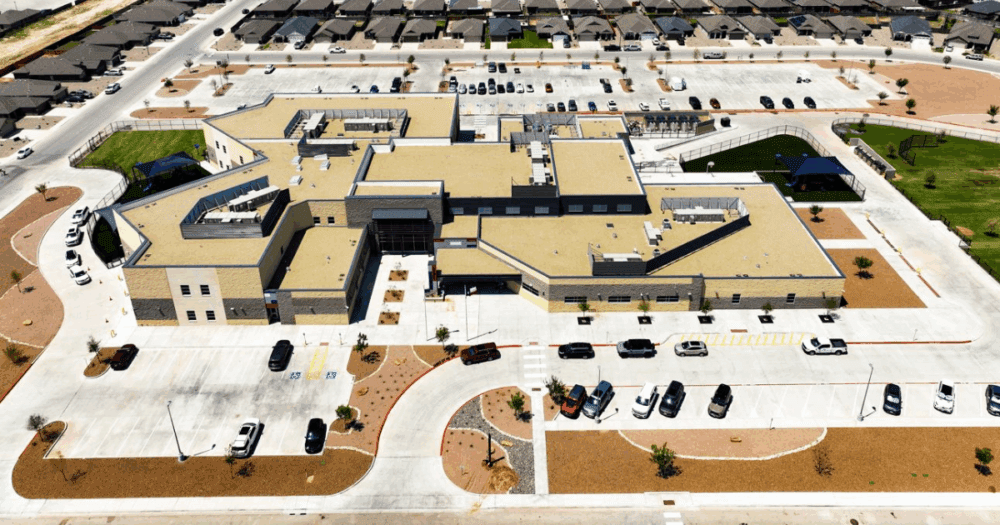
- Bond report: District staff said work on projects funded by the $1.4 billion bond remains on time and within budget. Lone Star Trails Elementary came in $10.3 million under budget. Construction is moving ahead at the new Midland High and Legacy High, with foundation and concrete work already started. Additional work on campus security, maintenance, and restrooms will go out for bids in the spring.
-
Student discipline: Administrators reviewed changes in state law that allow limited out-of-school suspension or placement in an alternative program for young students only in serious cases such as weapons or safety threats. Trustees said they support maintaining safe classrooms and firm but fair discipline. The district uses a three-tier support system to address behavior problems.
-
-
Tier 1: schoolwide expectations and social-emotional lessons
Midland’s top stories. One quick email. Free, every Friday.Get Midland Wrapped, our free weekly email for busy Midland residents. Each Friday, we break down the week’s most important local stories — what happened, why it matters, and what to watch next — so you can stay informed without the noise. -
Tier 2: small-group counseling and mentoring
-
Tier 3: individual support for severe or repeated behavior.
-
-
Staffing and teachers: Administrators explained how the district’s “Opportunity Culture” model puts top teachers in leadership roles to coach small teaching teams while still teaching students. The district said this approach has improved performance on participating campuses without adding costs.
Friez asked how many of the 30% of teachers without certification are pursuing it. Superintendent Stephanie Howard said all have degrees, many are in certification programs, and some, like welding and health science instructors, qualify through professional experience. She said this flexibility helps fill high-need teaching positions.
-
Strategic plan update: MISD reported progress on its five-year plan tied to student achievement, teacher development, and family engagement. This year, 77% of district goals met or exceeded targets, up from 73% last year.
Teacher collaboration has improved through new professional learning communities, and 96% of campuses rate their teamwork as “highly functional.” The district expanded career programs through partnerships with Chevron and Baylor and launched “Parent Power Ups” that help families support learning, attendance, and mental health.
-
District-wide improvement: The district continues its work with Teach Like a Champion, a training program that helps principals and teachers improve instruction and classroom management. The goal is for at least 5% more students each year to meet grade-level standards, higher than typical yearly gains in the past. Administrators said consistency across classrooms and fast use of student data is key to achieving that goal.
-
Bilingual and ESL: About 6,500 MISD students, roughly one in five, are learning English. Bilingual programs operate at 17 elementary schools, and ESL instruction is available districtwide. Last year, almost 300 students became fully English-proficient.
Younger students are improving steadily in reading and math, but middle school students still struggle in writing and social studies. The district continues to face a teacher shortage in bilingual and ESL program, though new training sessions and certification workshops are helping reduce the number of state waivers needed.
-
Campus walkthroughs: Principals and assistant principals visit classrooms weekly to observe lessons and give immediate feedback. Each completes between five and 15 visits per week, depending on the campus. Walkthrough data is tracked districtwide, and as of October, 79% of schools met or exceeded targets. Trustees said these visits have helped improve classroom management and teacher support.
-
Pipeline relocation: Trustees voted to move pipelines from inside the new Midland High property (formerly Ranchland Hills Golf Club) to the edge of the site. The goal is to prevent future construction problems, reduce safety risks, and allow full use of the campus for decades. The work is expected to cost about $2.8 million, more than double the $1.2 million cost of leaving the pipelines in place.
Several trustees said the higher cost was justified on a $450 million project. “Sometimes doing it safe is going to cost a little bit more,” Trustee Tommy Bishop said. Trustee John Guinn said the added cost, under one percent of the total, is worth it to ensure the pipeline doesn’t cause problems for decades. Trustee Matt Friez agreed but called for stronger oversight. “We’ve been kept out of the loop and that’s unacceptable,” he said.