
Council split on rezoning future Mark Payne development
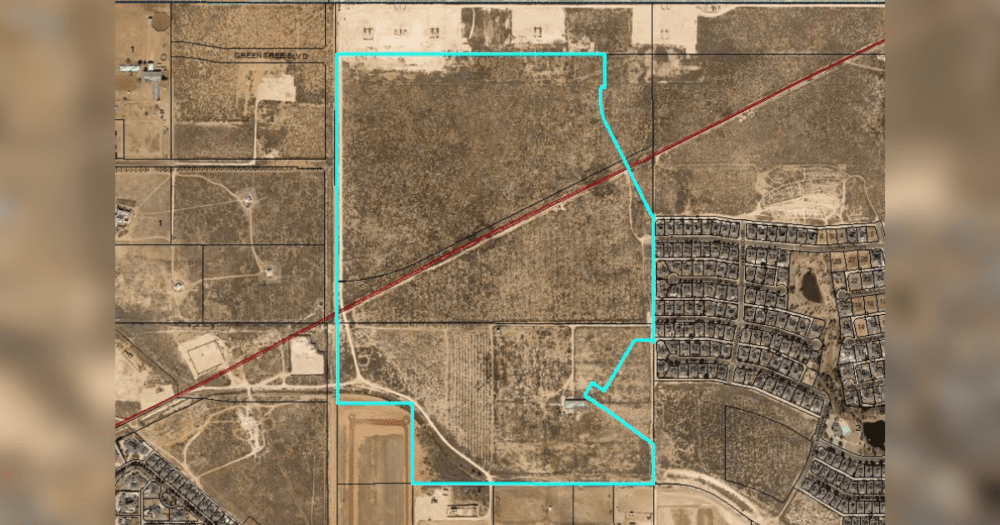
What happened: The Midland City Council spent nearly 45 minutes working through a rezoning request tied to a residential development along North Garfield. The discussion quickly turned into a broader debate about how the city should handle growth: whether to allow development to move forward and solve infrastructure alongside it, or hold projects until roads and drainage systems are fully in place.
The request, brought by local, long-time developer Mark Payne, would rezone more than 150 acres for a subdivision with over 350 homes and a smaller portion of local retail. The zoning shift would give the developer flexibility to offer a mix of housing types, including smaller lots intended to improve affordability. That flexibility became the central issue for council members.
Why it matters: Payne argued that flexibility in lot sizes directly ties to affordability and whether the project can move forward at all. He explained that rising construction costs are already pushing lot prices significantly higher, and smaller lots are one of the few remaining tools to keep homes attainable.
“We do have an affordability problem, and if we don’t address it fast, it’s just going to get worse and worse,” Councilman Jack Ladd said.
Midland’s top stories. One quick email. Free, every Friday.Get Midland Wrapped, our free weekly email for busy Midland residents. Each Friday, we break down the week’s most important local stories — what happened, why it matters, and what to watch next — so you can stay informed without the noise.
Catch up quick: Research from the Texas Public Policy Foundation (TPPF) consistently points to zoning restrictions, permitting delays, and regulatory uncertainty as key drivers of higher home prices. TPPF has found that local land-use policies can “add delay and expense for the project to come into compliance,” increasing the final sale price of homes.
Their research also shows that zoning and permitting regimes can “delay construction, require unnecessary changes,” and ultimately raise costs for buyers. In practical terms, each round of revisions or delays increases a developer’s carrying costs and exposes the project to rising material prices. As a result, longer and less predictable approval processes tend to reduce housing supply and push prices higher.
The big picture: While Councilwomen Robin Poole and Amy Burkes each expressed opposition to the smaller-lot rezoning, the rest of the council supported the development as Payne presented it. However, nearly all of the council members raised concerns about whether the city’s infrastructure can support it.
“The infrastructure needs on the north side of town have really outpaced our building process,” Councilman Brian Stubbs said. Stubbs is the District 1 council representative, which includes the area of this proposed development.
Traffic along Garfield and the lack of completed connections, particularly at Mockingbird, were recurring concerns, as was stormwater drainage in an area already known for flooding. Mayor Lori Blong acknowledged that the city has historically not kept infrastructure on pace with development in this part of town.
Go deeper: Council was relatively split on their view of the sequencing of private development and public infrastructure. One side views development as something the city should support while working through infrastructure needs in parallel. The other side argues that the city should clearly address roads, drainage, and right-of-way acquisition before approving large-scale growth.
What was entirely absent from the council’s discussion was the role of impact fees. The city created impact fees to ensure adequate public facilities by requiring new development to pay its share of the infrastructure costs it creates. In practice, that framework should allow development to move forward while generating revenue so the city can quickly address the roads, drainage, and utilities needed to support it.
The other side: Poole expressed her desire for the council to treat all developers equally.
“I think we need to be careful saying we trust you because we know your product,” Poole said. “When we have other developers that we’re not allowing that with. I think we have to have a level playing field, and we can’t pick winners and losers just based on the fact that they provide a good product and they give us their word.”
However, Planning and Development Officer Elizabeth Triggs pointed to the platting process as the stage where the city typically addresses project-specific concerns.
“It’s important to note the primary concerns talk about the increased traffic in the area and the adequacy of ingress, egress with that large number of lots coming in. So, that is certainly conversations that we will continue to have, particularly as we move through the platting process,” Triggs said. “Platting does allow us to address many of those concerns.”
What’s next: Council moved to defer the item to allow additional work between city staff and Mark Payne on infrastructure planning, cost considerations, and development parameters before bringing it back to council in June.