
Inside the two-day training changing how teachers teach civics
Editor’s note: This is Part 3 of a four-part series on the new civics instruction coming to Texas elementary schools this fall and the training Texas teachers and administrators are completing this summer to deliver it. Part 1 is an overview. Part 2 examines the law and the lawmakers behind it. Part 3 goes inside the teacher training. Part 4 looks at what students will actually learn.
Catch up quick: Part 1 review — Texas elementary schools will begin teaching a structured civics program built around the nation’s founding documents this fall. Part 2 review — That program traces to a 2021 state law, Senate Bill 3. The materials and training the whole state will now use were built here in Midland.
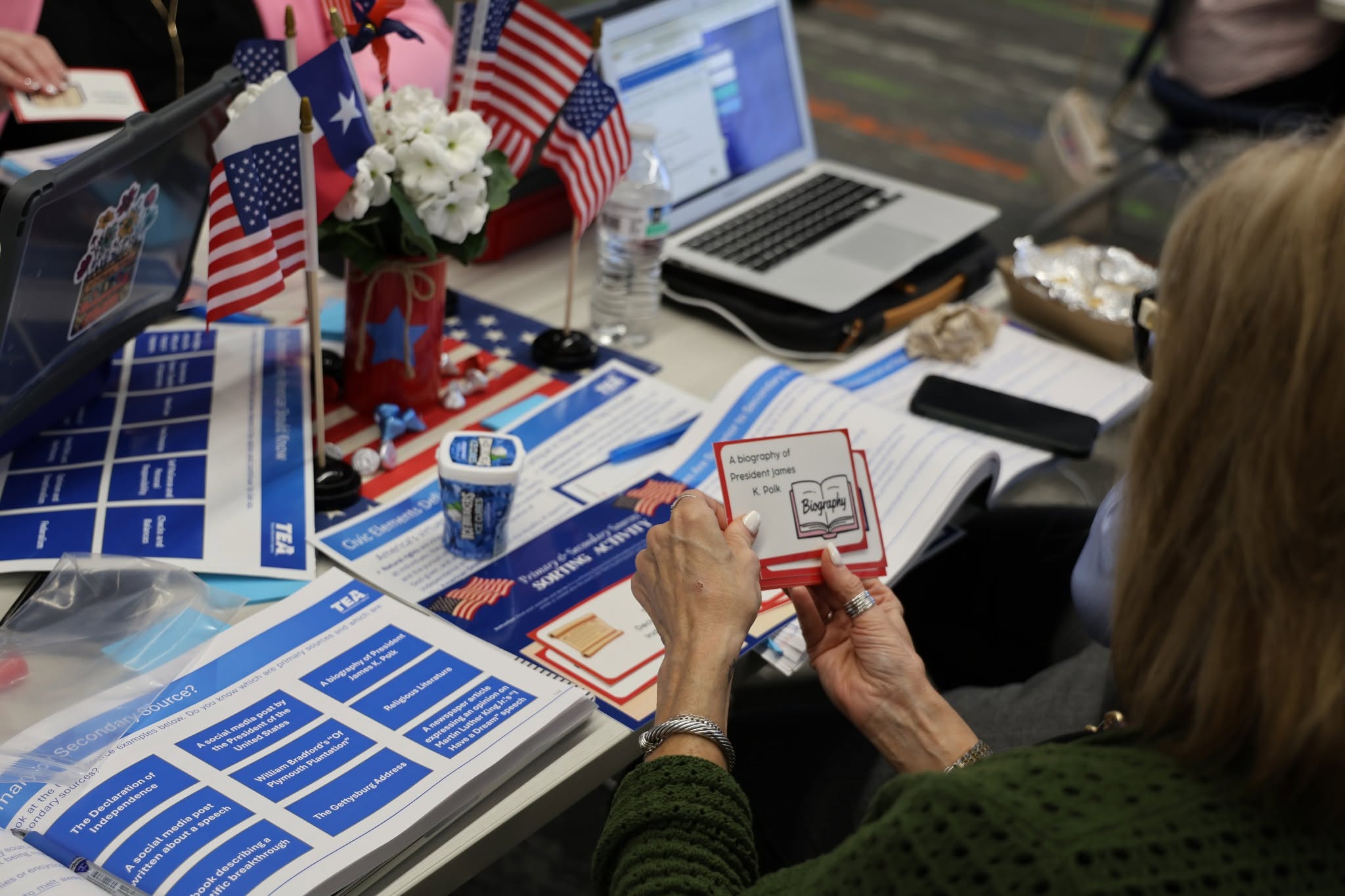
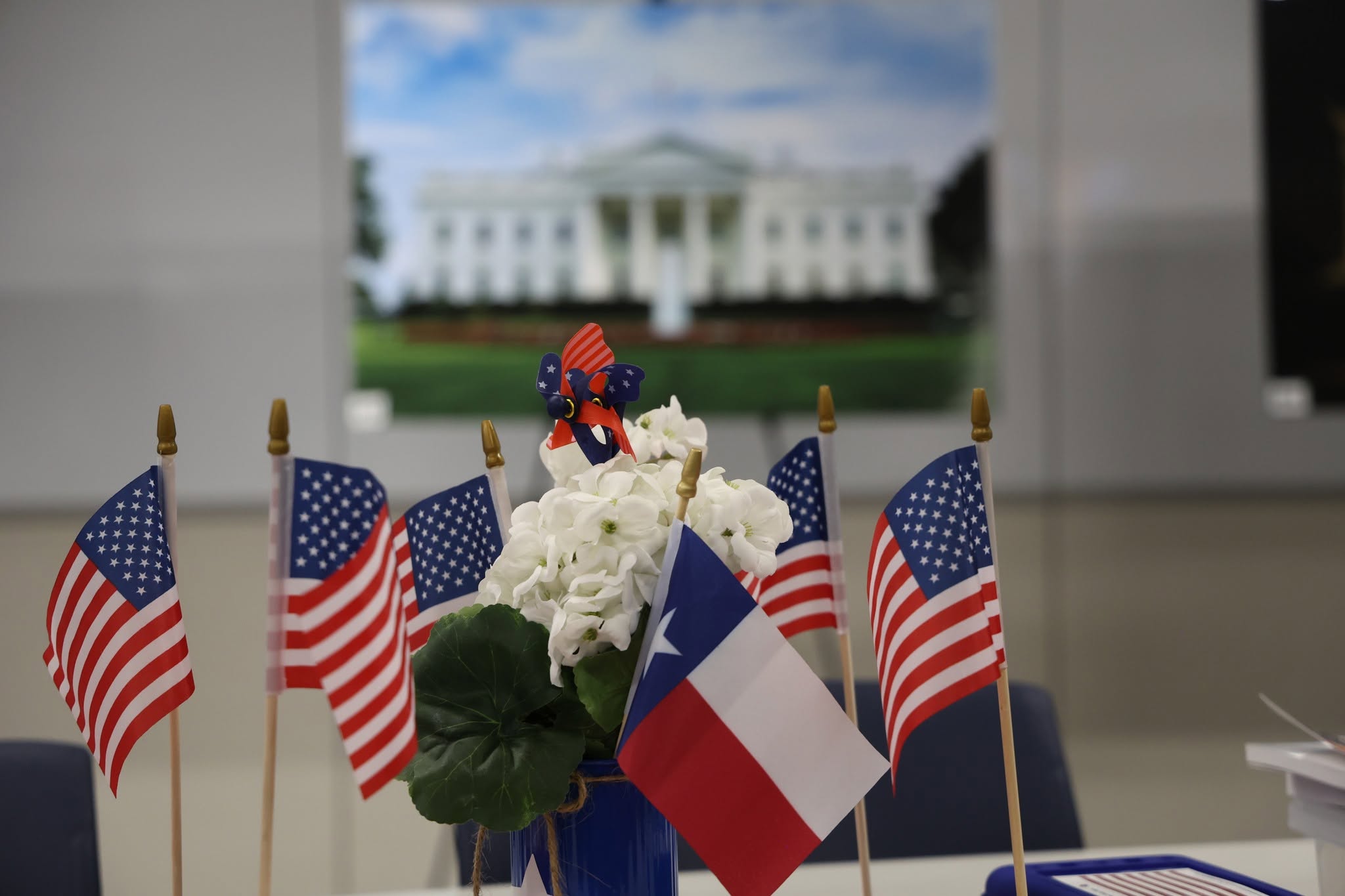
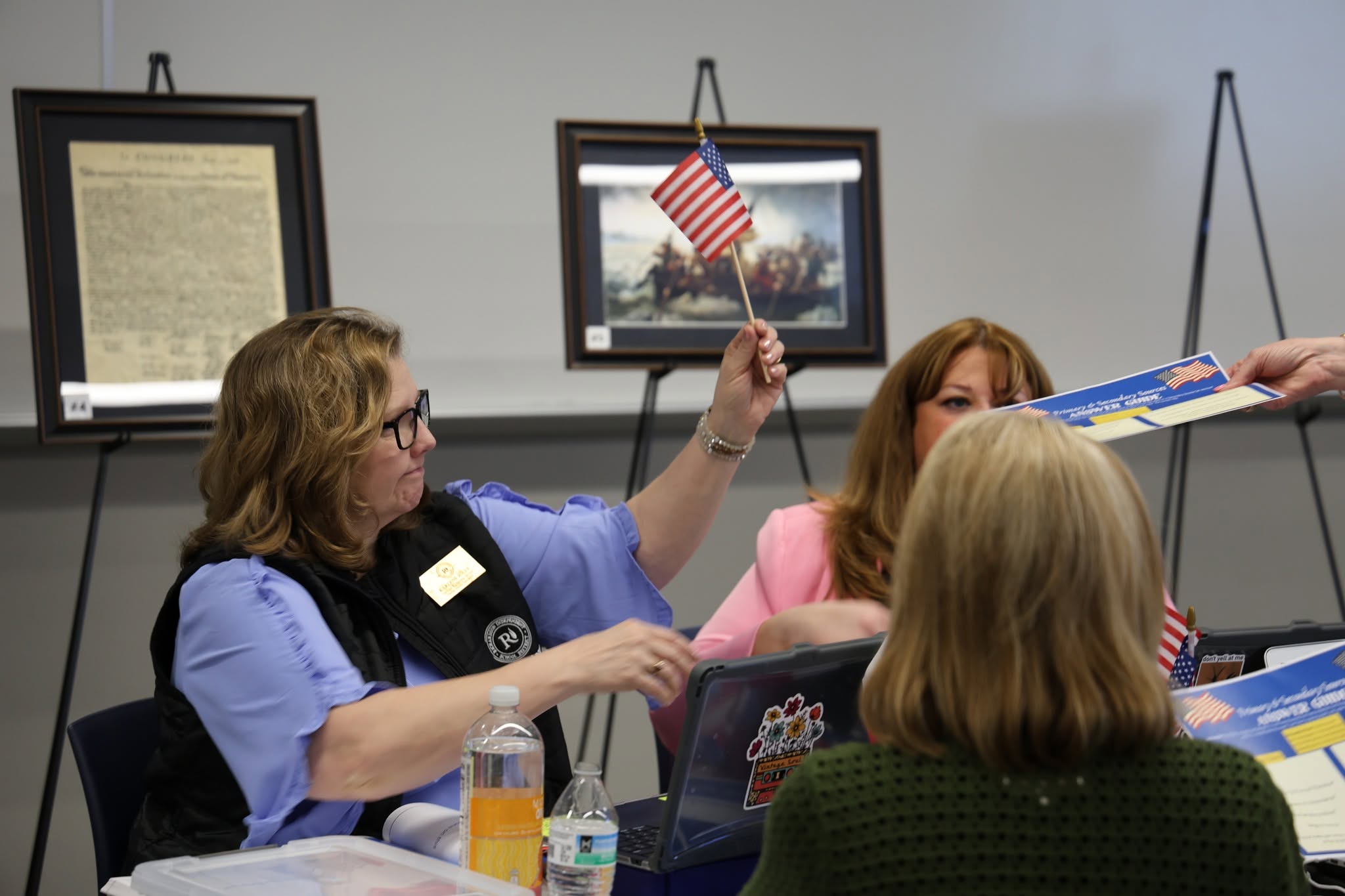
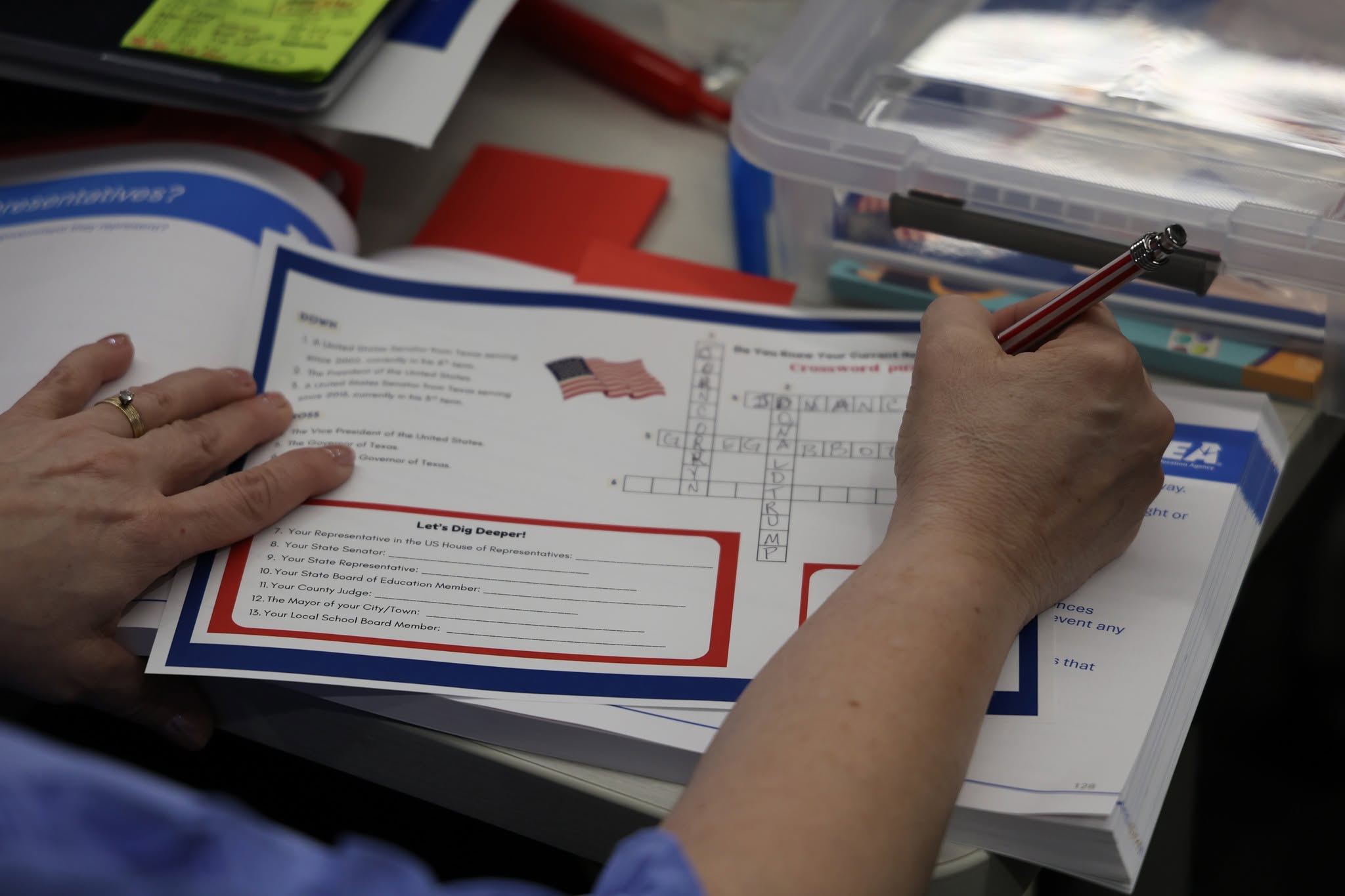
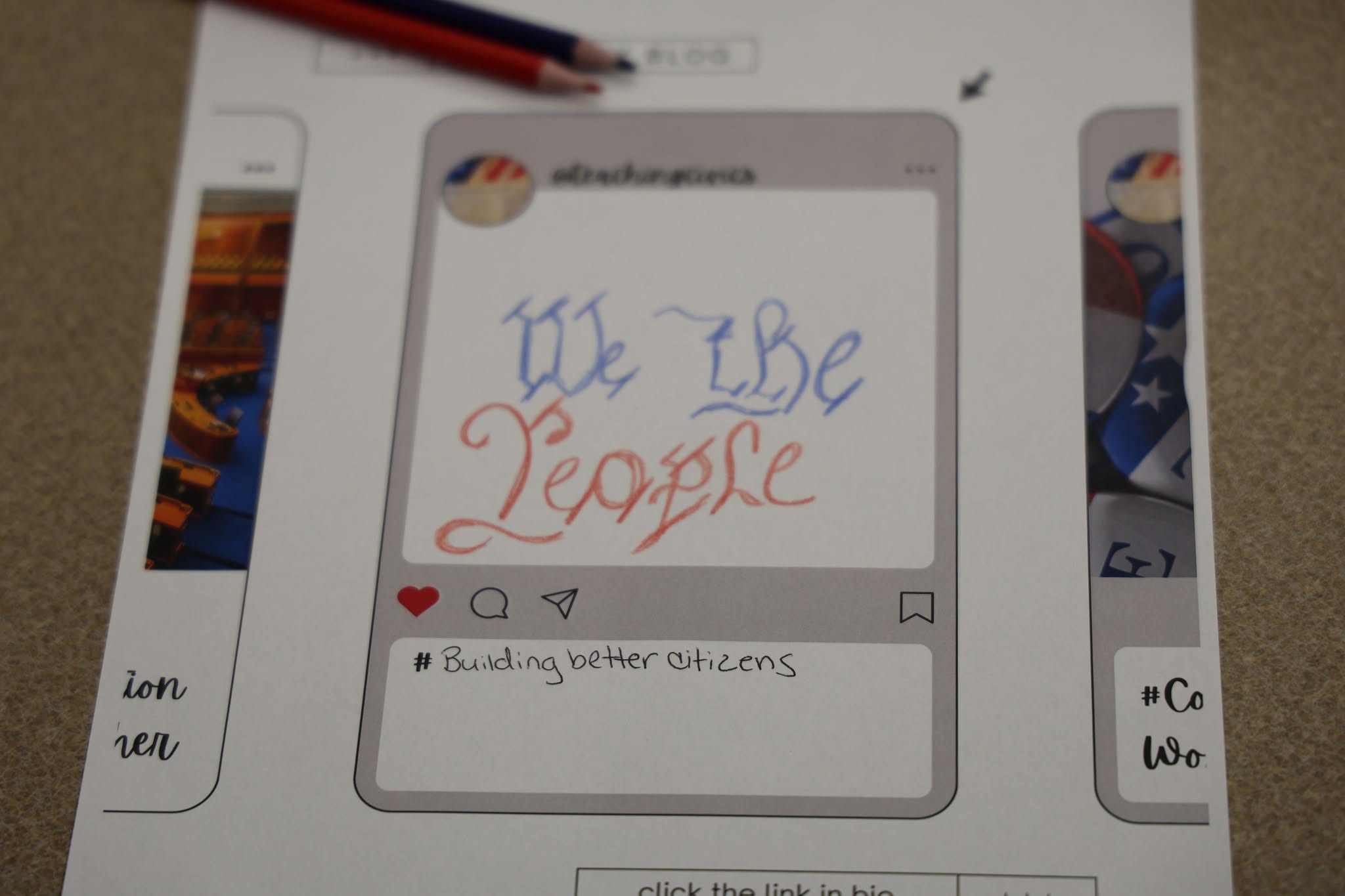
What to watch: A teacher who walks into one of the Education Service Center (ESC) civics training classrooms will likely notice that it does not look like a typical teacher training. There are red, white, and blue accents across the room, and a request that when you have a question, you wave one of the little American flags on the tables.
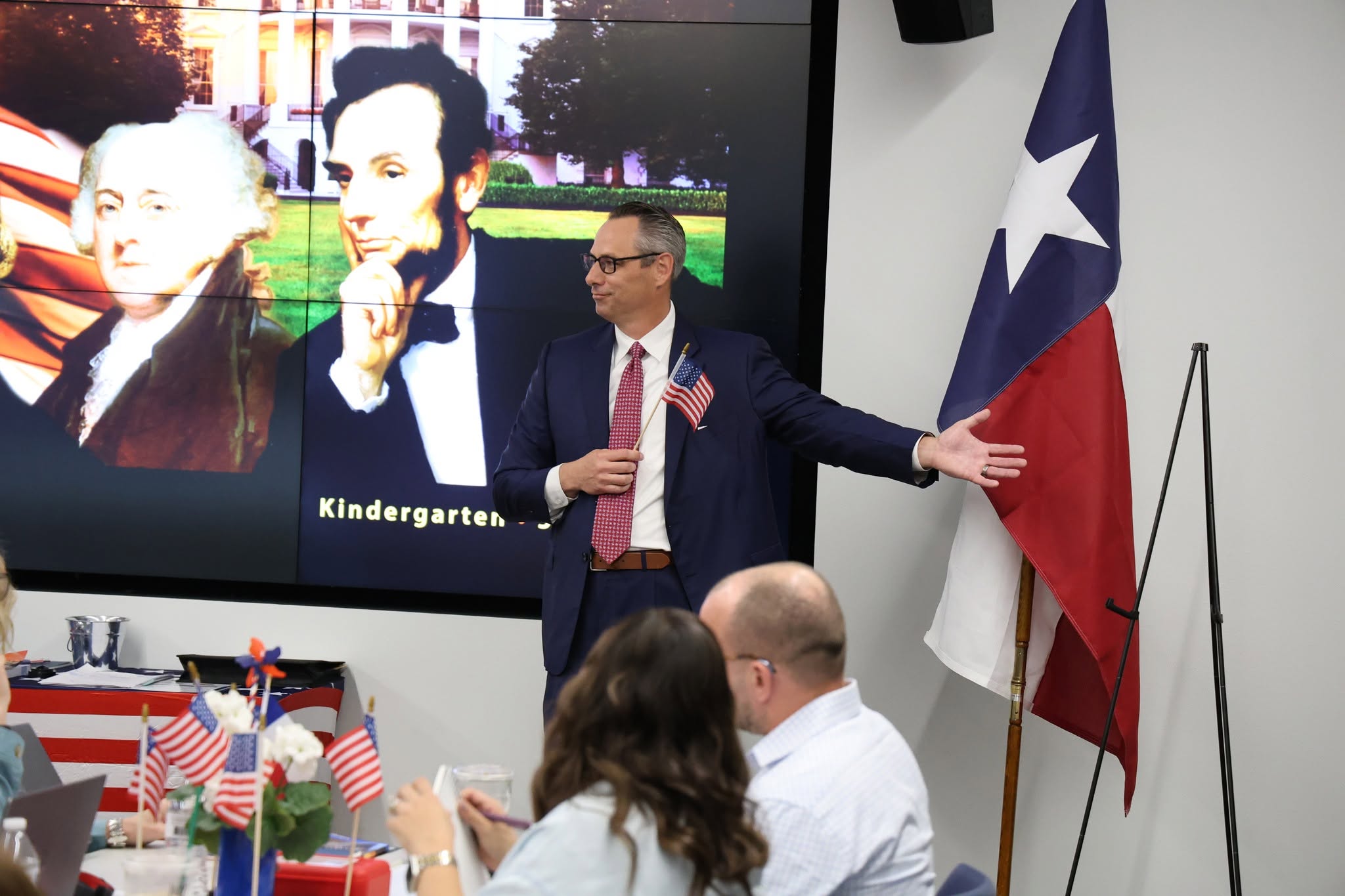
As Dr. Dewitt Smith, Executive Director and CEO of the Region 18 ESC, told The Permian Press, “you see red, white, and blue everywhere.” Smith led the team that built and delivered the new civics training statewide.
“I wanted to create a civic experience, because if we can create a civic experience, people will replicate what you model,” Smith said. “We draped it in patriotism.”

-
- Photos from Region 18 Education Service Center
Why it matters: Texas is attempting the biggest change in how it teaches civics to public school children in a generation. And the training Smith and his team created intends to help civics stick with children by first making it stick with adults. The idea is to train teachers and administrators through the experience, so they are eager to take what they learn back to their campuses and integrate civics into every subject so it runs throughout the school day.
“Our hope is that gets modeled down to the service center trainings, and then it gets modeled then in the classroom with our teachers,” Smith said. “Because if they can create a civics experience or a history experience, you and I both know that kind of stuff sticks.”
-
- Photos from Region 18 Education Service Center
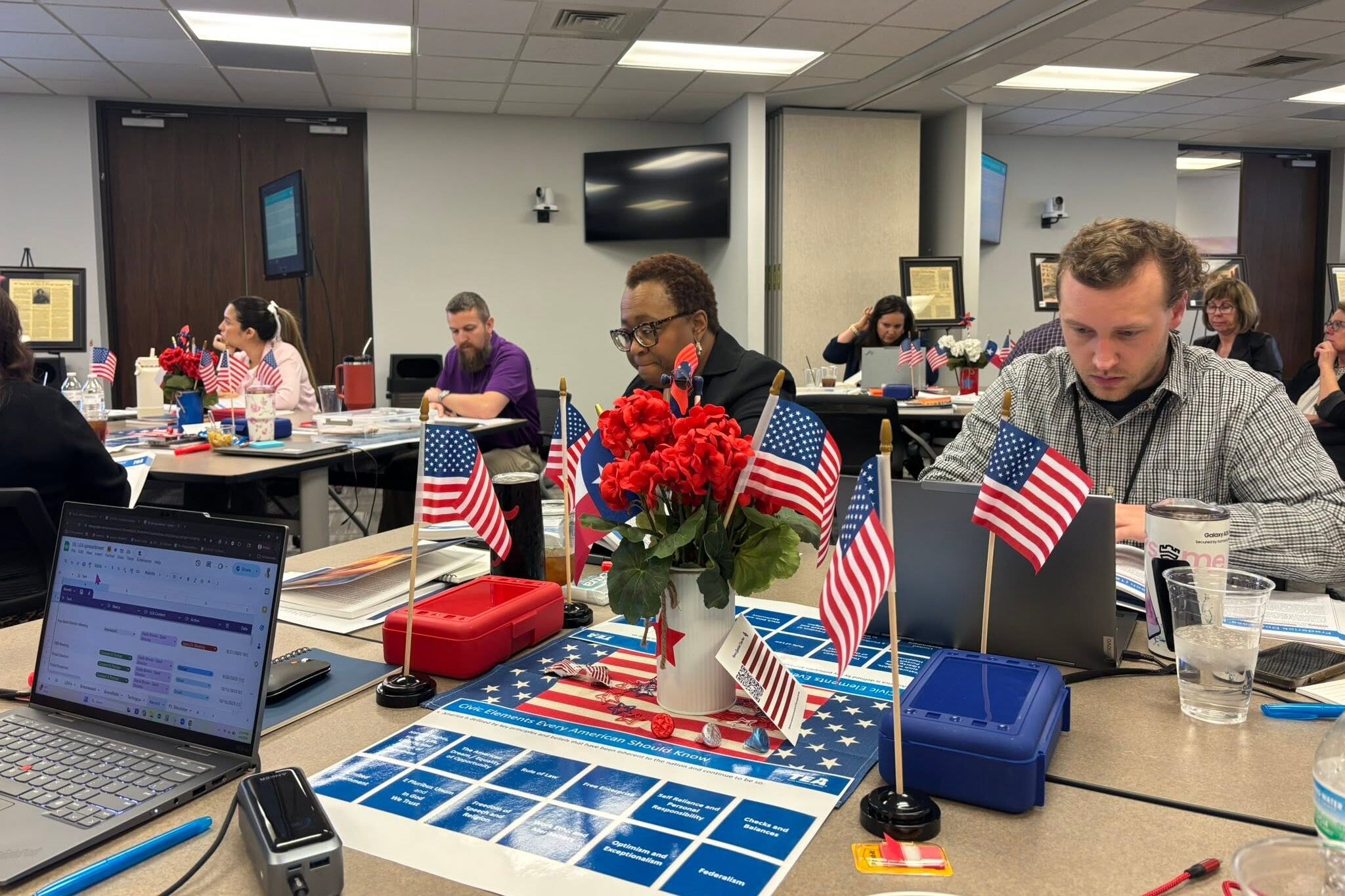
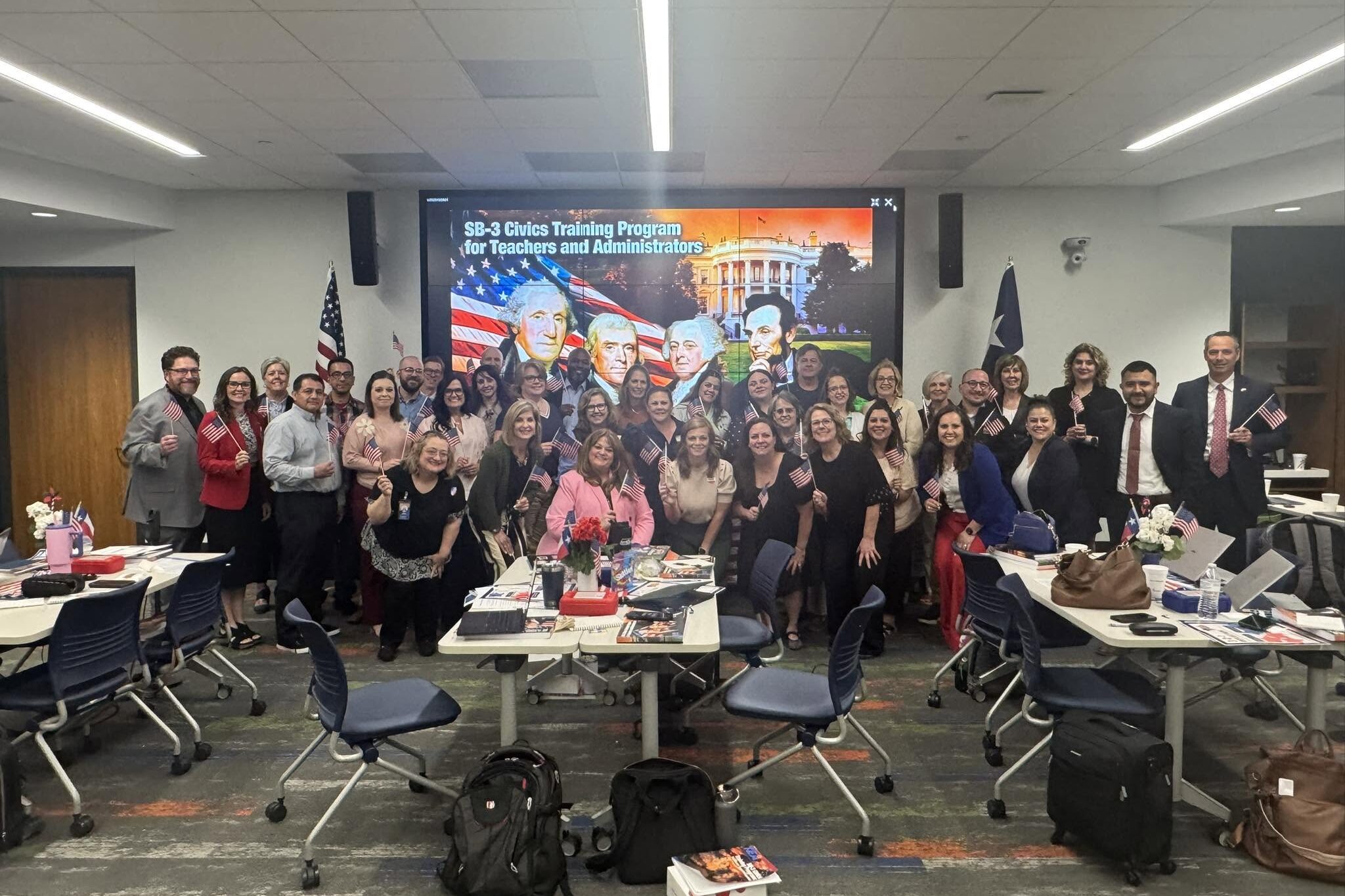
The big picture: The training is two days, in person, totaling 12 hours of content, delivered through the public school’s corresponding regional ESC, and is free for districts. State law requires every campus to send at least one teacher and one principal or campus instructional leader to the training. MISD confirmed to The Permian Press that it will send the principal and at least one teacher from each campus.
Smith explained that the state pays for the training through a legislative appropriation, and the ESCs do not charge schools to attend. Classroom teachers who complete the training outside their contract hours are eligible for a $600 stipend, whereas administrators are not.
Over the two days, teachers and administrators work through the program’s modules, as their students will eventually. They read the founding documents in their own hands, moving through the lessons in chronological order, and engaging in the same activities a classroom would.
The program is built around 17 modules, and participants answer 20 questions per module through an online system and must score at least 90% on each one to be certified in civics by the state.
-
- Dr. Dewitt Smith
-
- Photos from Region 18 Education Service Center
-

- SBOE Member LJ Francis
Go deeper: Before the summer teacher and administrator trainings began, Region 18 ran what Smith called a “training of trainers” or “TOT.” The TOT sessions were for regional experts, most of whom were history and social studies specialists, who would then deliver the program to teachers and administrators in their own parts of the state. Smith’s team started in Midland in April, then took the TOT on the road to Richardson, Austin, and Houston.
According to the program’s own internal survey of those spring sessions, 98% of 103 respondents rated the training excellent or good, and two of the four host regions, including Region 18 here in Midland, scored 100%.
Some trainers flagged the pace as overwhelming for the volume of material. But Smith’s read on how teachers will respond once they have been through the training is what he called an “exhale.”
“These trainings [are] almost like an exhale, like now I know what I can [do], what I need to do, how I can do it, and what I shouldn’t be doing,” Smith said. “Structure breeds knowledge and knowledge breeds confidence.”
Smith said the training instructs teachers to discuss “concepts objectively, chronologically, and free from political bias,” and that the program’s structure is not meant to be a cage but rather to free a teacher to teach a hard subject without fear of getting it wrong.
-
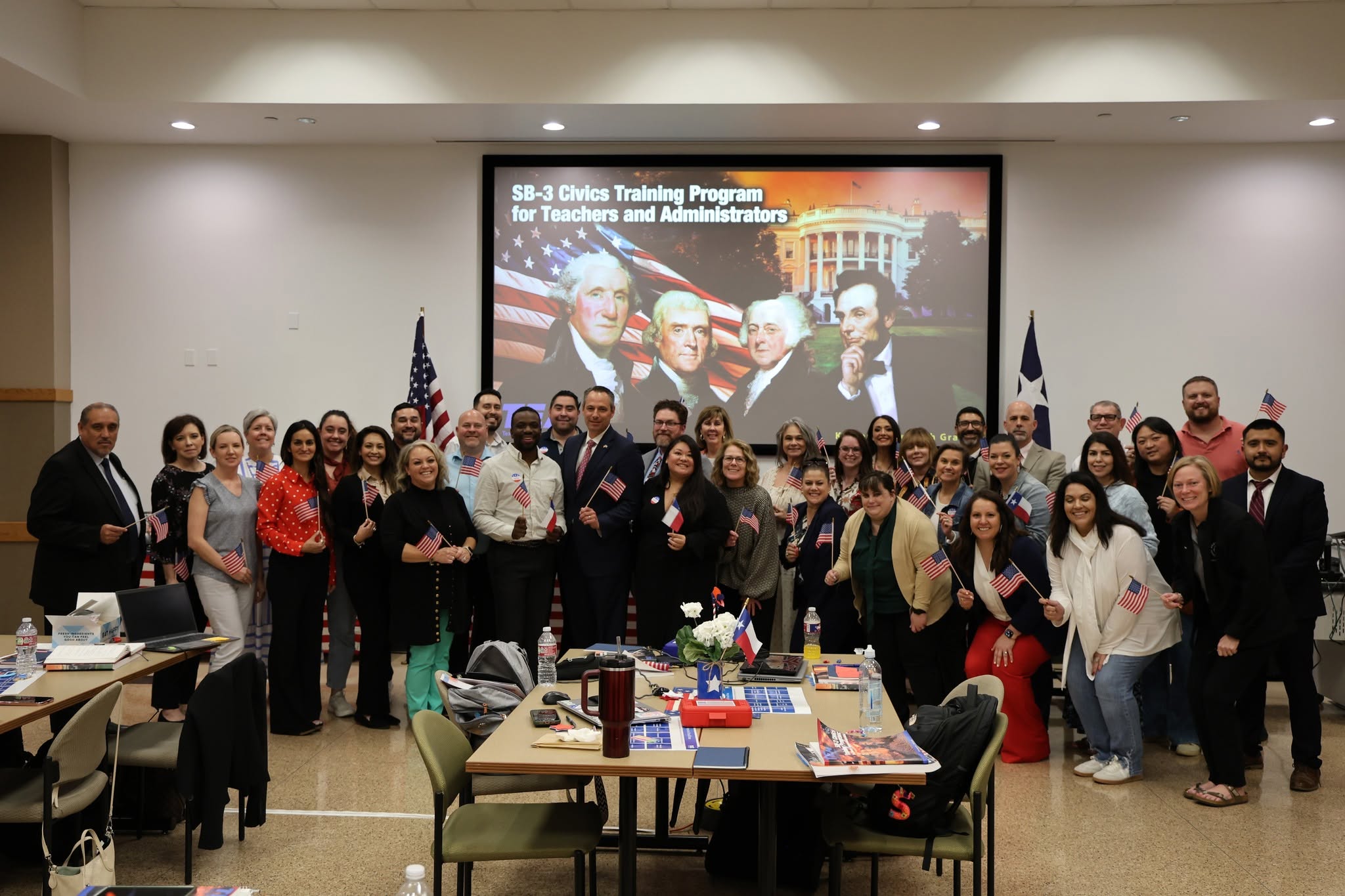
- Photos from Region 18 Education Service Center
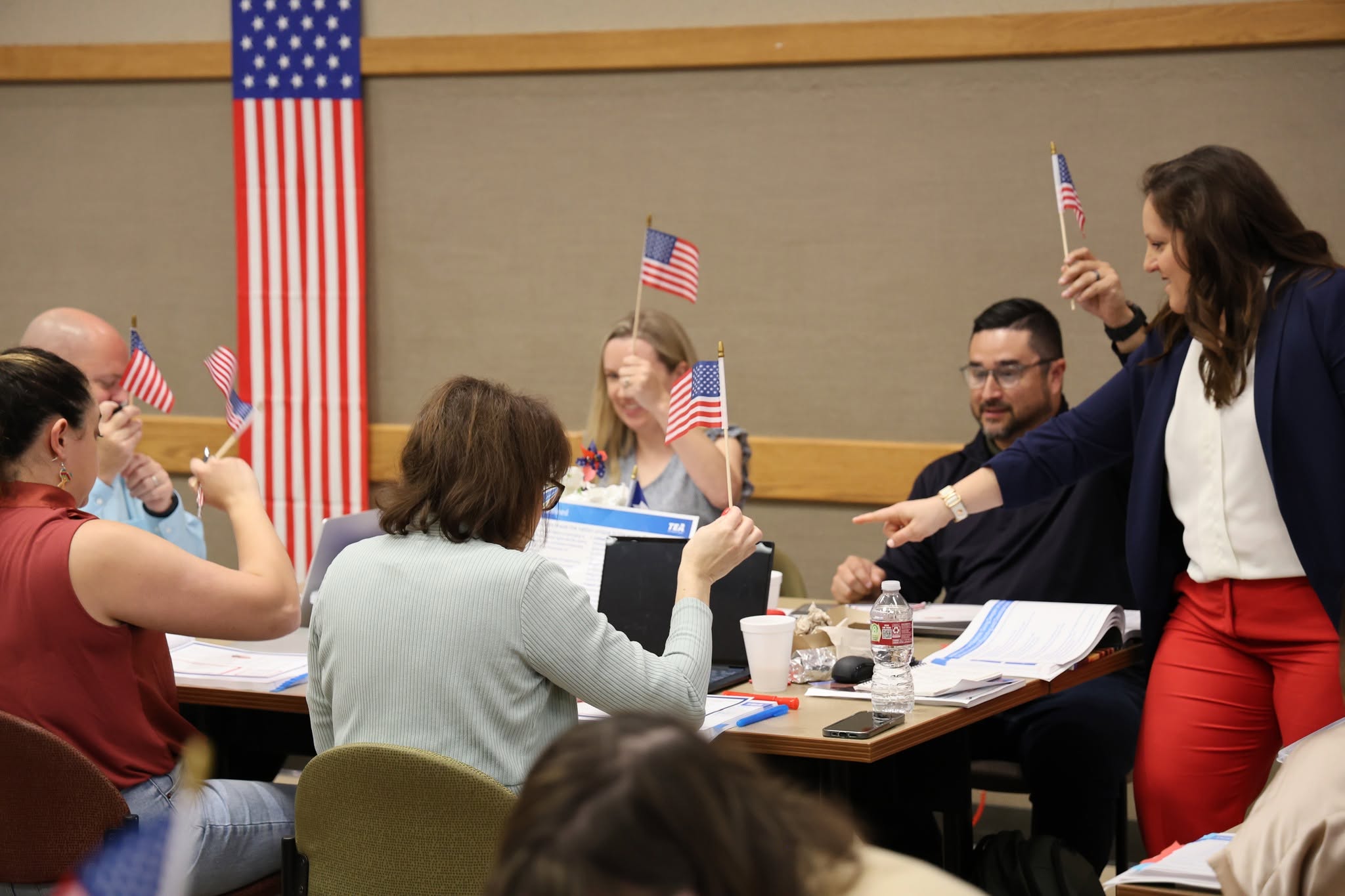
What’s next: The first wave of training for teachers and administrators is already underway. The 20 regional education service centers across Texas are training elementary teachers and administrators this summer, for two days at a time, so the instruction reaches elementary classrooms this fall.
Read part 4 of the series — What your child will actually learn in Texas’ new civics lessons. Part 4 enters the classroom to explore what your child will learn once the school doors open in August.