
How Midland built the school civics program rolling out this fall

Editor’s note: This is Part 2 of a four-part series on the new civics instruction coming to Texas elementary schools this fall and the training Texas teachers and administrators are completing this summer to deliver it. Part 1 is an overview. Part 2 examines the law and the lawmakers behind it. Part 3 goes inside the teacher training. Part 4 looks at what students will actually learn.
Catch up quick: Part 1 review — Civics knowledge has been slipping, both on the national report card and on Texas’s own assessments. However, Texas elementary schools will begin teaching a structured civics program built around the nation’s founding documents this fall.
What happened: The civics training that representatives from every Texas elementary school are attending this summer was built in Midland. The Region 18 Education Service Center (ESC), headquartered in Midland, received a state grant from the Texas Education Agency (TEA) to develop the elementary program. Region 18 is one of 20 state-funded technical assistance ESC organizations that support the public school systems within its region.
Midland sits near the center of the biggest change to how Texas teaches civics in a generation.
Zoom out: The program traces its origins to Senate Bill 3, passed in the 87th Texas Legislature’s second special session of 2021 and authored by State Sen. Bryan Hughes. Gov. Greg Abbott signed it on Sept. 17, 2021. The law directed the TEA Commissioner, Mike Morath, to develop a civics training program. It required every public ISD and charter campus to send at least one teacher and one administrator to complete it.
State Sen. Kel Seliger, who represented Midland at the time, and State Rep. Tom Craddick, who still represents Midland in the House, both voted for it.
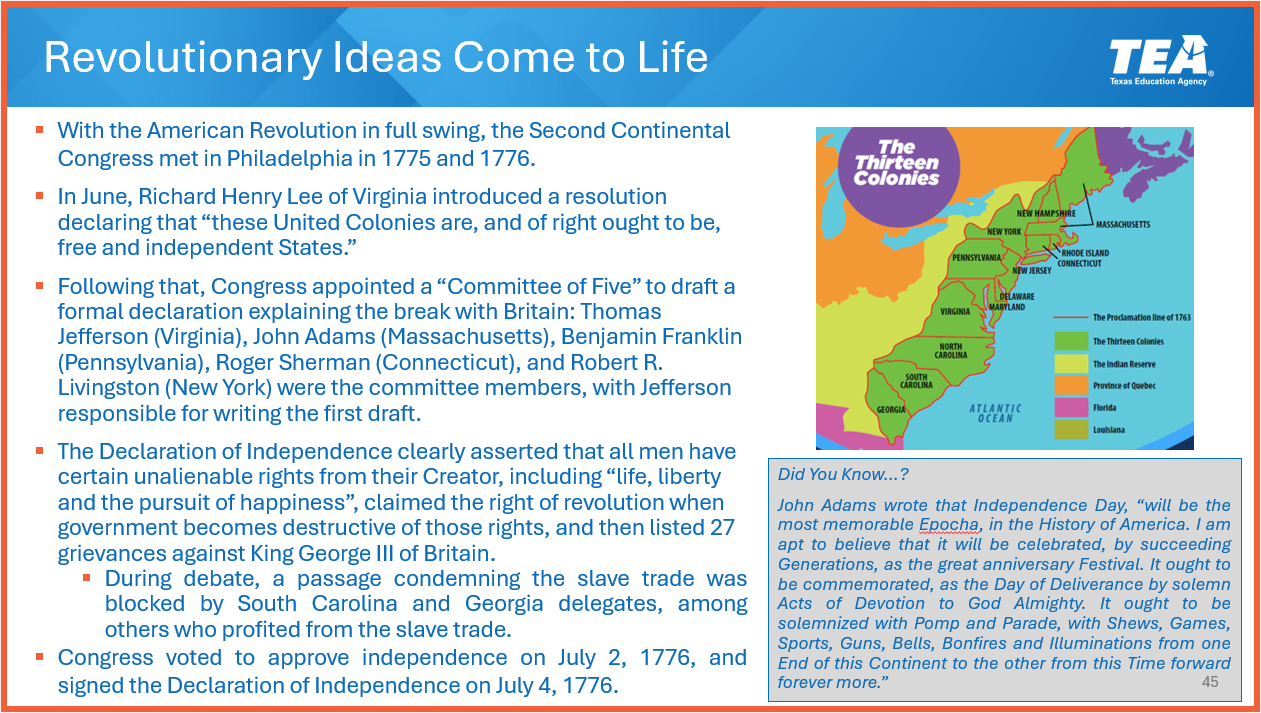
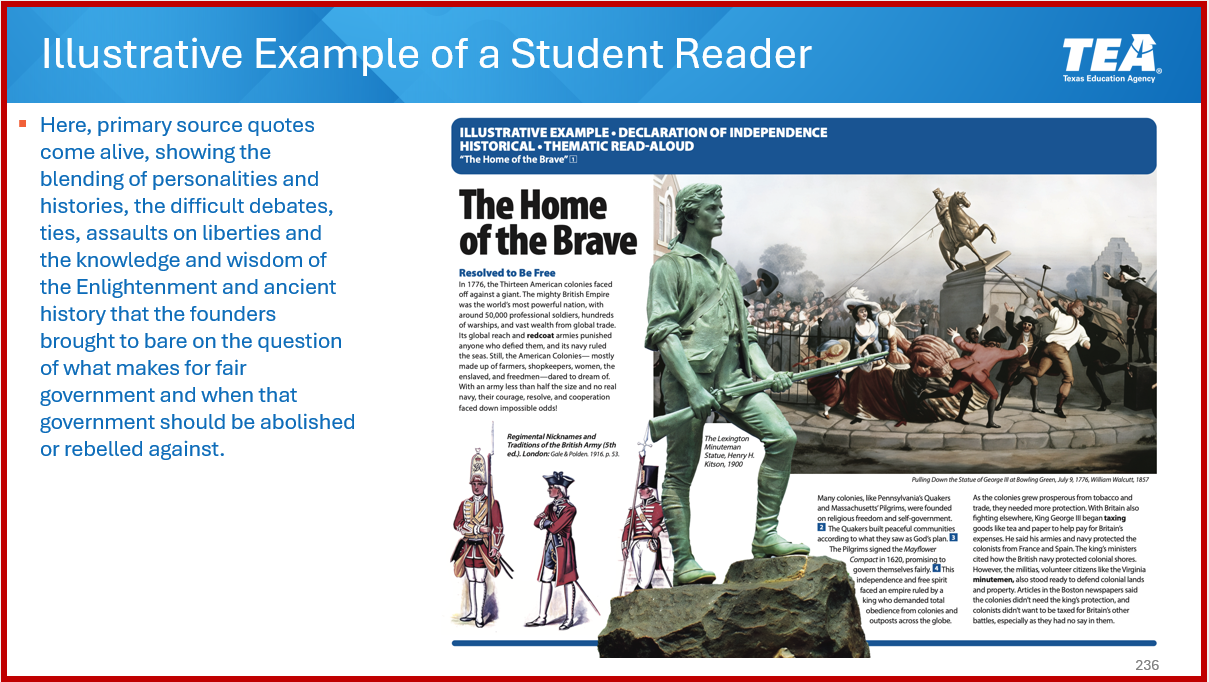
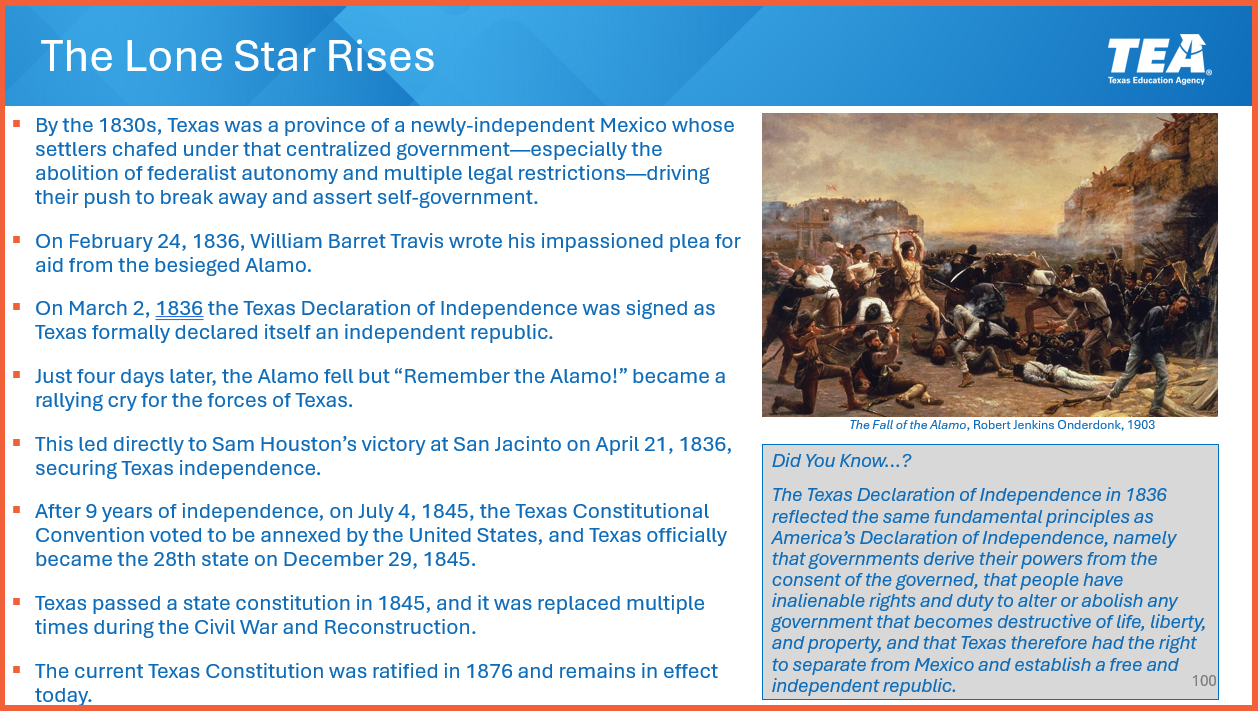
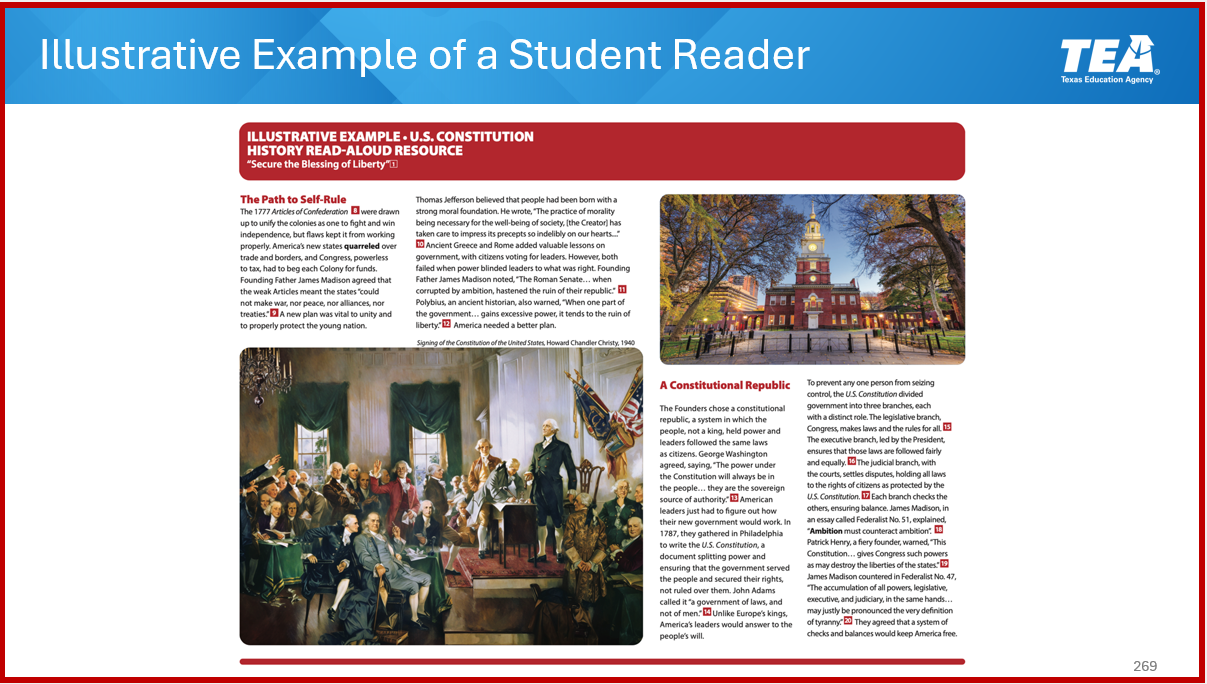
The big picture: SB 3 set in motion a chain that ran for years and passed through many hands. As Dr. Dewitt Smith, Executive Director and CEO of the Region 18 Education Service Center, explained to The Permian Press, Region 18’s role began with a grant from the TEA to develop the elementary program.
The center then ran its own competitive bidding process, awarded the development work, and produced the materials, the printed primary-source readers students will hold in their own hands, the two-day training model, and the teacher online certification system from the ground up. He said that Region 18 even became a printing-and-shipping operation, helping coordinate materials for campuses across Texas.
-
- Civics Training Program for Teachers and Administrators
-
- Civics Training Program for Teachers and Administrators
Go deeper: The program cleared its final gate on Feb. 25, when the SBOE adopted the elementary content on a 10–4 vote, a margin Smith called “unheard of.”
“The state’s new civics training program brings traditional values back to Texas classrooms and will help set our kids up for lifelong success,” SBOE Chairman Aaron Kinsey told The Permian Press.
“Its train-the-trainer model is highly scalable, and when it came before the board, I was excited to move forward with the SBOE’s approval,” Kinsey said. “Texas students should grow up understanding the principles this country was founded on, and starting this fall, they will.”
What they’re saying: Smith was quick to spread the credit. He thanked Sen. Hughes for authoring the law, TEA’s Commissioner Morath and Deputy Commissioner Dr. Shannon Trejo, Chairman Kinsey and the SBOE for approving the content, and his own Region 18 civics team and fellow service centers for building the program and carrying it across Texas.
“Thank you, [Sen. Hughes] for your visionary leadership and unwavering dedication to ensuring that our nation’s core principles and founding documents remain at the heart of Texas education,” Smith said. “Your commitment ensures future generations understand and appreciate the exceptional heritage of our country.”
“When we wrote Senate Bill 3, the vision was simply that every Texas student deserves to learn the truth of our history, the good, the bad, and the ugly, and to know the founding documents that made self-government possible,” Sen. Bryan Hughes told The Permian Press.
“But we can’t ask teachers to teach what no one has equipped them to teach,” Hughes said. “My hope was that we’d put real tools in their hands, and that our kids would come away understanding how blessed we are to live under these principles, and ready to carry them forward.”
-
- Civics Training Program for Teachers and Administrators
-
- Civics Training Program for Teachers and Administrators
Who’s behind it: Coauthors of SB 3 were current Sens. Donna Campbell, Lois Kolkhorst, Angela Paxton, Charles Perry, and Charles Schwertner, and former Sens. Brian Birdwell, Dawn Buckingham, Brandon Creighton, and Larry Taylor.
The bill’s sponsor in the House of Representatives was former Rep. Dan Huberty. Joint sponsors were current Reps. Steve Toth, Will Metcalf, and former Rep. James White. Cosponsors were current Reps. Cole Hefner, Tom Oliverson, Jared Patterson, David Spiller, Valoree Swanson, Tony Tinderholt, Cody Vasut, and Terry M. Wilson, and former Reps. Kyle Biedermann and Phil King.
The SBOE vote approving the elementary content fell along party lines, with Evelyn Brooks, Keven Ellis, LJ Francis, Brandon Hall, Will Hickman, Aaron Kinsey, Pam Little, Tom Maynard, Julie Pickren, and Audrey Young all voting in favor.
What’s next: The first wave of training is already underway. The 20 regional education service centers across Texas are training elementary teachers and administrators this summer, for two days at a time, so the instruction reaches elementary classrooms this fall.
Read Part 3 of the series — Inside the two-day training changing how teachers teach civics. Part 3 goes inside the training itself and explores what teachers and administrators actually do over the two days, how they have responded to it, and what it asks of them.