
Walk around Centennial Park with the Historical Society
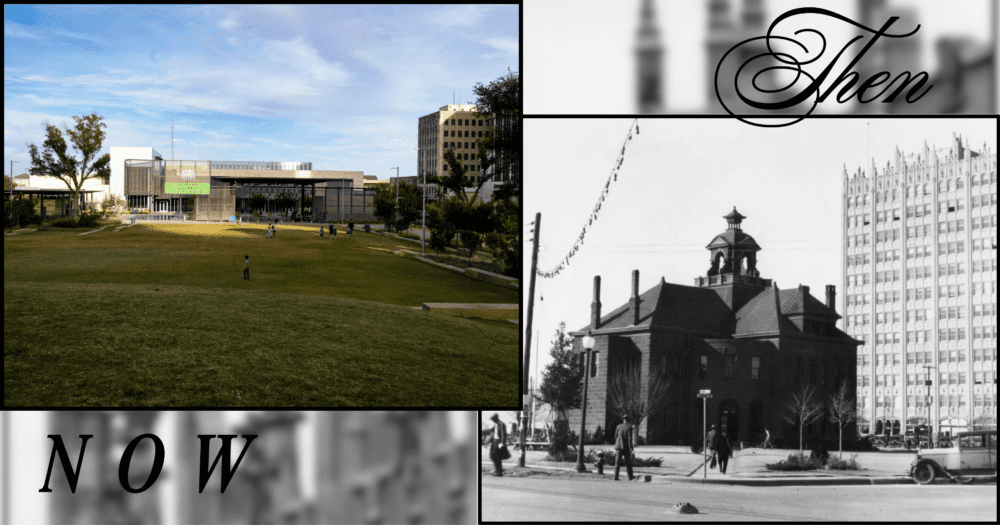
Take a self-guided walking tour through downtown Midland with the Historic Walk Around the Park, a route created by the Midland County Historical Society that highlights how the area around Centennial Park has changed over time. At each stop, use your imagination to stroll back in time and imagine what life was like here in these bygone years.
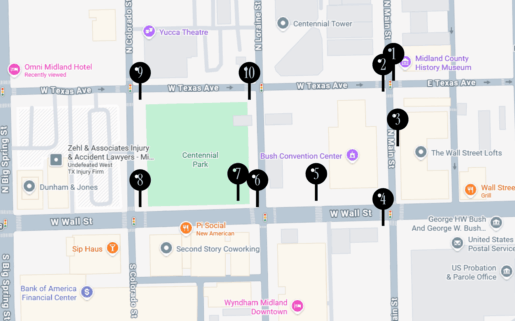
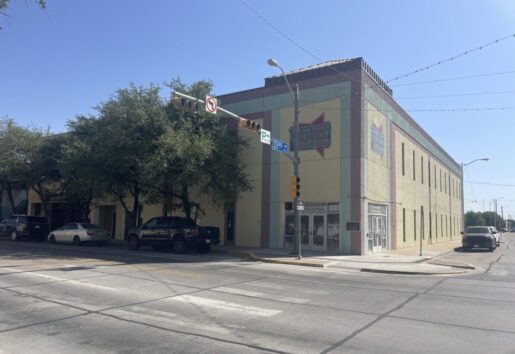
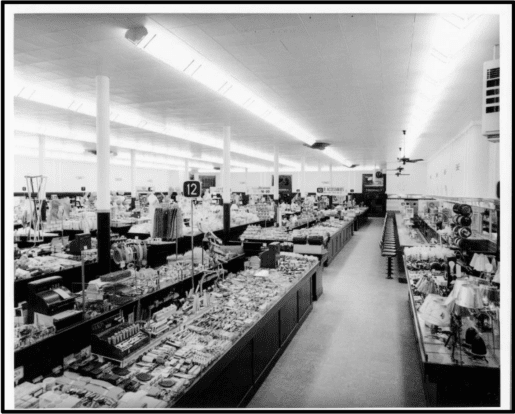
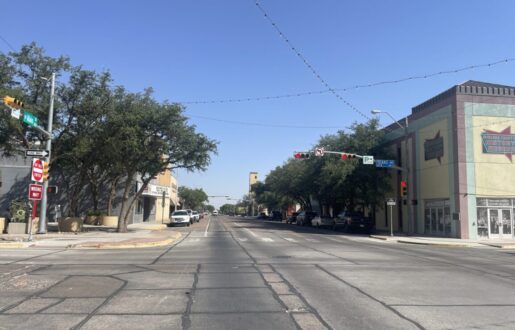
1. Start your walk in front of the Midland County History Museum at the corner of Main Street and Texas Avenue, which originally operated as a Woolworth store in the late 1940s.
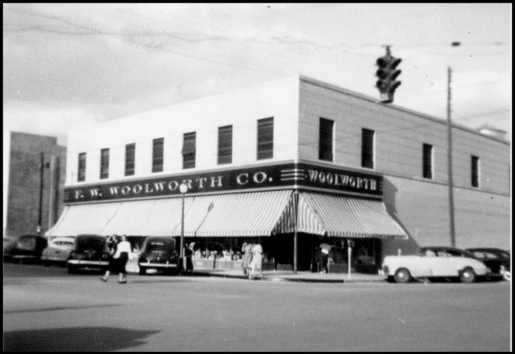
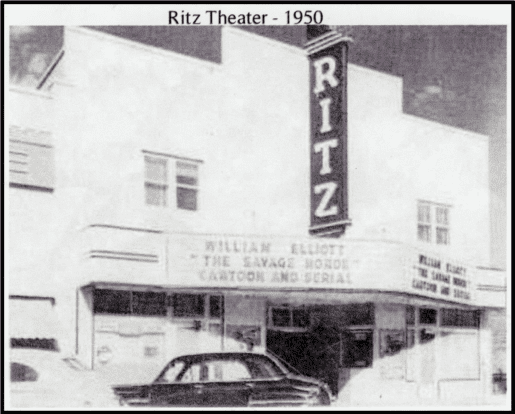
This is a view inside a typical Woolworth store. It may even be the Midland one, though we are not certain. The Midland Woolworth did have a lunch counter like the one on the right. Look across Main Street, and you will see the Ritz Theater, now the home of Basin PBS. In the 1930s-1950s, it provided entertainment as a movie theater. This is a 1950 view of the Ritz from where you are standing.
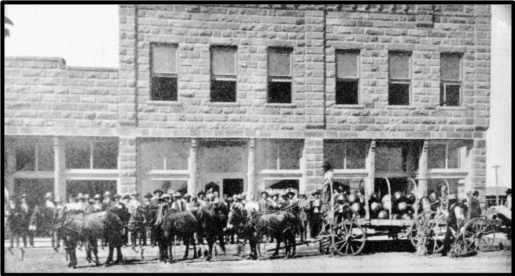
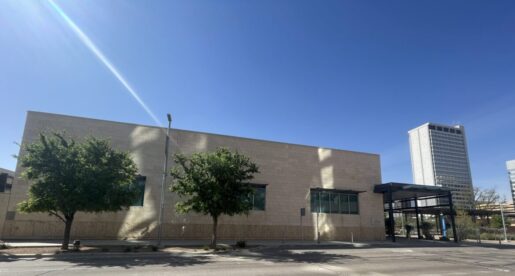
2. Now look to the corner of the Bush Convention Center. In 1906, this stone building was built on the corner of Texas and Main. In the early 1900s, George D. Elliott operated a mercantile business in the building. In this photograph from around 1910, a crowd has gathered to view the watermelon load brought to town. Mr. Elliott helped establish the first electric company in Midland. The Convention Center now occupies this corner.
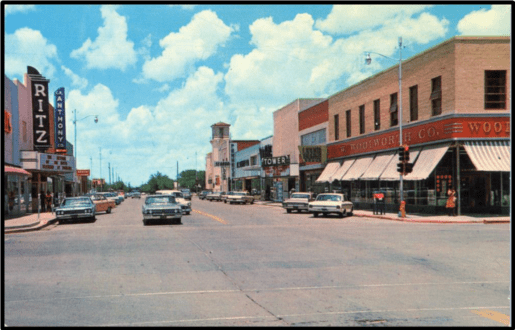
Turning to look north on Main Street, this would be your view in the 1960s. The Ritz Theater is on the left, and Anthony’s clothing store is next to it. The Tower Theater across the street opened in 1947. The First Methodist Church building, built during World War II, is visible in the background on the right. It was torn down after the current Sanctuary building was constructed in the late 1960s. The Woolworth’s, of course, is in front on the right.
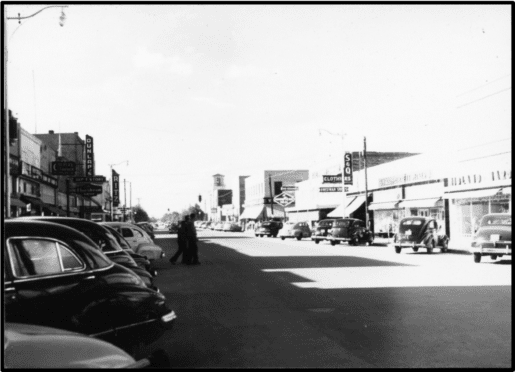
3. Walk south on Main Street to the middle of the block and look back north on Main. This is a view from where you are standing on the 100-200 blocks of Main Street around 1950. In the 1950s and into the 1960s, almost all the Midland stores were located downtown. The Woolworth Building is near the center of the photograph, and the Ritz is on the left.
Other businesses you can see include Dunlap’s clothing store and S and Q Clothiers, next to the Harris-Luckett general store. In the background near the center of the photograph is the tower of the First Methodist Church.
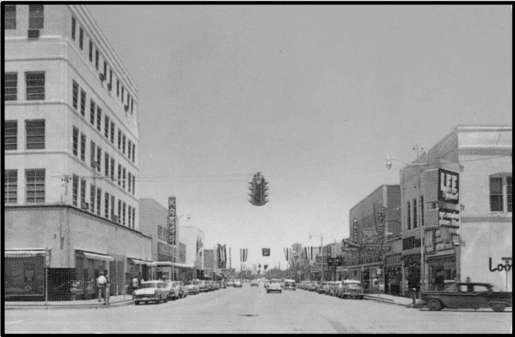
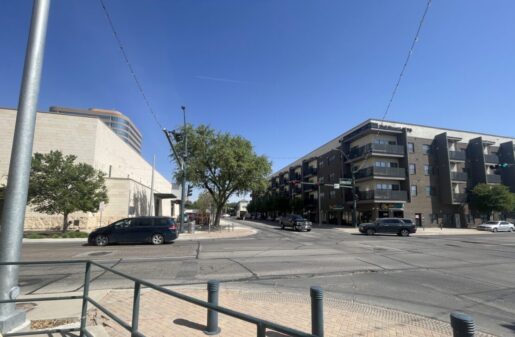
4. Continue your walk south on Main and cross to the left corner of Main and Wall for your next stop. If you looked north at the intersection of Main and Wall in the late 1950s, this is what you would see. Lee Optical and Kruger Jewelry were located where the Don Quinto restaurant now operates. The Wall Street Lofts now occupy the rest of the block.
Kress’ department store was next door to The Crawford (on the left), formerly the Llano, which closed in 1962. Banners advertising the Midland Rodeo, a big annual event, float above the traffic in the background.
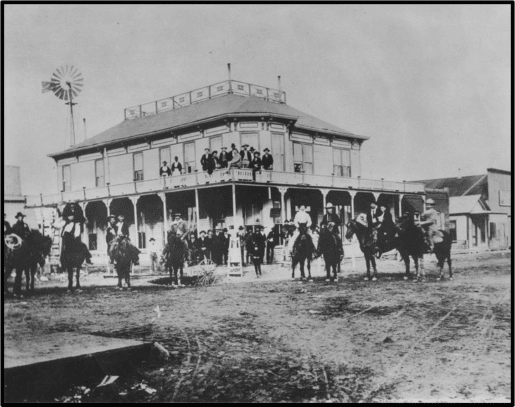
This is a view from long, long ago. It was taken on Christmas Day in 1895, where the Convention Center now stands. The building is the Llano Hotel, Midland’s first lodging establishment. Cowboys have lined up in the street as others stand on the street or on hotel balconies.
This corner of Main and Wall was then known by the former names of these streets. Wall was Iowa Street; Main was Abilene Street (following the pattern of naming the North-South streets after stations on the Texas-Pacific Railway line).
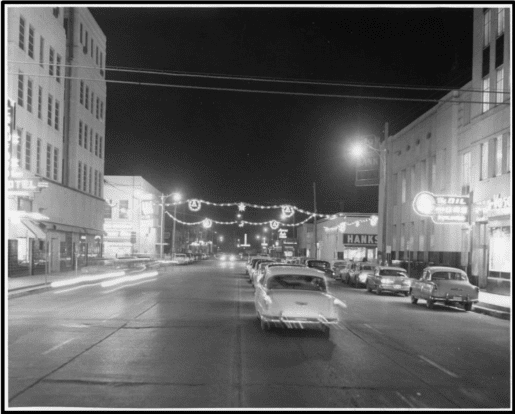
5. Cross the street to the Bush Convention Center and walk down to the Doubletree Hotel and Centennial Park intersection. Turn and look east. This is the December 1957 view of downtown Midland looking east on Wall Street. The Crawford Hotel is on the left, and the First National Bank is on the corner on the right. It is the only building in this photograph that remains today.
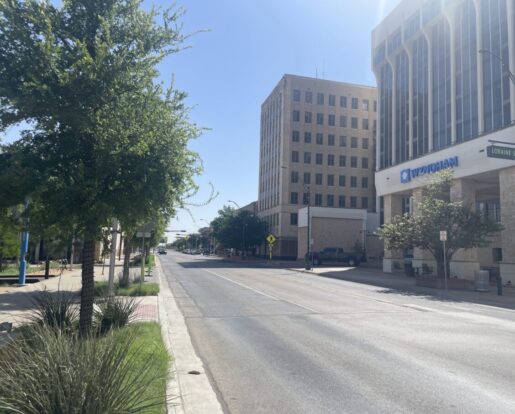
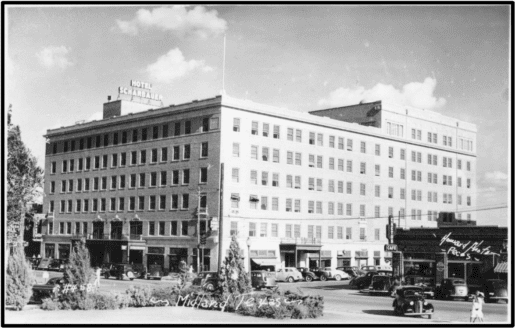
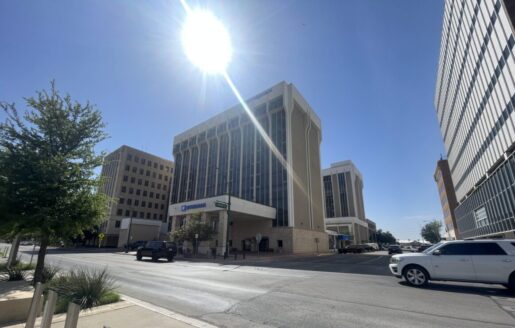
6. Continue west on Wall Street to where Loraine Street crosses the park. Across Wall Street stands the DoubleTree Hotel. For many years, the Scharbauer Hotel stood at this location. Built in the 1920s, the Scharbauer was Midland’s finest hotel, a destination for many travelers. The ballroom hosted many of Midland’s social events. The Cactus Café was on the corner of Loraine and Main in this 1940s postcard.
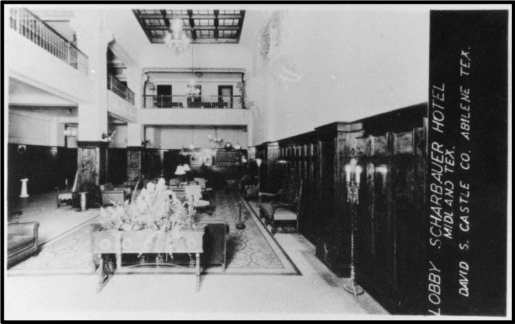
If you had entered the Scharbauer Hotel, this is what you would have seen in the lobby. Cattlemen, landmen, and Petroleum businessmen often met in this lobby to work out the details of million-dollar deals.
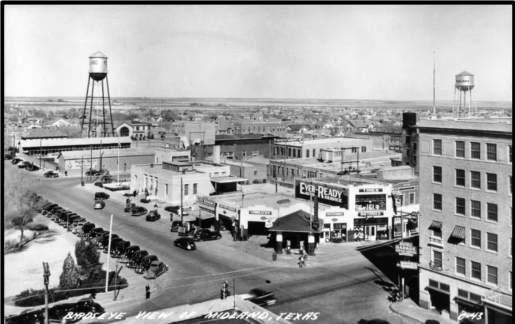
The Ever-Ready Filling Station, on the left of the hotel, opened in 1927 and was Midland’s first service station. It provided gasoline, tires, and other services to local customers and travelers off the Bankhead Highway, which ran through Midland along Wall Street at that time. Just right of the water tower in the back is First Baptist Church. This photograph was probably taken in the 1930s.
7. Continue your walk west on Main to the Clock Tower—a view of the Midland County Courthouse after it was remodeled in 1974. The clock and tower were erected in 1976 as part of Midland’s celebration of the United States’ Bicentennial. After the purchase of the new Midland County Courthouse building, further north on Main Street, this building was demolished, and Centennial Park was created. The Clock Tower remains today.
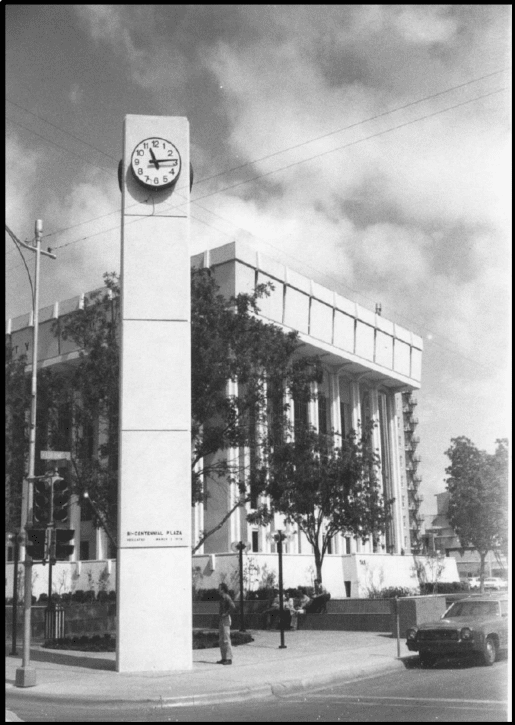
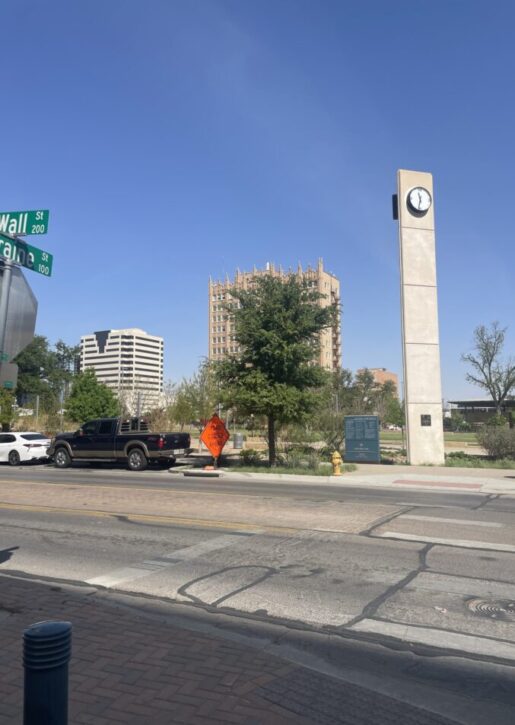
The Midland County courthouses have changed many times over the years. The 1974 remodel was done on this courthouse, built in 1930.
And this is the courthouse, the 1930 one replaced. This building was erected in 1905 and made of red sandstone from the Quito Quarry near Barstow, Texas, for a cost of $30,000. In the early years, a pond stood on the courthouse grounds. The tradition was to toss the bridegroom in the pond on his wedding day.
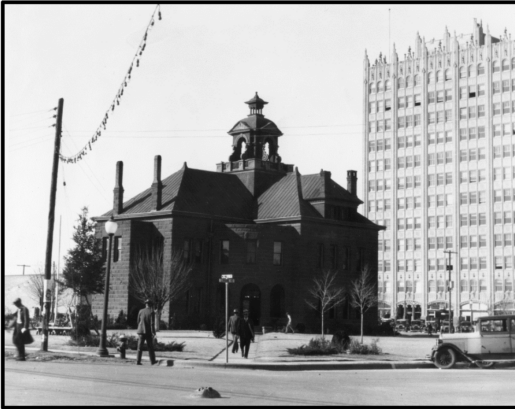
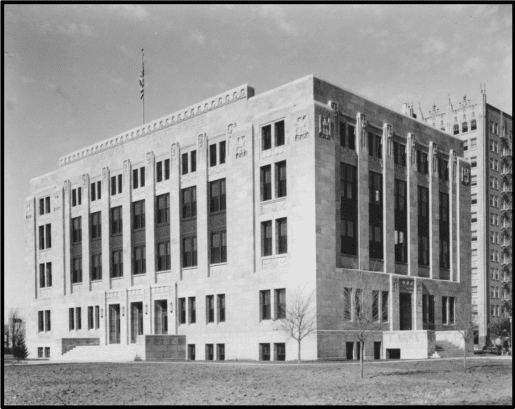
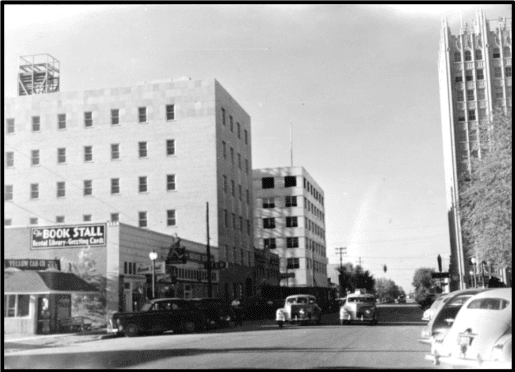
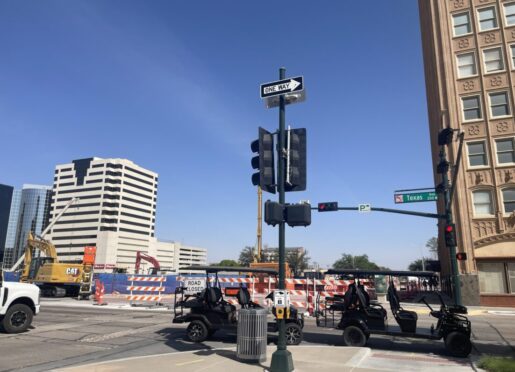
8. Continue west to the intersection of Wall and Colorado. If you stood on this corner around 1950, this is what you would have seen. Across the street was the Yellow Cab Company and the Book Stall. Now the OMNI Hotel is under construction, and the Wilkinson-Foster Building was. Behind that, the McClintic Building, and on the left, you can see a bit of the Petroleum Building.
This is a great photograph of the Petroleum Building, taken from across the street where you are standing, showing how it looked in 1929, shortly after it was built. You can see the sign for the Yucca Theater on the left of the building. The Yucca opened as a music theater and motion-picture venue, billing itself as one of the first in the area to have air conditioning. Now the home of Summer Mummers, the interior still preserves the original Assyrian décor.
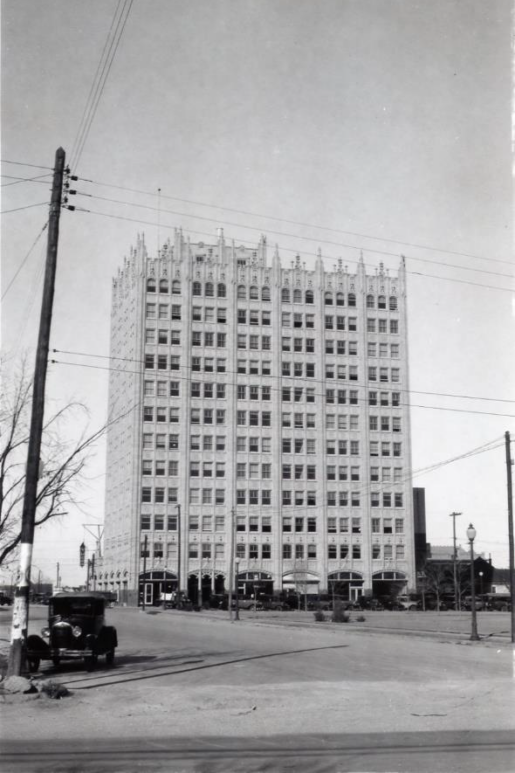
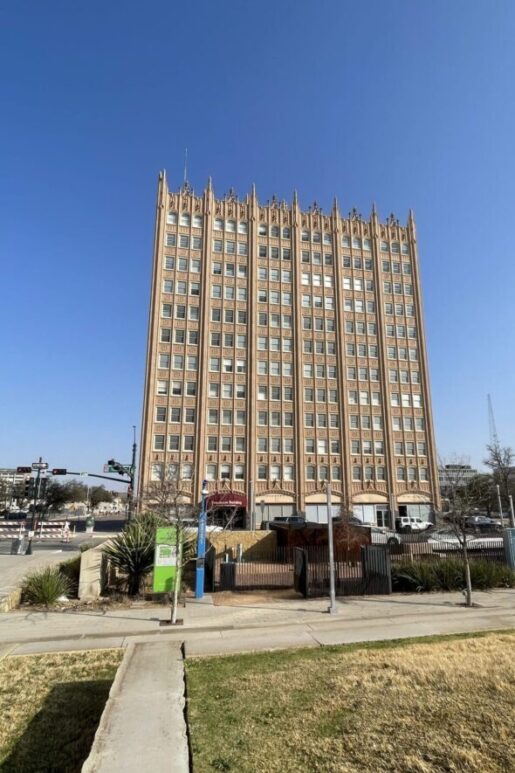
9. Enjoy a leisurely walk north on Colorado Street to the corner of Colorado and Texas to reach your next stop. Take a few moments to study the architecture of the Petroleum Building. Fort Worth architect Wyatt C. Hedrick designed this Art Deco building for oilman T. S. Hogan.
The twelve-story building was Midland’s first skyscraper. Completed in 1929, Hogan planned to create office space for the booming oil industry of the Permian Basin. Hogan’s timing was unfortunate, however. The buildings, which opened just before the stock market crash of 1929, sat largely unoccupied for several years. The building features many classic architectural elements, including a roof lined with Gothic spires.
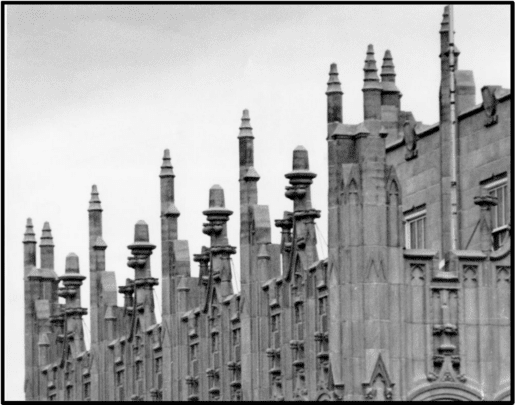
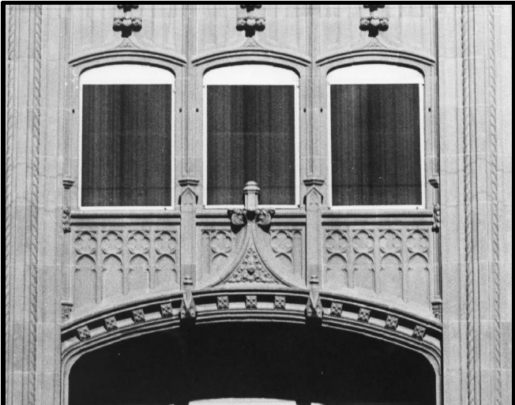
Examine the side of the building. Note the number of intricate designs that cover the entire building. Take some time to enjoy and study the intricate detail and the marble trim that adds a touch of elegance. Look at the street-level windows with Moorish arches. Notice also the marble along the ground level. All these are intended to give the building elegance and respectability.
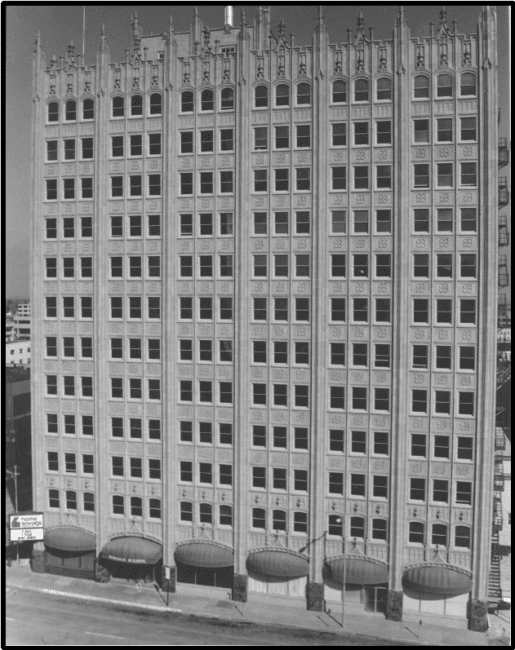
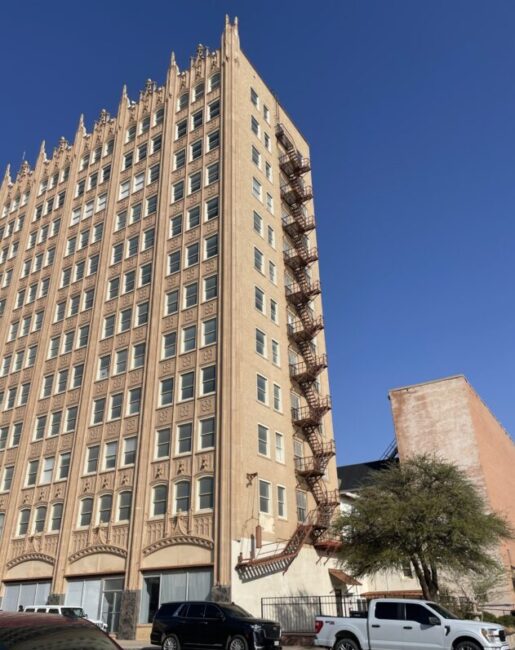
Several oil companies occupied the building in the early days, including Magnolia Petroleum (Mobil Oil), now part of Exxon, George Abell’s Tex-Mex Petroleum, Shell Petroleum, and Phillis Petroleum. Over the years, the building also housed a barbershop, a pharmacy, lawyers’ offices, dentists’ offices, and physicians’ offices. It even housed a future president, as former President George W. Bush once had offices here.
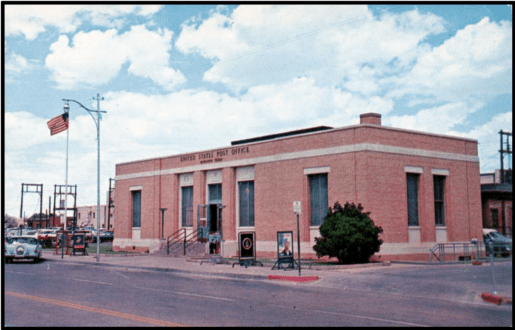
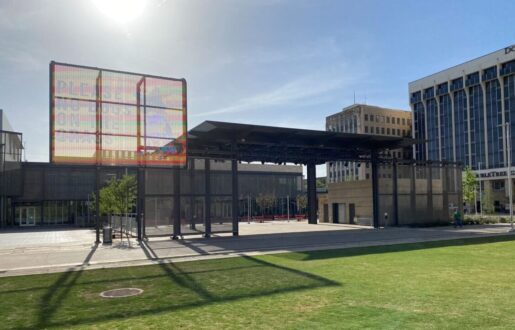
10. After you finish your study of the Petroleum Building, walk east on Texas Avenue until the intersection with Loraine Street. For many years, the Main Post Office for Midland was located at 114 N. Loraine Street, about where the stage area is at Centennial Park now. With the Midland County Courthouse just across the street from the Post Office, this would have been a very busy part of downtown.
Finish your historic walk back where you started at the Midland County History Museum, or stop by Centennial Park or the many local restaurants and shops downtown Midland has to offer to top off your day.
What’s next: Enjoy this short stroll into Midland’s past and come out with a better idea of how different downtown Midland looked in years past. Learn more about the interesting past of Midland County by visiting the Midland County History Museum.