
City infrastructure development focuses on northeast and west
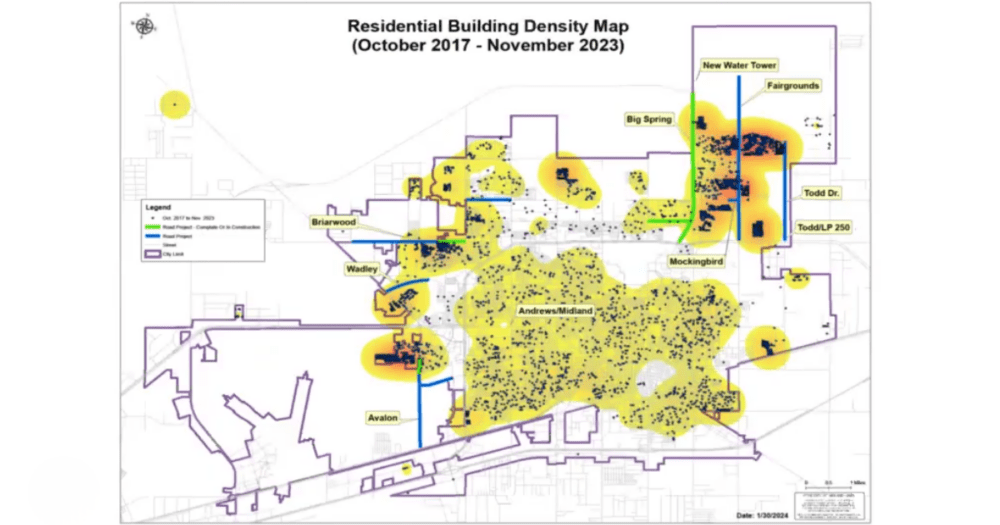
What happened: The City of Midland presented a three-year infrastructure outlook to the Midland Development Corporation (MDC) on Monday, April 13, outlining priority road, sewer, and connectivity projects to manage rapid growth in key areas of the city. Assistant City Manager City staff said the plan focuses on the Northeast and West Midland, where residential development has surged in recent years.
Why it matters: Ortiz said the city is planning infrastructure years in advance of development to avoid falling behind the pace of growth.
“If we would have waited for the activity that you see now, we would have been too late,” Ortiz said, noting that road and utility projects can take years to design, acquire right-of-way, and build.
The big picture: Ortiz outlined several projects driving the city’s three-year plan, all concentrated in areas where development is already underway or expected to accelerate.
- State Highway 191 and County Road 1250 interchange and overpass
- Todd Drive extension and widening (north of Loop 250)
- Golf Course Road East and Scharbauer Drive connection
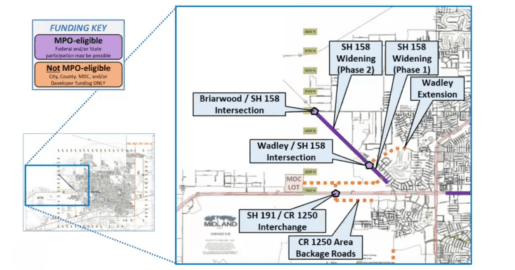
- West Midland corridor improvements tied to State Highway 158
In West Midland, the city is tying infrastructure directly to the opening up of large tracts of land for development. A central piece of that effort is a 2.3-mile sewer line extension running through MDC-owned property, which Ortiz said will allow the area to develop more efficiently.
Roadway improvements along State Highway 158, including intersection upgrades at Wadley and Briarwood and phased widening projects, will complement the utility expansion by allowing the area to handle increased traffic as development progresses.
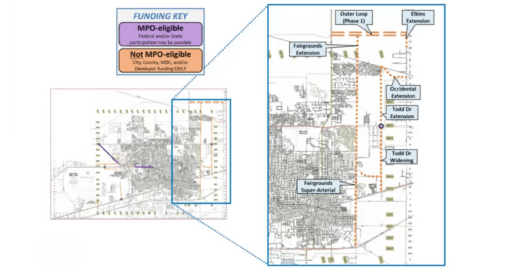
In East Midland, the focus is on connectivity in areas where growth is already underway. The city is advancing projects along Todd Drive, including both widening and extension work, as well as improvements to Fairgrounds Road and the development of a larger “super arterial” corridor intended to handle higher traffic volumes.
Additional extensions, including connections along the Elkins and Occidental corridors and planning for a future outer loop, will create a more complete road network in an area where new housing has expanded faster than existing infrastructure can accommodate.
Catch up quick: The MDC is a voter-created economic development entity funded by a dedicated 0.25% city sales tax approved in 2002. For fiscal year 2025–26, the city council approved a $16.2 million MDC budget. As of FY 2024, MDC held more than $28 million in cash and investments. MDC dedicates roughly 35% of its annual revenue to infrastructure investment.
As a Type A economic development corporation, MDC focuses on projects that create jobs, including industrial development, infrastructure, and business recruitment.
The bottom line: Ortiz said a partnership between the city and MDC is accelerating many of these projects. Instead of waiting on state timelines, the city and MDC are funding design work and early project phases locally, then coordinating with the state to move projects into construction more quickly. This approach allows Midland to advance projects years earlier than traditional processes would allow.