
MCUD shifts strategy, eyes smaller water bond in Nov
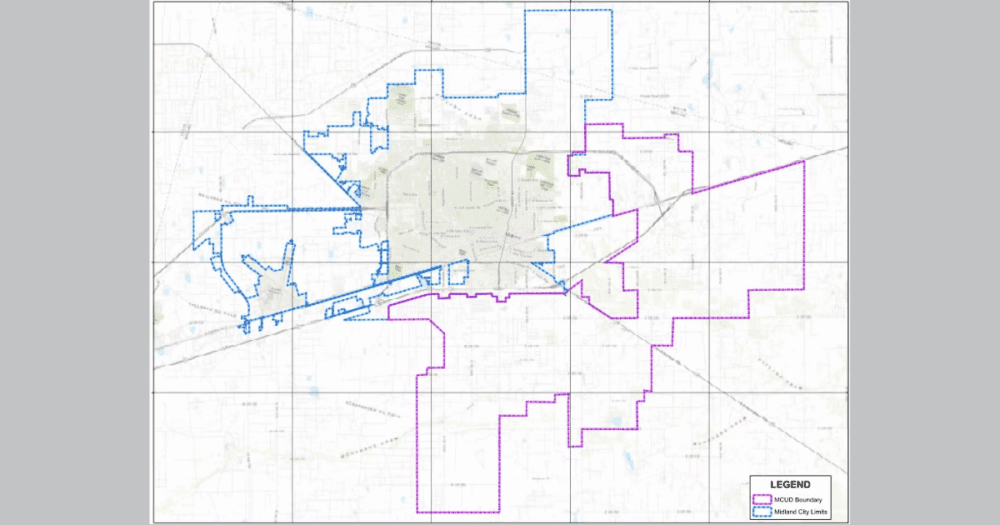
What happened: On Wednesday, April 30, the Midland County Utility District (MCUD) board outlined a new financing plan for water infrastructure.
The board is now considering a smaller $200-$300 million bond for November 2026, that MCUD conservatively projects will connect 50 new residential connections in the first year and 213 in the next, partly because of the unresolved dispute over private-utility service territory with Park Water, which is still pending before the PUC.
The total project, potentially serving the district’s 35,000 residents, is still expected to carry a hefty price tag. MCUD General Manager Norman Ashton told the board he has “a really hard time believing that 85 square miles [of MCUD serviceable area] is going to be less than $1-2 billion.” The board expects a new engineering report, due in late June, to establish the current, total dollar figure.
Catch up quick: A year ago, MCUD asked Greenwood-area voters to approve a $645 million bond to build out a public water system, which 76% rejected. Greenwood is unincorporated, and it is outside the city or county’s authority to provide water service. In 2013, voters in the Greenwood area approved the creation of MCUD, a separate, taxpayer-supported public utility district, designed to one day deliver water to residents.
For most of the past decade, MCUD existed mostly on paper. As of late 2025, the district had collected less than $14 million in revenue over the previous four years and spent less than $2 million, primarily on engineering and water fees.
Why it matters: For a Greenwood resident, the practical questions are when I could receive MCUD water to my home, and how much it will cost me. The April 30 meeting answered those questions, at least in part.
The big picture: MCUD’s previous plan sought to fund the entire system in a single ballot question. The new approach, Ashton told the board, would use a smaller bond to build out the highest-priority phase first, likely the southern part of the district, generate water-rate revenue from those new customers, the school district, and the jail.
MCUD would then finance future expansions through revenue bonds backed by that income rather than property-tax-backed general obligation bonds repaid by every property owner in the district.
The district also has a new 10-year financial model. It assumes the existing 3-cent maintenance and operations portion of the property tax stays flat, builds in a one-year cash reserve to support a strong bond rating, and shows the district can cover its costs purely from water rates and the existing tax. If voters were to approve an MCUD bond, it would increase the district’s interest and sinking fund (debt) portion.
The other side: Until residential connections grow, the financial plan leans on Greenwood ISD and the Midland County jail. The school district’s projected $320,000 a year in water revenue does not actually reach MCUD’s accounts as cash for years. The district owes Greenwood ISD a credit against past contributions until a $5 million obligation is paid off, projected to be 2039 at modeled use levels.
Similarly, the county previously approved a $5 million interlocal agreement with MCUD for infrastructure at county facilities, with MCUD to reimburse the county if a bond passes.
Go deeper: The district proposed water rates would mirror those of the City of Midlands. The district’s financial consultant recommended a base monthly bill of $23.26, including the first 2,000 gallons, with charges that climb the more a household uses. A typical 5,000-gallon-a-month residential customer would pay about $43, while a heavier 10,000-gallon user would pay about $75.90. A formal rate vote is expected at the May 21 meeting.
Ashton and the district’s contractors told the board that the district’s four wells, two 2-million-gallon ground tanks, a 100,000-gallon elevated tower, and a reverse-osmosis treatment unit are operating. Greenwood High School expects to begin drawing water this week, and the new Midland County jail will be the second customer once construction is complete.
The bottom line: A year after voters rejected its previous bond, the district’s case to Greenwood voters is now becoming clearer. Whether that’s a case voters accept will be tested in November. The board said it will consider the actual size of the new bond at its next meeting on May 21.