Texas power prices soar amid wind, solar, transmission buildout

What happened: On Wednesday, July 29, the Texas Senate’s Business and Commerce Committee held a hearing to listen to panels of oil and gas industry representatives, utility officials, policy experts, landowners, and the general public on the need and impact of the Public Utility Commission of Texas’ (PUC) proposed $33 billion 765 kilovolt (kV) transmission plan that would move large amounts of electricity over long distances across the state.
In the Permian Basin alone, since 2024, the PUC approved or is considering 24 projects totaling about 455 miles of 345-kV and 138-kV transmission lines and $2.2 billion. Those projects drew about 100 intervener filings mainly from affected landowners.
By comparison, the first five proposed 765-kV projects span about 765 miles across the state and total more than $10 billion. Those projects have drawn more than 3,500 intervener filings. The proposed line from Big Spring to Glen Rose alone had more than 700 documents filed by interveners between Oncor’s opening of its PUC docket and its formal application filing.
Why it matters: Midland’s state senator, Kevin Sparks, serves on the Senate Business and Commerce committee and has been publicly concerned about the PUC’s process for selecting plans for the statewide 765-kV electrical lines. The Legislature passed House Bill 5066 in 2023 directing the PUC to implement a reliability plan for the Permian Basin.
The legislation changed the previous approval process by directing the PUC to develop a transmission reliability plan specifically for the Permian Basin, which has experienced extremely long delays in connecting oil and gas operations to the grid as oil production increased from 1.5 million barrels per day in 2014 to more than 6 million barrels per day today.
The result of that legislation, however, grew beyond new transmission within the Permian Basin. The Electricity Reliability Council of Texas (ERCOT) and the PUC expanded that authority to develop a plan that includes the state’s first 765-kV transmission lines as a backbone across most of the state. Sparks has argued that the resulting statewide plan goes beyond what lawmakers intended when they passed the Permian Basin legislation.
The big picture: The central theme of the hearing was the issues facing the Texas grid from the intermittency of large amounts of wind and solar generation, as well as uncertainty about how much electricity new data centers will ultimately demand.
The Permian Basin has about 34,000 megawatts (MW) of wind and solar generation capacity, compared with only 4,000 MW of natural gas generation capacity and roughly 10,000 MW of electricity demand. Because wind and solar do not produce at full capacity at all times, the Permian Basin can shift between exporting excess electricity and importing electricity from elsewhere in the state, sometimes within the same day.
The transmission and distribution portion of an electric bill — the part that pays for the poles, wires, and other infrastructure that moves electricity — has increased from $0.035 per kilowatt-hour (kWh) in 2020 to $0.061/kWh in 2026. Oil and gas representatives said at the hearing that they routinely wait three to five years to connect new operations to the electric grid and want transmission improvements to shorten those waits.
Go deeper: Texas opened its retail electricity market to competition in 2002, allowing many customers to choose their electricity provider while transmission and distribution remained regulated by the PUC. This created a system of power experimentation in Texas. Intermittent wind and solar rose from about 3% of electricity generation in 2007 to more than 41% in 2026.
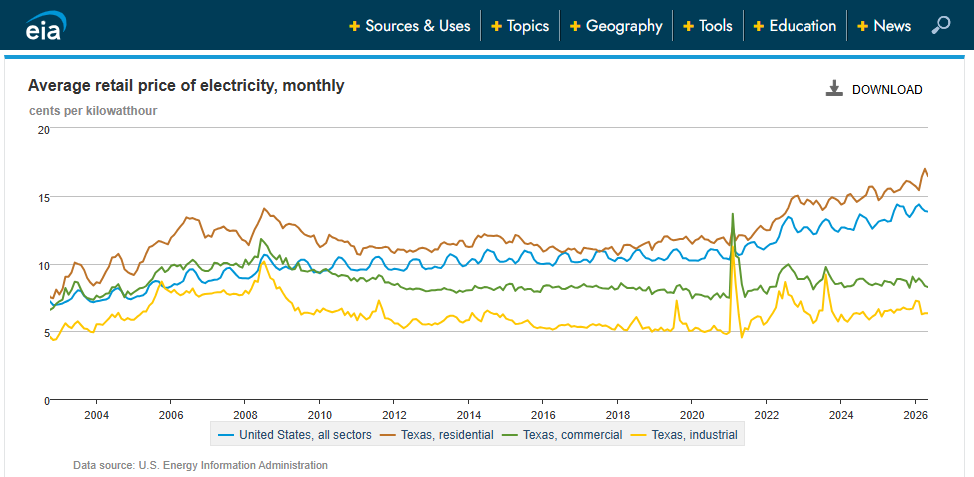
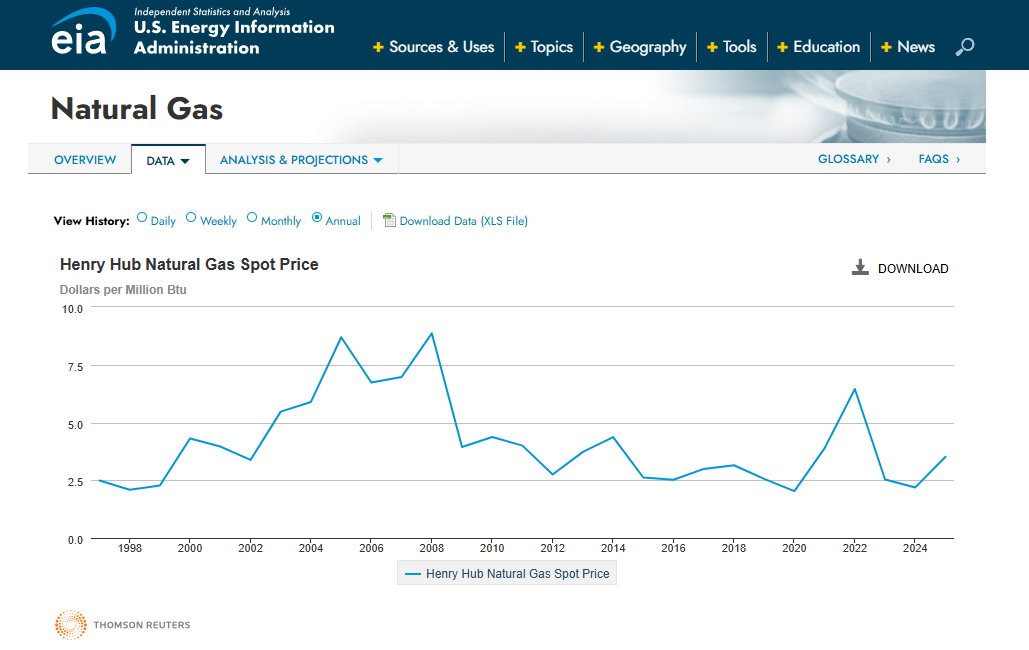
While power prices were originally relatively predictable and sent market price signals when new or improved generation could be built, they have now become a convoluted mix of wires, weather conditions, and power-use habits. Texans today pay more for electricity than they did in 2008, when natural gas prices were the highest in history at about $9 per million British thermal units (MMBtu), compared with about $3/MMBtu today.
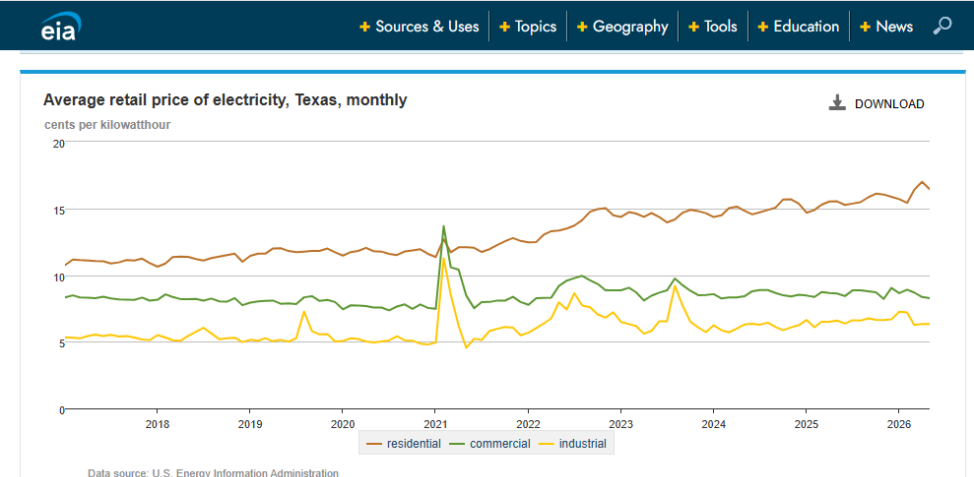
Since 2020, electricity prices for residential users in Texas have risen by more than 40%, from 11.5 cents/kWh to 16.5 cents/kWh, while industrial prices have risen by 25%, from 5.05 cents/kWh to 6.33 cents/kWh. Texas’ economic growth has exploded since 2020, increasing the number of electricity customers by 15% in residential and 65% in industrial accounts.
During that same period, the share of Texas electricity generated by wind and solar increased from 25% in 2020 to 37% in 2025 and exceeded 41% through July 2026.