
Deputy approved after constable claim disputed by sheriff
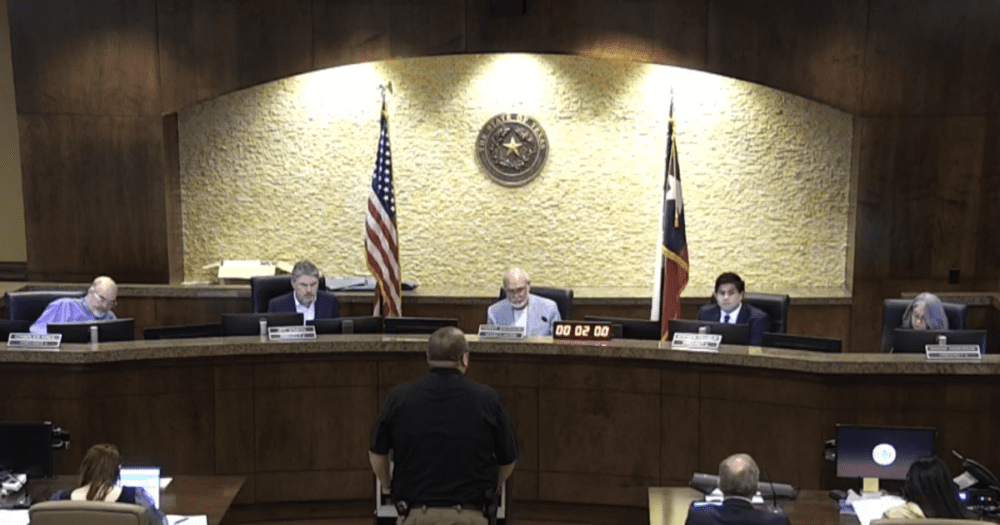
What happened: The Midland County Commissioners Court met on Tuesday, March 3, and approved a $5.5 million road maintenance contract, authorized new law enforcement equipment funded by a federal grant, and voted to hire a deputy constable after debate about staffing and salary structure.
Key points:
- Constable hire: Constable Jerry Cook asked the court to approve hiring a deputy, saying the position would reduce reliance on outside agencies when he needs assistance. Earlier in the meeting, Sheriff David Criner, a former Constable, addressed a complaint raised by Cook last month, saying that when he called the Sheriff’s Office for assistance, it took nearly 45 minutes for them to arrive.
The sheriff said he conducted an internal review of the situation and found that animal control responded to a report of dogs at the property, not a delayed response from sheriff’s deputies. Criner added that he believed Cook knew about the dogs on the property and should have better coordinated the assistance he would need before arriving.
The court ultimately approved, 3–2, hiring a deputy for Cook. Commissioners Steven Villela, Dianne Anderson, and Charles Hall approved the hire with Jeff Sommers, and Judge Terry Johnson opposed. The votes aligned with the court’s previous 3–2 decision allowing Constable Jamie Hall, the daughter of Commissioner Hall, to hire a deputy.
- Road chip seal: Commissioners authorized a contract for the county’s 2026 chip seal program for $5.5 million to treat roughly 85 miles of county roads. Officials said the chip seal process extends the life of rural roadways by sealing pavement and preventing deterioration, and that preventative maintenance can save millions compared to full road reconstruction.
- Anti-gang unit: The court also approved several law enforcement items tied to the Texas Anti-Gang Unit (TAG), including the purchase of a TruNarc digital drug analyzer. The portable device allows officers to identify suspected narcotics in the field quickly and is fully funded by a federal TAG grant.
TAG officials also received approval to apply for the fiscal year 2027 TAG grant totaling approximately $2.68 million, which funds regional gang enforcement operations across the Permian Basin.
- Department evaluations: Commissioners also spent significant time discussing how the court should evaluate department heads. After debate, the court voted to assign individual commissioners as liaisons for roughly three departments. The system is intended to give commissioners a more direct point of contact with specific offices while still leaving formal supervision with the full court.
- Personnel policy: Commissioners discussed a proposed change to a personnel policy that governs anniversary step raises for county employees, but the item ultimately failed. Johnson proposed removing the phrase “2% increase” from the policy so employees would simply move up one step in the pay scale.
He said the change would allow the Sheriff’s Office to continue using its separate step structure, which provides roughly 4% increases. Villela said the change could limit future courts’ flexibility when setting salaries. The motion failed and the policy was left unchanged.