
Can a society prosper without virtue? A Midland perspective
Editor’s note: This opinion piece was submitted to The Permian Press for publication. Readers interested in submitting an opinion on this or another local issue can visit our Submit a Story page.
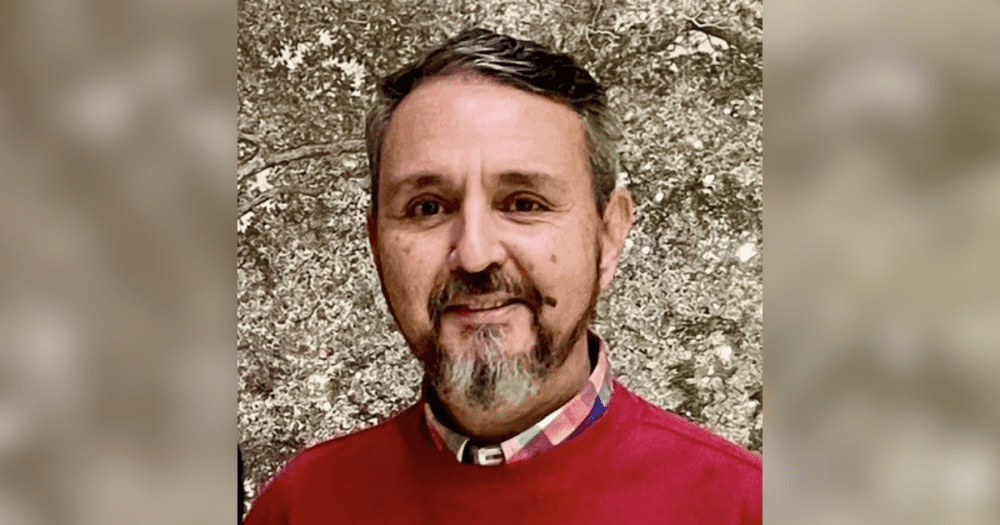
Eliel Rosa is a legal immigrant from Brazil. He is the founder of the Nehemiah220 Ministries, serving Midlanders for eight years now. He has a BA in Social Sciences and a specialization in Urban Sociology. He came to the U.S. to pursue a PhD in Constitutional Law and Public Policy.
In 2007, I completed my academic dissertation in the Department of Social Sciences at the Federal University of Paraná, Brazil. At its core, the research was guided by a central question: Can a society achieve lasting prosperity without a foundation of virtue?
In my view, the Founding Fathers of the United States grasped the weight of this question with remarkable clarity. As President John Adams wrote in 1798:
“There is no government that is able to contend with human passions unrestrained by morality and religion. Avarice, ambition, revenge, and corruption would break the strongest cords of our Constitution, as a whale goes through a net. Our Constitution was made only for moral and religious people. It is wholly inadequate to the government of any other.”
Regrettably, history has provided no shortage of examples—across nations, institutions, and levels of authority—in which both public officials and private citizens have fallen short through unlawful or unethical conduct.
The consequences of such failures extend far beyond public disillusionment or declining trust in leadership. They carry significant economic implications, constraining the conditions necessary for sustainable growth, stability, and national development.
In essence, political self-government is inseparable from personal self-government. Where citizens lack a foundational standard of ethics and character, their collective decisions will inevitably reflect those deficiencies—elevating ambition over service, diminishing human dignity, and fostering a culture marked by moral and spiritual erosion.
In such environments, power and wealth displace justice and opportunity as the primary societal aims. The choices of a people, therefore, are a direct expression of their values.
This raises essential questions: how do the values that shape individual lives influence broader economic and social progress? What responsibilities do citizens at large bear—not only in their private and professional conduct, but collectively—in shaping a more just and flourishing society.
These questions formed the basis of my academic work in 2007, later expanded into a book in 2016. The research developed into a case study examining how the practical application of values influenced public life in the city of Curitiba, Brazil. It presented compelling evidence of the central role played by collective character, as well as the healthy interdependence between social institutions and civic society, in driving the city’s progress during the latter half of the twentieth century.
The findings demonstrated that without a strong culture of integrity, active civic participation, and sustained alignment between citizens and government, Curitiba’s urban renewal and the successful implementation of its Master Plan would not have been possible.
The relationship between the public sector, private enterprise, and civil society is inherently complex and deeply interdependent. For such a relationship to yield meaningful and lasting outcomes, it must be grounded in a shared commitment to the common good and sustained by mutual trust in the integrity of all parties involved. Absent these principles, development, economic vitality, and social cohesion remain unattainable aspirations.
Turning to the present, Nehemiah220 Ministries has initiated a timely and significant dialogue addressing the far-reaching implications—both beneficial and challenging—of the now irreversible advancement of Artificial Intelligence within the Midland community.
The initiative seeks to convene a diverse group of experts and community members, fostering a multidisciplinary exchange of perspectives on the social and economic transformations brought about by automation and the increasing integration of AI across both white-collar and blue-collar professions.
At its core, this movement is grounded in a fundamental ethical conviction: the Christian call to love one’s neighbor as oneself. It is within this spirit that pastors, coaches, professors, educators, healthcare professionals, law enforcement officers, business leaders, legal practitioners, journalists, engineers, as well as parents, grandparents, retirees, veterans, and students are invited to participate in the Midland of Tomorrow discussions.
The next gathering will take the form of an open town hall meeting scheduled for May. For further information, please contact [email protected].