
From Texas Tech to $6B deals: Double Eagle’s story
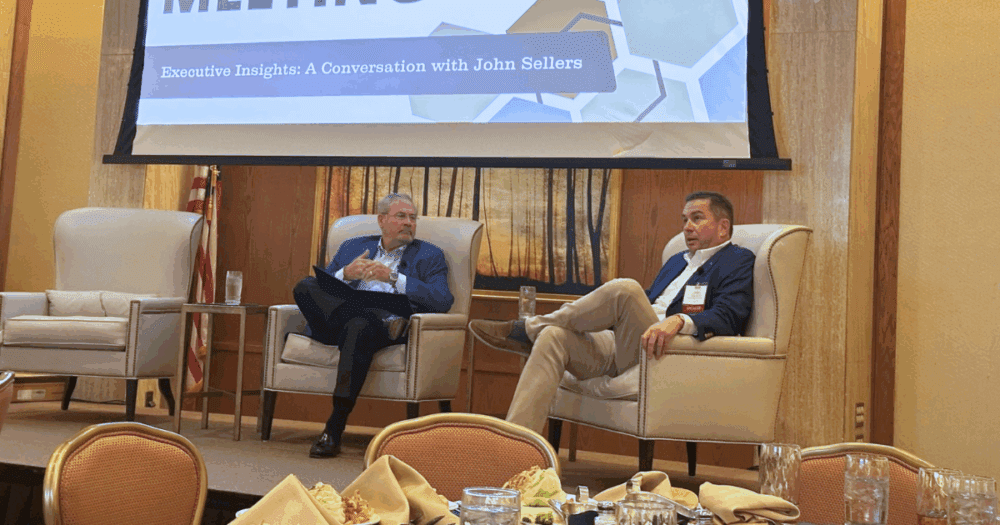
What happened: At the Permian Basin Petroleum Association (PBPA) Annual Meeting, Double Eagle Co-Founder John Sellers joined Admiral Permian Resources CEO Denzil West for a conversation on the company’s origins, growth, and outlook. Sellers credited private capital, disciplined operations, and a loyal team culture as the foundation of Double Eagle’s success in the Permian Basin.
Go deeper: Sellers and Cody Campbell launched a real estate development firm while at Texas Tech. “It was a pretty successful business,” Sellers said, until the 2008 crash left them “wiped out like the general market.” Midland contacts introduced them to land deals, where they used option leases because, as Sellers noted, “we didn’t really have money to buy them.” Their first flip, a Haynesville Shale lease, went to Permian legend Autry Stephens.
They spent the next three years in the Eagle Ford, building lasting relationships. “This business is hard enough, but without connections it’s almost impossible,” Sellers said. By 2011, they shifted to the Permian, buying around other active operators. Early wins included sales in Gaines and Dawson counties to Shell and Chesapeake, plus a $100 million Reagan County package to Forest Oil in 2012.
By the numbers:
- Double Eagle has drilled about 700 horizontal wells in the Midland Basin since 2008.
- The company currently runs four rigs.
- Their transactions place them among the top tier of Permian deals, alongside Diamondback’s $26B Endeavor Energy acquisition (2024), Occidental’s $12B CrownRock purchase (2023), Ovintiv’s $4.3B Black Swan deal (2023), Conoco’s $9.5B purchase of Shell’s Delaware Basin assets (2021), and Exxon’s $5.6B Bopco deal (2017).
The big picture: Double Eagle gave serious thought to going public during Double Eagle II, but the founders ultimately chose to remain private. Sellers said staying private preserved flexibility, not just on monetizing assets, but also on growing side ventures like royalty and midstream.
Reality check: Double Eagle holds 60,000 acres in deep plays below the Wolfcamp, but Sellers said that does not equate to the historic number of wells in Spraberry and Wolfcamp units. “Just putting anything you can actually go drill horizontally together is exceptionally hard,” he said. Deep wells now cost $12–13 million per 2-mile lateral, and the company is working to bring that below $10 million by 2026.
What they’re saying: Sellers credited their “family” culture, a loyal, equity-holding team with little turnover, as the key to progress. “We run this like a family,” he said. He emphasized their collaborative style extends to dealmaking, where trust and commitment ease friction with partners.
The bottom line: While they’ve looked at other basins, Sellers said the focus remains on the Permian, where scale and profitability are strongest. Double Eagle’s formula remains unchanged: stay private, stay nimble, stay disciplined, and invest in people. With deep play bets and cost-cutting initiatives, the company is wagering on steady oil prices and long-term growth in the Permian.